How do Organisms Reproduce?
Note on How do Organisms Reproduce?
How do Organisms Reproduce?
Key Concepts
Importance of Reproduction
Reproduction is the biological process by which organisms create new individuals similar to themselves. While not necessary for the survival of an individual, it is essential for the survival of a species and the stability of its population.
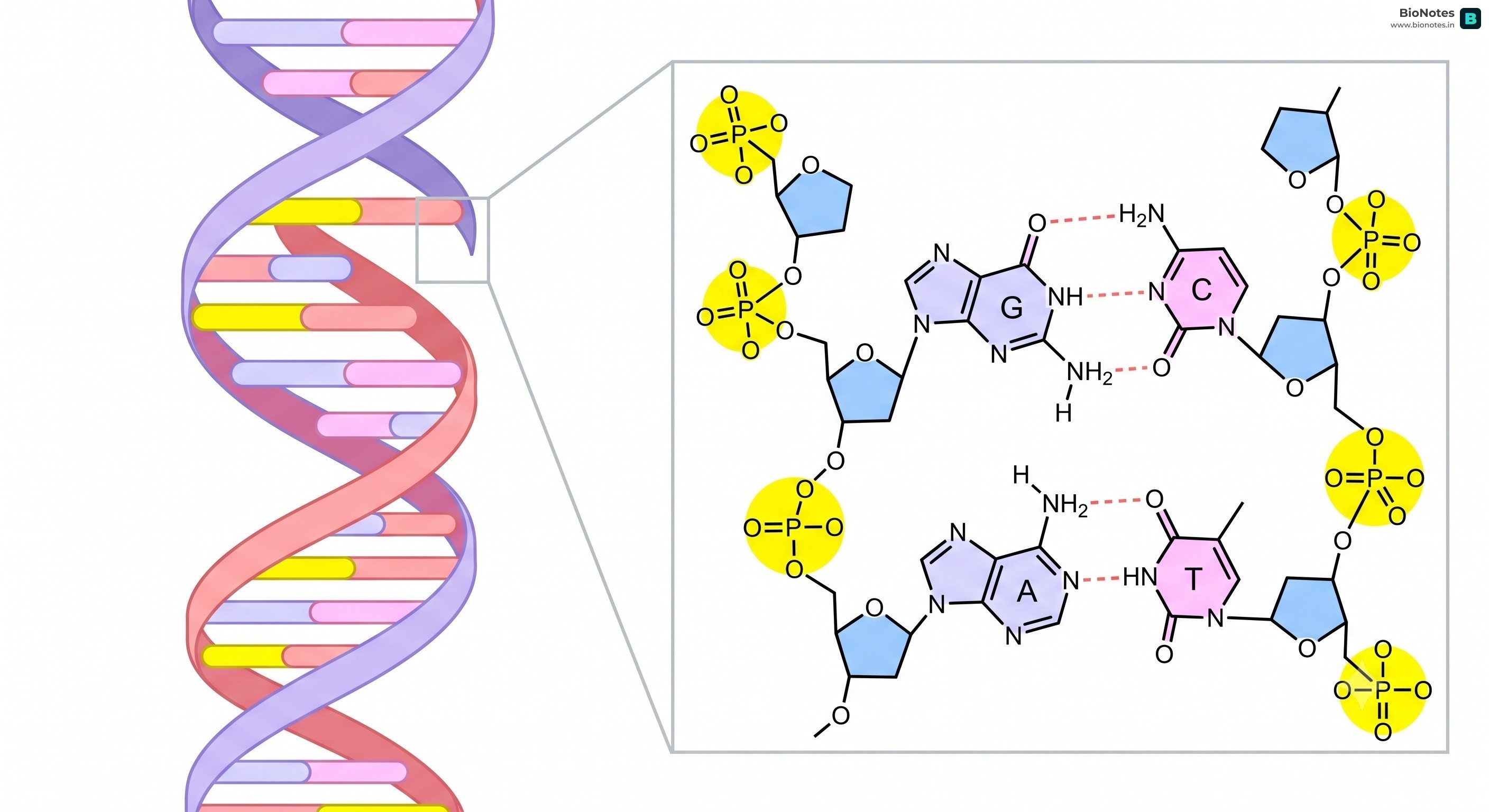
DNA Copying and Variation
- DNA (Deoxyribonucleic Acid): The information source for making proteins and building body design.
- DNA Copying: A basic event in reproduction where cells build copies of their DNA. Since no biochemical reaction is 100% accurate, variations occur during this process.
- Variation: Subtle differences between individuals that allow a population to adapt to environmental changes (niches), serving as the basis for evolution.
Asexual Reproduction
Creation of a new generation from a single individual.
- Fission: Common in unicellular organisms. Binary fission (Amoeba splits into two) and Multiple fission (Plasmodium divides into many cells).
- Fragmentation: Simple multicellular organisms (like Spirogyra) break into pieces that grow into new individuals.
- Regeneration: Ability of organisms (like Planaria and Hydra) to grow into complete individuals from cut body parts.
- Budding: An outgrowth (bud) develops on the parent body (like Hydra and Yeast), matures, and detaches to become a new individual.
- Vegetative Propagation: Growing new plants from parts like root, stem, or leaves (e.g., Bryophyllum, sugarcane, rose).
- Spore Formation: Spores (covered by thick protective walls) develop into new individuals (e.g., Rhizopus/bread mould).
Sexual Reproduction
Involves two individuals (male and female) to create a new individual. This mode allows for greater variation by combining DNA from two parents.
Reproduction in Flowering Plants:
- Reproductive Parts: Stamen (male - produces pollen) and Pistil (female - contains ovary and egg).
- Pollination: Transfer of pollen from stamen to stigma (Self or Cross-pollination).
- Fertilisation: Fusion of male germ-cell with the egg to form a zygote, which develops into an embryo and finally a seed.
Reproduction in Human Beings:
- Puberty: The period of adolescence when reproductive tissues begin to mature, and secondary sexual characteristics appear (e.g., hair growth, voice changes, menstruation).
- Male Reproductive System: Includes testes (produce sperms and testosterone), scrotum, vas deferens, prostate gland, seminal vesicles, and penis.
- Female Reproductive System: Includes ovaries (produce eggs and hormones), fallopian tubes (site of fertilisation), uterus (womb), and vagina.
- Placenta: A special tissue that nourishes the embryo from the mother's blood and removes waste.
- Menstruation: The monthly cycle of shedding the thickened uterine lining when an egg is not fertilised.
Reproductive Health and Contraception
Maintaining reproductive health involves awareness of sexually transmitted diseases (STDs) and responsible family planning.
- STDs: Bacterial (gonorrhea, syphilis) and Viral (warts, HIV-AIDS).
- Contraceptive Methods: Mechanical barriers (condoms), Hormonal methods (pills), IUDs (Copper-T), and Surgical blocks (Vasectomy and Tubectomy).
/CBSE/NCERT/Notes/Class_10_Science/Chapter_07_How_do_Organisms_Reproduce.mdx