Class 09 Biology - Introduction to Life - Exercises
NCERT Biology Exercises for Class 09 Biology - Introduction to Life - Class_09_Science
Class 09 Biology - Introduction to Life - Exercises
Questions and Answers
1. Differentiate between the following pairs of terms based on the clues given in parentheses:
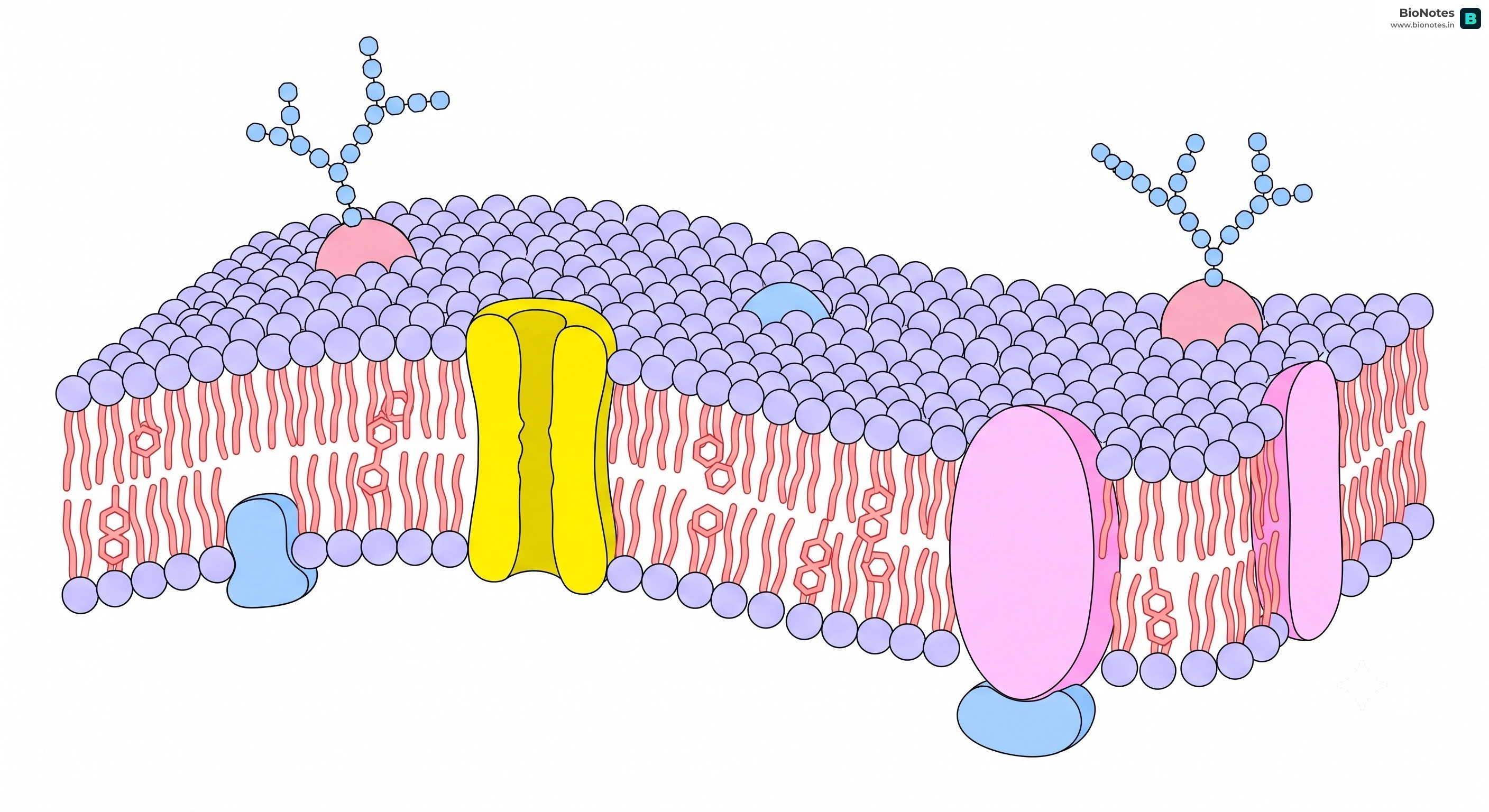
(i) Cell membrane and cell wall (permeability) Answer: The cell membrane is selectively permeable, meaning it allows only certain substances to pass through while blocking others. The cell wall, however, is generally fully permeable to water and substances in solution, providing structural support but not acting as a primary selective barrier.
(ii) RER and SER (structure) Answer: Rough Endoplasmic Reticulum (RER) has ribosomes attached to its surface, giving it a "rough" appearance under an electron microscope. Smooth Endoplasmic Reticulum (SER) lacks ribosomes on its surface and appears smooth.
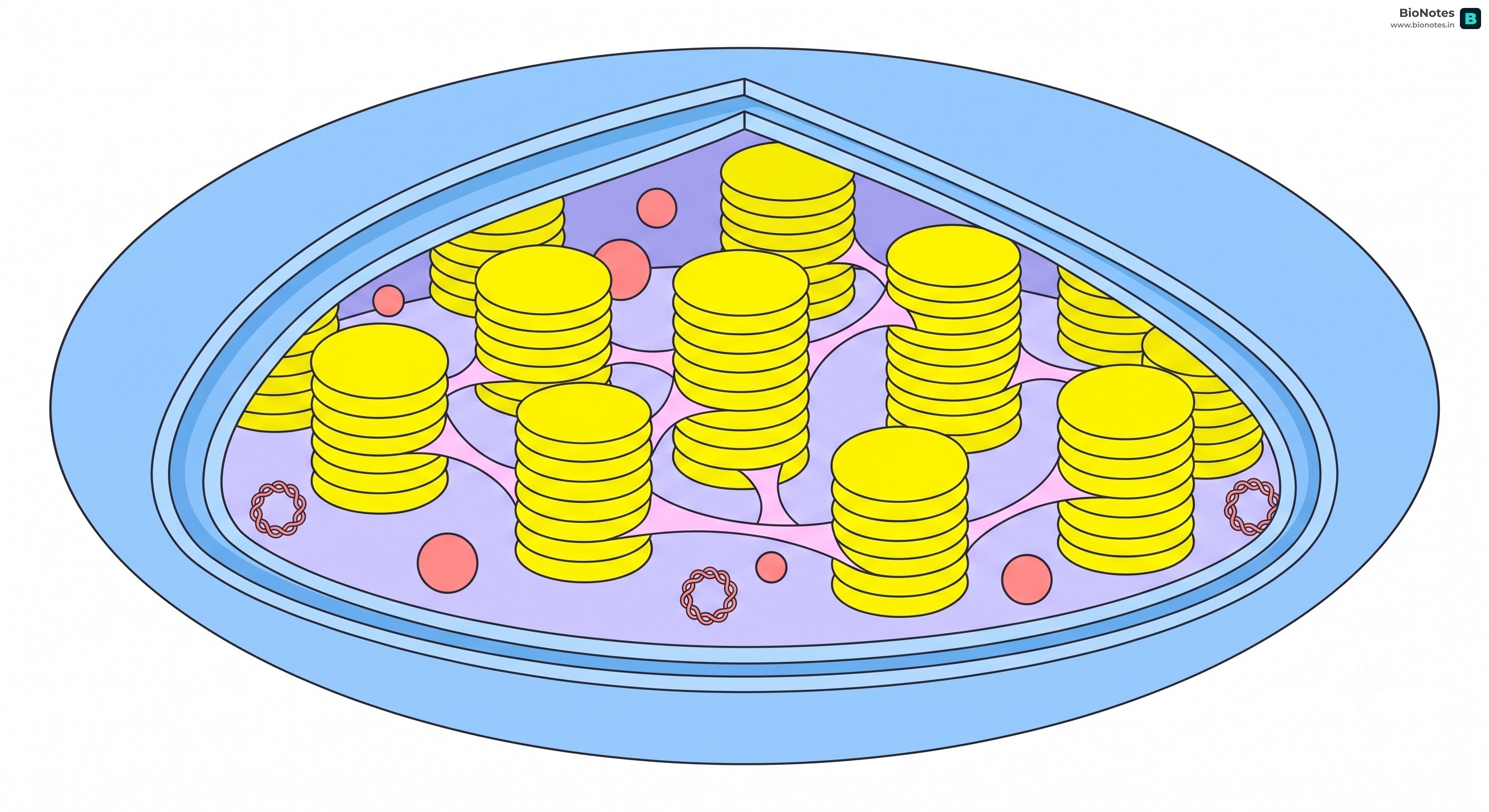
(iii) Chloroplasts and chromoplasts (pigments) Answer: Chloroplasts contain the green pigment chlorophyll and are involved in photosynthesis. Chromoplasts contain non-green pigments (such as yellow, orange, or red) and provide bright colors to flowers and fruits.
2. Two similar animal cells are placed in two different solutions: Cell X in pure water and Cell Y in concentrated salt solution. Cell X swells and Cell Y shrinks. Which statement is correct?
(i) Salt molecules moved into Cell Y, causing it to shrink. (ii) Water moved into Cell X and more water moved out of Cell Y than the salt solution entered in it. (iii) Water moved into Cell X and moved out of Cell Y through the cell membrane. (iv) Solute movement caused osmosis in both cells. Answer: (iii) Water moved into Cell X and moved out of Cell Y through the cell membrane. (This is due to osmosis: water moves from a hypotonic medium to a hypertonic medium across the selectively permeable membrane).
3. Match the cell parts with their functions:
(Note: Referring to general cell structure as described in the chapter)
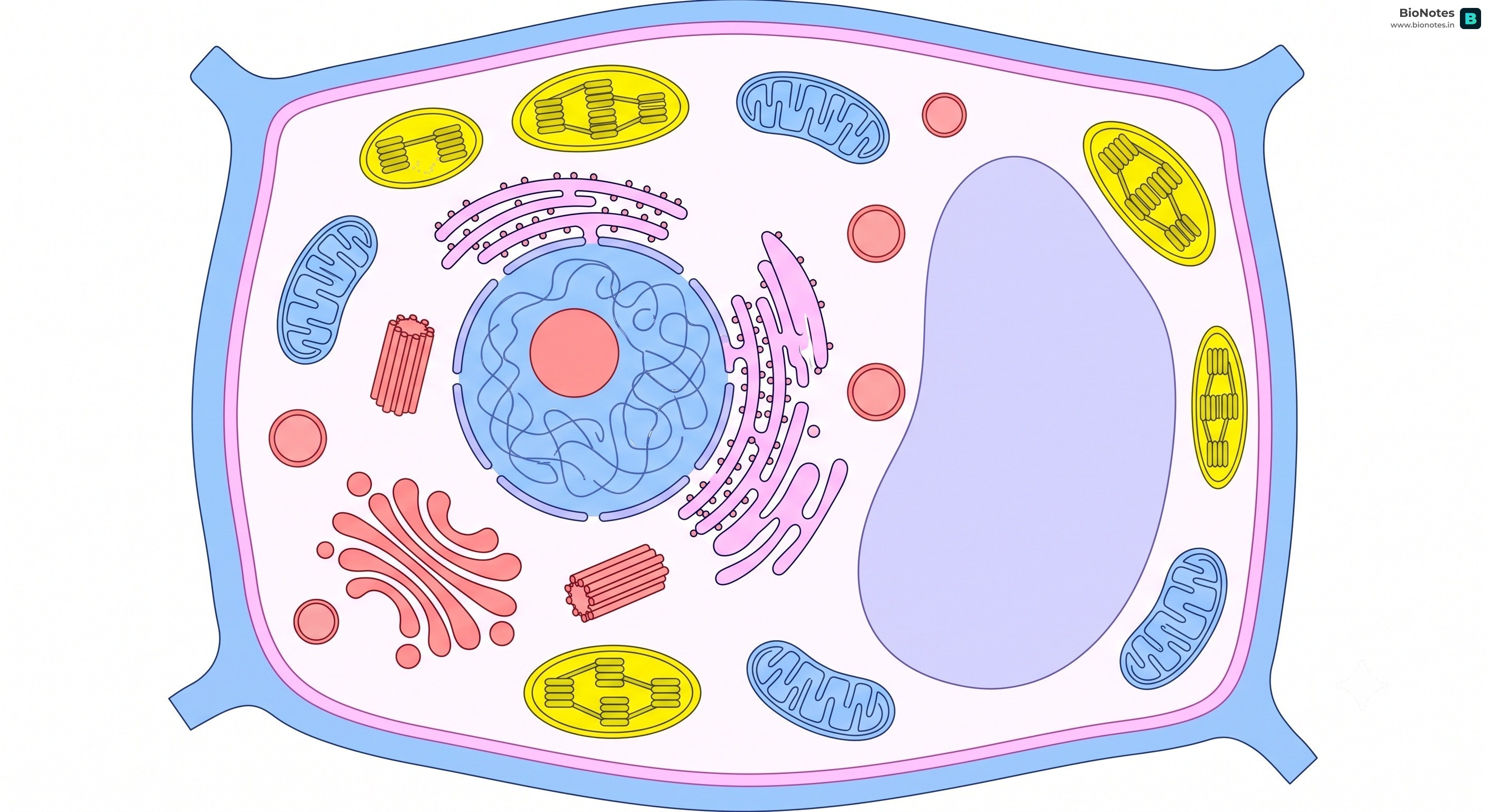
- Controlling all activities of a cell: Nucleus
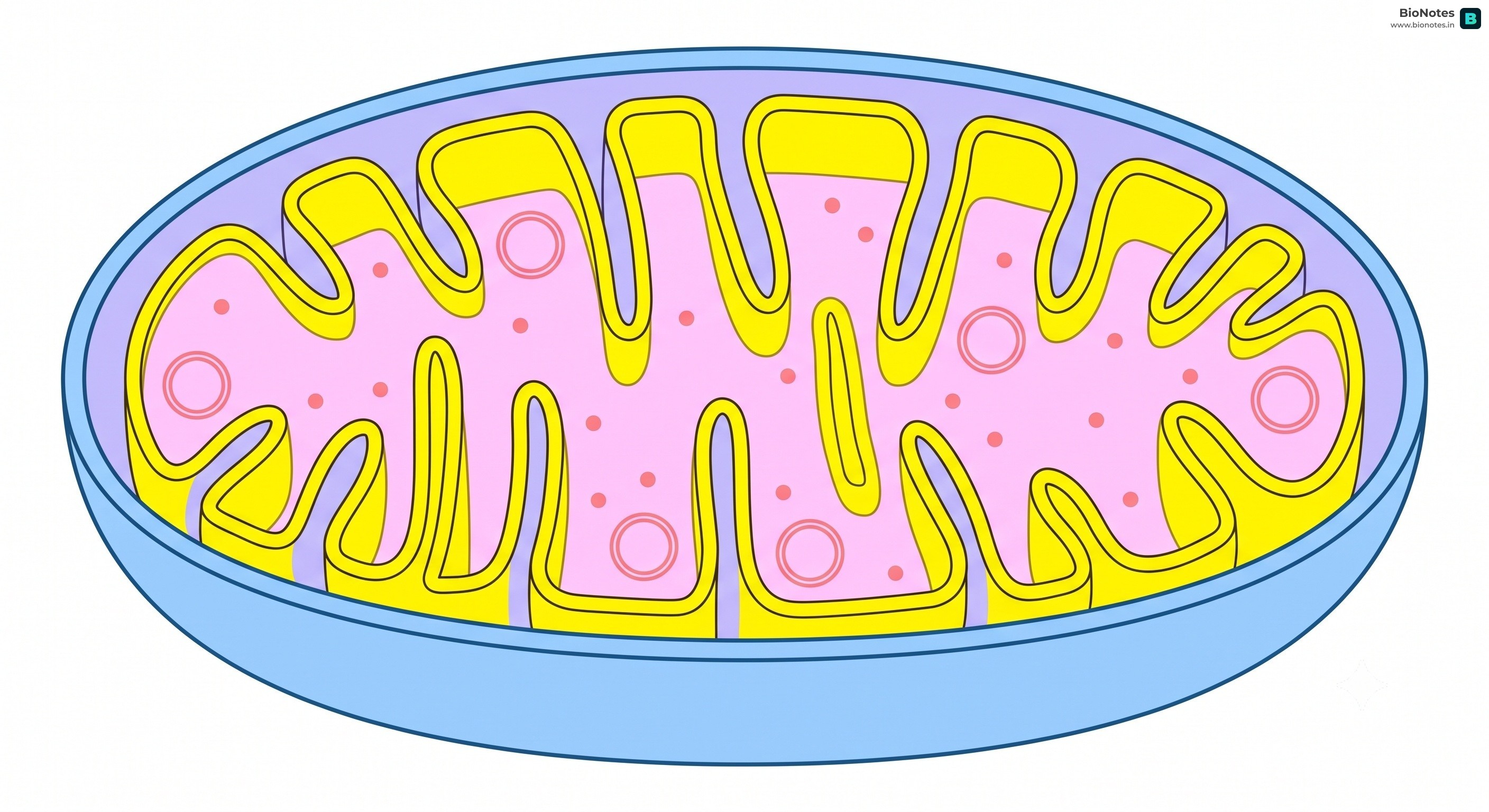
- Site of cellular respiration: Mitochondria
- Storage organelle that also provides rigidity (in plants): Vacuole
- Separates cell contents from surroundings: Cell membrane (Plasma membrane)
- Provides structural rigidity (in plants/bacteria): Cell wall
- Packs and stores materials received from ER: Golgi apparatus
- Helps in manufacturing food: Chloroplast (in plants)
4. Which of the following pairs are correctly placed?
| Option | Present in the plant cells | Absent in the animal cells |
|---|---|---|
| (i) | Leucoplast | Cell wall |
| Answer: (i) is correct. Leucoplasts and cell walls are both characteristic of plant cells and absent in animal cells. |
5. Renu says all plant parts (including roots) have plastids. Rohit says roots don't have plastids because they don't photosynthesize. Who is correct?
Answer: Renu is correct. While roots do not contain chloroplasts (which are for photosynthesis), they do contain leucoplasts. Leucoplasts are a type of plastid used for storing food materials such as starch, oils, or proteins, which is a common function in root cells (e.g., in potato tubers or carrots).
6. Discuss the similarities and differences between mitochondria and chloroplasts.
Answer:
- Similarities: Both are double-membrane-bound organelles, contain their own DNA and ribosomes, and can synthesize some of their own proteins. Both are involved in energy transformations.
- Differences: Mitochondria are found in both plant and animal cells and are the sites of cellular respiration (producing ATP). Chloroplasts are found only in plant cells (and some algae) and are the sites of photosynthesis (synthesizing sugars using light energy).
7. Which pair of cell organelles contains DNA?
(i) Chloroplasts, Ribosomes (ii) Mitochondria, Nucleus (iii) Golgi bodies, Ribosomes (iv) Nucleus, Lysosomes Answer: (ii) Mitochondria, Nucleus. (Chloroplasts also contain DNA, but are not paired with another DNA-containing organelle in the other options).
8. Carrot in plain water vs. salt solution.
(i) What hypothesis is being tested? Answer: The hypothesis is that water moves across cell membranes via osmosis depending on the external solute concentration. (ii) Suggestion for improvement? Answer: Use multiple carrots for each setup to ensure reproducibility and weigh the carrots before and after the 24-hour period to quantify the water gain or loss. (iii) Why the difference in texture? Answer: In plain water (hypotonic), water enters the carrot cells, making them turgid (stiff and crunchy). In salt solution (hypertonic), water leaves the cells, making them flaccid (rubbery and limp).
9. Presence or Absence of structures:
| Structure | Bacterial Cell | Animal Cell |
|---|---|---|
| Chromosome | Present (Single circular) | Present (Multiple linear) |
| Nucleus | Absent (Nucleoid present) | Present |
| Mitochondria | Absent | Present |
| Golgi complex | Absent | Present |
| Chromoplasts | Absent | Absent |
10. Potato Cup Experiment:
(i) Why does water gather in Cup B and C? Answer: Due to osmosis. The sugar/salt inside the cup creates a hypertonic environment, drawing water from the beaker through the living potato cells. (ii) Why is Cup A necessary? Answer: It serves as a control to show that water does not move into the hollowed portion without a solute gradient. (iii) Why no water in A and D? Answer: In Cup A, there is no solute to create an osmotic gradient. In Cup D (boiled potato), the heat has destroyed the cell membranes, making them no longer selectively permeable, thus preventing osmosis.
11. Identify the incorrect match:
(i) Ribosome — Protein synthesis (ii) SER — Lipid and cellulose synthesis (iii) Lysosome — Digestion of foreign agents Answer: (ii) is incorrectly matched in the context of general biology. SER is primarily involved in lipid and steroid/hormone synthesis and detoxification; cellulose synthesis typically occurs at the plasma membrane or via the Golgi apparatus.
12. What happens if all mitochondria are removed from a eukaryotic cell?
Answer: The cell would be unable to perform aerobic cellular respiration and would fail to produce sufficient ATP (energy). Consequently, most cellular processes would stop, and the cell would eventually die.
13. Which phenomenon inhibits tumor formation? Can plants develop tumors?
Answer: Contact inhibition and Programmed Cell Death (PCD) inhibit tumor formation in animal cells. Plants can also develop tumors (often called galls), usually caused by infections (like Agrobacterium) or environmental stress, though they don't spread like animal cancers due to the rigid cell walls.
14. Which organelles help in cell membrane synthesis?
Answer: The Rough Endoplasmic Reticulum (RER) synthesizes proteins, and the Smooth Endoplasmic Reticulum (SER) synthesizes lipids. These components are then transported via vesicles to the Golgi apparatus for modification and eventually to the cell membrane. This process is known as membrane biogenesis.
15. What would happen if gametes were formed by mitotic divisions?
Answer: If gametes were formed by mitosis, they would have the same number of chromosomes as the parent cell (2n). During fertilization, the resulting zygote would have double the chromosome number (4n). This doubling would continue in every generation, leading to genomic instability and likely death of the organism.
16. Preservation of Amla (Case Study):
(i) Scientific concept? Answer: Osmosis and dehydration. (ii) How does salt/sugar prevent spoilage? Answer: High concentrations of salt or sugar create a hypertonic environment. When bacteria or fungi come into contact with it, they lose water via osmosis, which inhibits their growth or kills them. (iii) Recipe? Answer: Lemon pickle with salt and spices, or Amla murabba stored in heavy sugar syrup. (iv) Values? Answer: Resourcefulness, food security, sustainability, and application of scientific knowledge for economic benefit.
/CBSE/NCERT/Exercises/Class_09_Science/Chapter_02_Introduction_to_Life.mdx