CBSE/NCERT/Notes/Class_05_EVS
Created by Titas Mallick
Biology Teacher • M.Sc. Botany • B.Ed. • CTET (CBSE) • CISCE Examiner
 BioNotes
Created by Titas Mallick
Biology Teacher • M.Sc. Botany • B.Ed. • CTET (CBSE) • CISCE Examiner
Online
Note on Water: The Essence of Life - Class 05 EVS
Most of the Earth's surface is covered with water, but the majority of it is salty (found in oceans). Freshwater is a very small fraction of the total water on Earth—if all Earth's water were in a glass, the freshwater would be only as much as in a teaspoon!
A Tiny Treasure If all the water on Earth were represented by a 1-litre bottle, the total amount of available freshwater for us to drink would be just a tiny droplet! This is why conservation is so important.
Water exists in three distinct states:
The water cycle is the continuous movement of water between the Earth's surface and the atmosphere:
Rainwater that is soaked up by the soil and stored deep underground in layers of rocks is called groundwater.
The Concrete Problem In cities, almost every inch of ground is covered with concrete or tar. This prevents rainwater from seeping into the ground, leading to falling groundwater levels and urban flooding during rains.
Rivers and lakes are major surface water sources.
Nature's Slide You can see gravity in action by pouring water on a slightly tilted surface. It will always flow "downhill," which is exactly how rivers find their way from mountains to the sea.
Aquatic plants and animals have special features to survive in water:
The Lotus Effect The waxy coating on a lotus leaf is so effective that water droplets roll off it like pearls, taking dirt and dust with them. This is why lotus leaves always look clean even in muddy water!
 www.bionotes.in
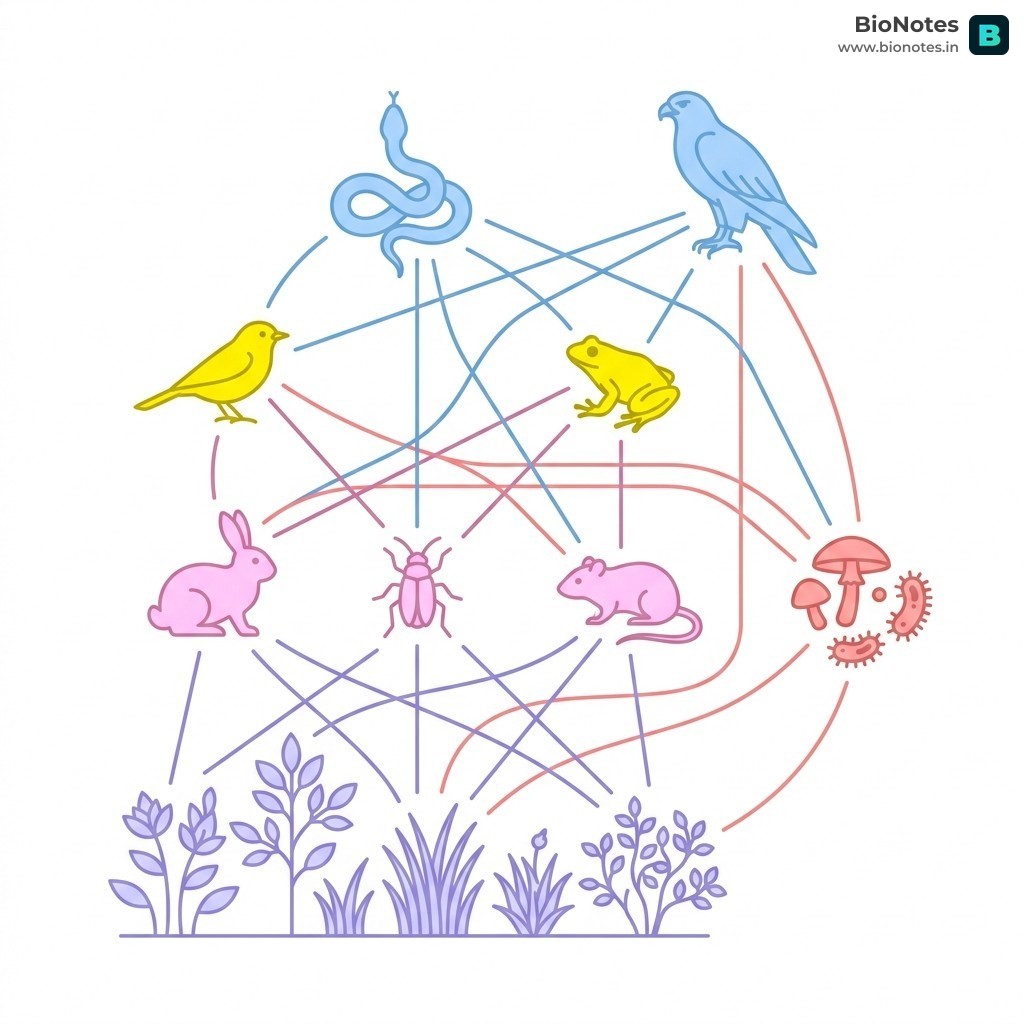
Organisms in a water body depend on each other for survival. A river food chain (e.g., small fish being eaten by big fish, which are eaten by herons or humans) shows how energy moves through the ecosystem. The disappearance of even one species can disrupt the entire balance.