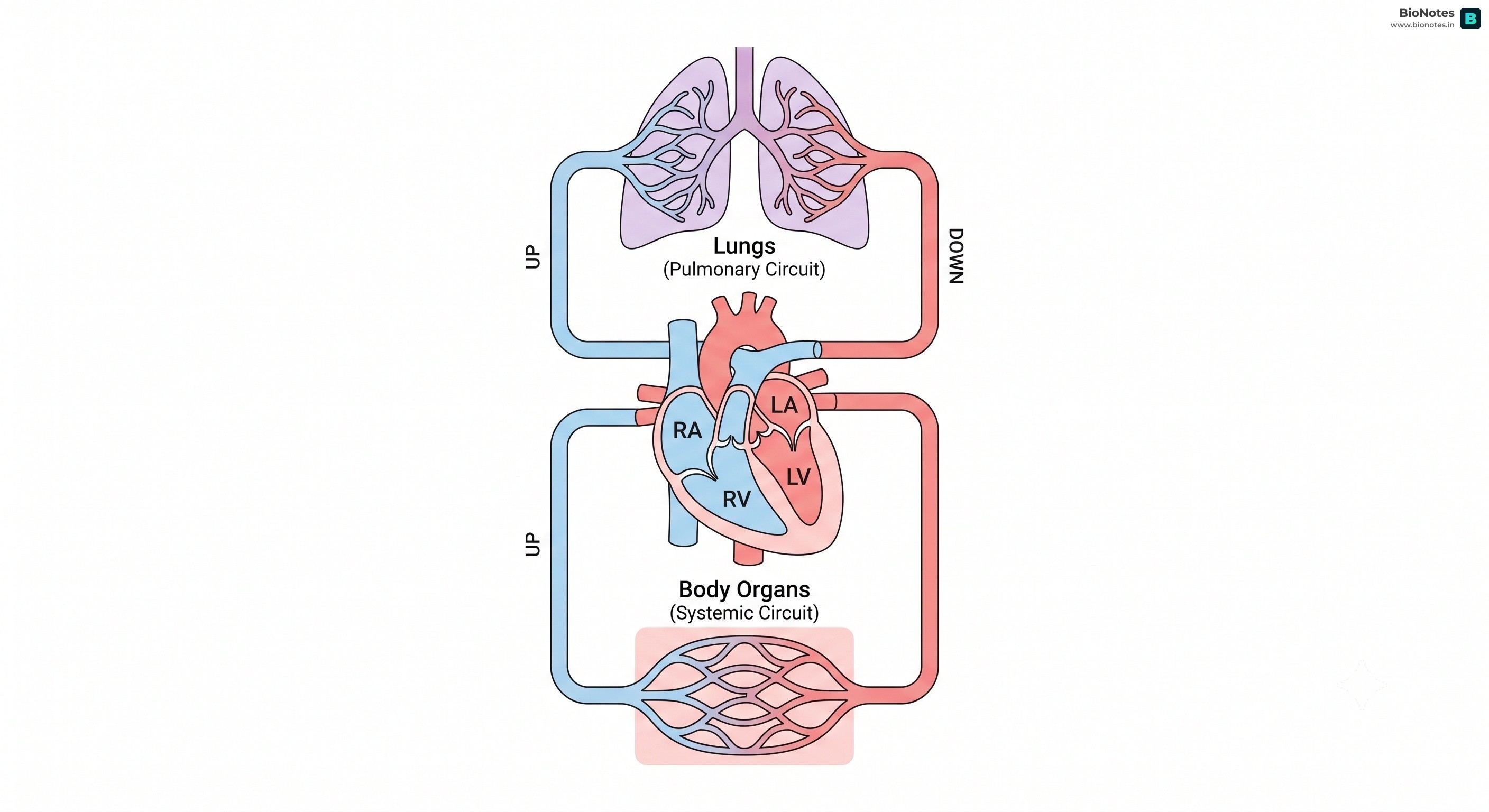
The circulatory system, also known as the cardiovascular system, is a vital network responsible for transporting nutrients, oxygen, hormones, and other essential substances throughout the body. It also removes waste products, like carbon dioxide, to be expelled. This intricate system is composed of the heart, blood vessels, and the blood itself.
Misconception 1:The right and left sides of the heart share the same blood.Correction: The two sides are completely separated by a wall (septum). The right side only handles deoxygenated blood, and the left side only handles oxygenated blood.
The heart is a muscular organ that acts as a pump, circulating blood throughout the body. It is divided into four chambers that work to pump both oxygenated and deoxygenated blood.
Valves: Flaps of tissue that prevent the backflow of blood. The four main valves are the tricuspid, pulmonary, mitral, and aortic valves.
Septum: A wall of muscle that separates the right and left sides of the heart.
Pacemaker: A small group of cells in the right atrium, called the sinoatrial (SA) node, that controls the heart rate.
[A simple diagram showing the four chambers (right and left atria, right and left ventricles), valves, and major blood vessels (aorta, pulmonary trunk, vena cava, pulmonary veins)]
Double Circulation: A circulatory system in which the blood travels twice through the heart for each complete circuit of the body.
Pulmonary Circulation: This circuit moves deoxygenated blood from the heart to the lungs, where it picks up oxygen and releases carbon dioxide. The now oxygen-rich blood returns to the heart.
Systemic Circulation: In this circuit, the heart pumps oxygenated blood to the rest of the body. After delivering oxygen and nutrients, the deoxygenated blood returns to the heart to begin the cycle again.
Palpitations: A noticeably rapid, strong, or irregular heartbeat due to agitation, exertion, or illness.
Cardiac Arrest: A sudden, unexpected loss of heart function, breathing, and consciousness.
Hypertension: High blood pressure, which can damage blood vessels and lead to other cardiovascular problems.
Atherosclerosis: The hardening of arteries due to the buildup of plaque, which can restrict blood flow.
Heart Attack: Occurs when blood flow to the heart is blocked, often by a blood clot.
Recognizing a Heart Attack
Common symptoms include chest pain or pressure, shortness of breath, and pain in the arms, neck, or jaw. If someone shows these signs, call for emergency medical help immediately.
Stroke:
Happens when blood flow to the brain is interrupted, either by a blockage or a ruptured blood vessel.
Heart Failure: A condition where the heart can't pump blood as effectively as it should.
Arrhythmia: An irregular heartbeat, which can be too fast, too slow, or erratic.
Introduction: A network of tissues and organs that help rid the body of toxins, waste and other unwanted materials. The lymphatic system is a part of the circulatory system and the immune system.
 BioNotes