CBSE/NCERT/Notes/Class_09_Science
Reproduction
Note on Reproduction (How Life Continues)
Reproduction
Key Concepts
1. The Nature of Reproduction
Reproduction is the biological process by which organisms produce new individuals of their own kind, ensuring the continuity of life and species survival.
- Asexual Reproduction: Involves a single parent; offspring are genetically identical clones.
- Sexual Reproduction: Involves two parents; offspring inherit a mix of characteristics, leading to genetic variation.
2. Asexual Reproduction in Plants and Animals
- Vegetative Propagation (Plants): New plants arise from vegetative parts like stems, roots, or leaves.
- Natural: Underground stems (potato, ginger), leaf sprouts (Bryophyllum).
- Artificial (Agriculture/Horticulture):
- Cutting: Using a stem piece with nodes.
- Grafting: Joining two plants (rootstock and scion) to combine traits.
- Layering: Bending a branch into the soil to grow roots.
- Tissue Culture: Growing many plants from small tissue samples in a lab.
- Budding (Animals/Yeast): A small outgrowth (bud) develops on the parent body, matures, and separates (e.g., Hydra, yeast).
3. Sexual Reproduction in Plants
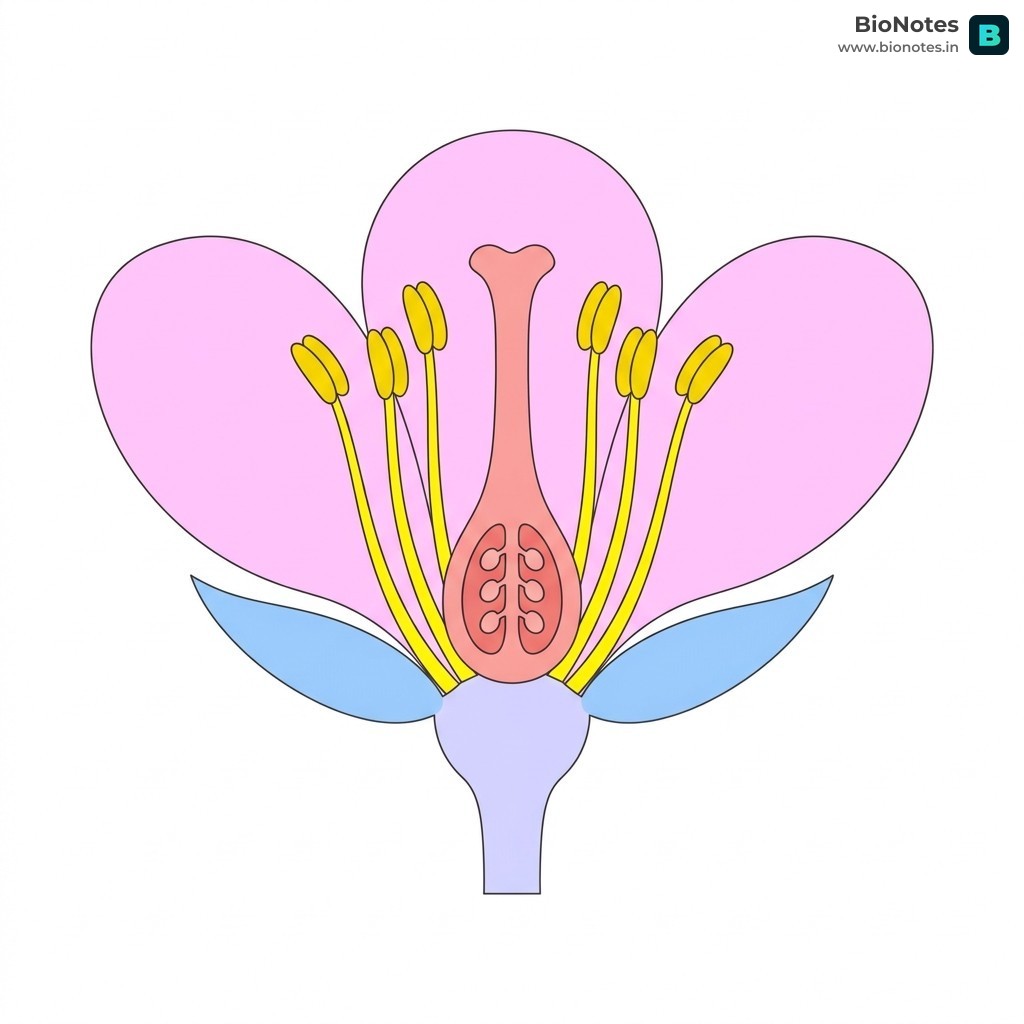
- The Flower: The reproductive organ.
- Stamen (Male): Anther and filament. Produces pollen grains (male gametes).
- Pistil/Carpel (Female): Stigma, style, and ovary. Ovary contains ovules (female gametes/eggs).
- Pollination: Transfer of pollen from anther to stigma.
- Self-pollination: Within the same flower or plant.
- Cross-pollination: Between different plants of the same species.
- Pollinators: Wind, water, insects (bees, butterflies), and birds.
- Fertilisation: The fusion of male and female gametes to form a zygote.
- Seed and Fruit Formation: After fertilisation, the ovule develops into a seed, and the ovary develops into a fruit.
4. Sexual Reproduction in Animals
- External Fertilisation: Occurs outside the female body (e.g., frogs, fish). Large numbers of eggs are laid, but survival is low.
- Internal Fertilisation: Occurs inside the female body (e.g., reptiles, birds, mammals). Higher survival rates as the embryo is protected.
5. Human Reproduction
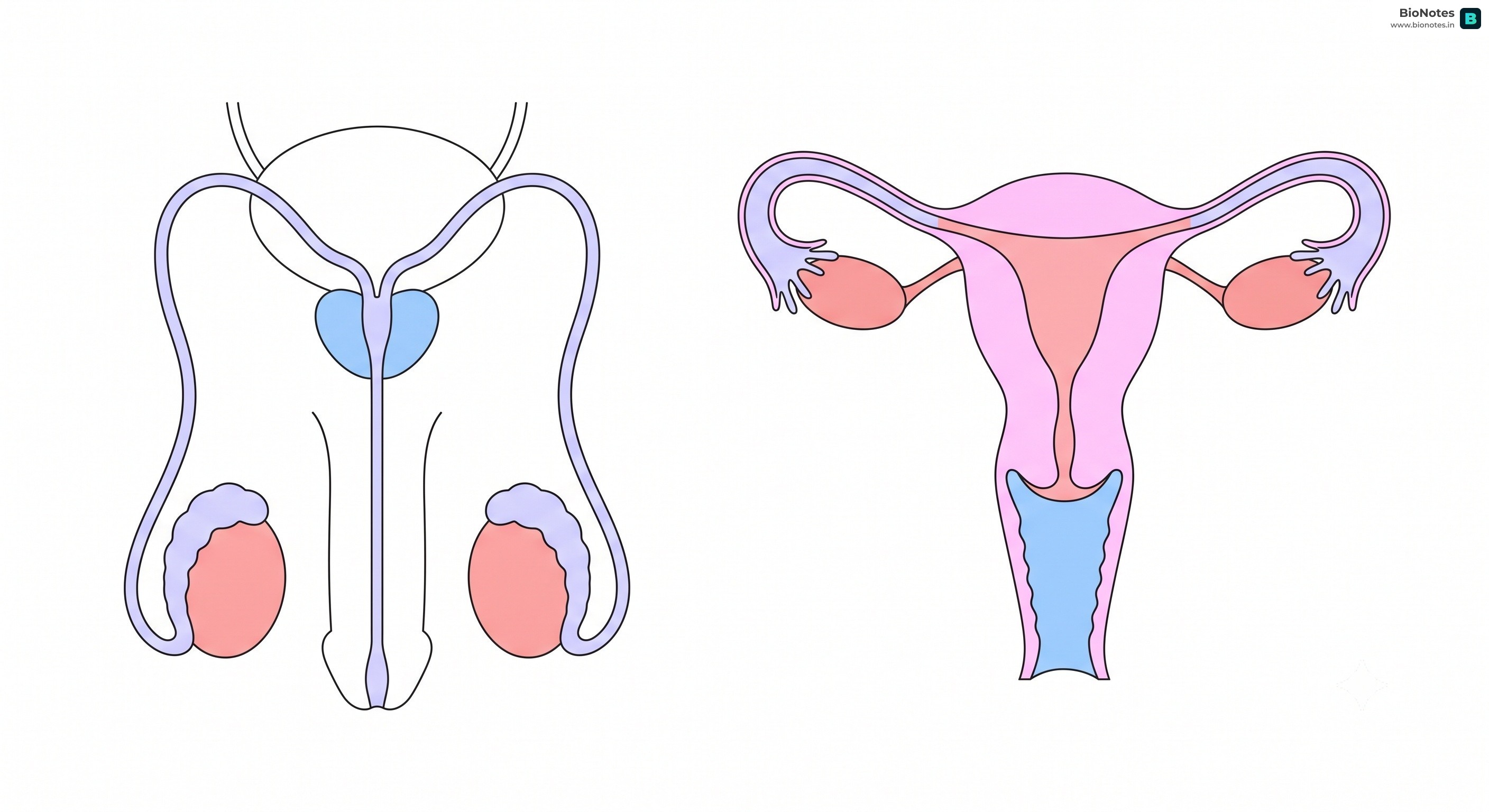
- Male Reproductive System:
- Testes: Produce sperm and testosterone; located in the scrotum for temperature regulation.
- Vas deferens: Tube that carries sperm.
- Glands: Seminal vesicles and prostate gland add nourishing fluids.
- Female Reproductive System:
- Ovaries: Produce eggs and female hormones.
- Fallopian Tubes (Oviducts): Site of fertilisation.
- Uterus: Where the foetus develops.
- Gametogenesis: Formation of gametes (23 chromosomes each).
- The Menstrual Cycle: A periodic cycle (~28 days) involving:
- Menstruation: Shedding of the uterine lining if no fertilisation occurs.
- Ovulation: Release of a mature egg from the ovary (around Day 14).
- Pregnancy and Birth: Lasts about 9 months (3 trimesters).
- Zygote → Embryo → Foetus.
- Implantation: Attachment of the zygote to the uterine wall.
- Childbirth: Expulsion of the baby via uterine contractions.
6. Reproductive Health and Contraception
- Sexually Transmitted Infections (STIs): Infections like HIV, Syphilis, and Herpes spread via physical contact.
- Contraceptive Methods:
- Barrier: Condoms (also prevent STIs).
- Chemical/Hormonal: Oral pills (change egg release).
- Intra-Uterine Devices (IUDs): Copper-T.
- Surgical: Vasectomy (males) and Tubectomy (females).
- Social/Ethical Issues: Prenatal sex determination is illegal in India to prevent female foeticide and maintain a healthy sex ratio.
Location:
/CBSE/NCERT/Notes/Class_09_Science/Chapter_11_Reproduction.mdx