Class 6
Created by Titas Mallick
Biology Teacher • M.Sc. Botany • B.Ed. • CTET (CBSE) • CISCE Examiner
 BioNotes
Created by Titas Mallick
Biology Teacher • M.Sc. Botany • B.Ed. • CTET (CBSE) • CISCE Examiner
Online
Common Misconceptions
Watch Out! Flowers are complex structures:
 www.bionotes.in
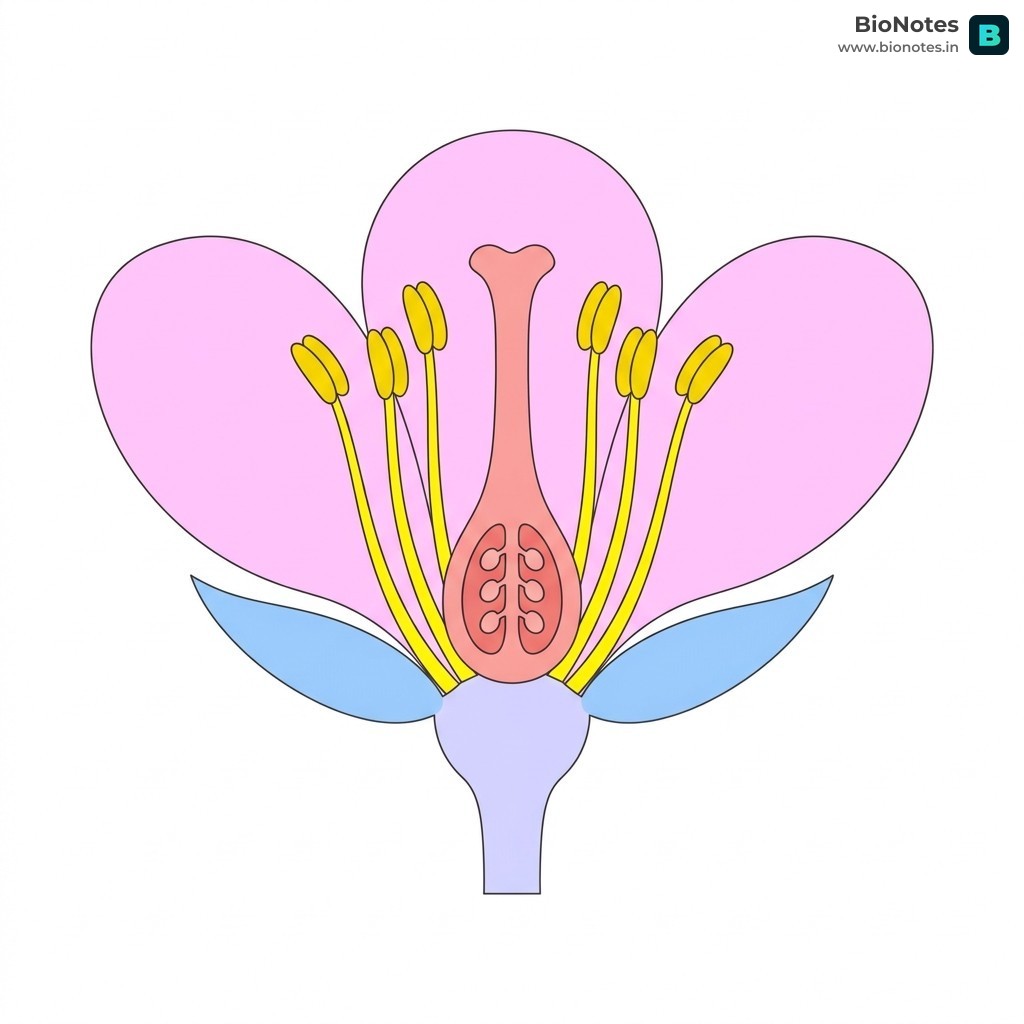
A typical bisexual flower consists of four main whorls, arranged concentrically on the receptacle (the part of the flower stalk to which the parts of the flower are attached).
Calyx (Sepals):
Corolla (Petals):
Androecium (Stamens):
Gynoecium (Pistil/Carpel):
Pollination is the transfer of pollen grains from the anther to the stigma of a flower.
Cross-pollination requires external agents to transfer pollen. Here's an idea about them:
Wind (Anemophily):
Water (Hydrophily):
Insects (Entomophily):
Fertilization is the fusion of the male gamete (from the pollen grain) with the female gamete (present in the ovule) to form a zygote.
Process in Simple Terms:
After fertilization, significant changes occur in the flower parts:
Fruits protect the seeds and aid in their dispersal.
The pericarp (fruit wall) of fleshy fruits is typically differentiated into three layers:
A seed is a fertilized ovule that contains an embryo and stored food, enclosed within a protective seed coat.
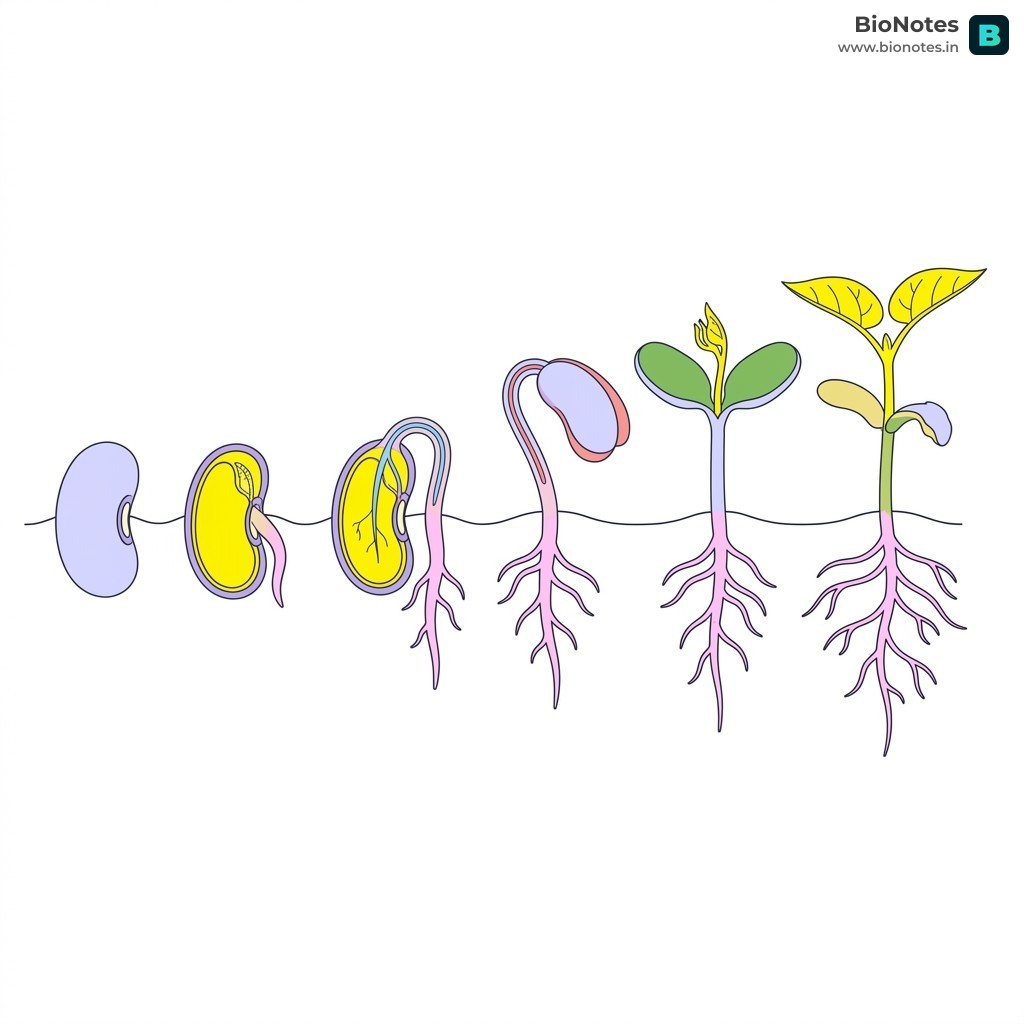
Germination is the process by which a seed sprouts and grows into a new plant.
Waiting for the Right Moment Seeds can stay "dormant" (asleep) for years until they get exactly the right amount of water, warmth, and air to start germinating.
 www.bionotes.in
NGSS-MS-LS1-4AQA-KS3-BiologyIB-MYP-Science