Class 6
Created by Titas Mallick
Biology Teacher • M.Sc. Botany • B.Ed. • CTET (CBSE) • CISCE Examiner
 BioNotes
Created by Titas Mallick
Biology Teacher • M.Sc. Botany • B.Ed. • CTET (CBSE) • CISCE Examiner
Online
Common Misconceptions
Watch Out! Your blood is a superhighway:
The circulatory system (also known as the cardiovascular system) is responsible for transporting blood, nutrients, oxygen, carbon dioxide, and hormones throughout the body.
Blood circulates continuously throughout the body, delivering oxygen and nutrients to cells and removing waste products.
 www.bionotes.in
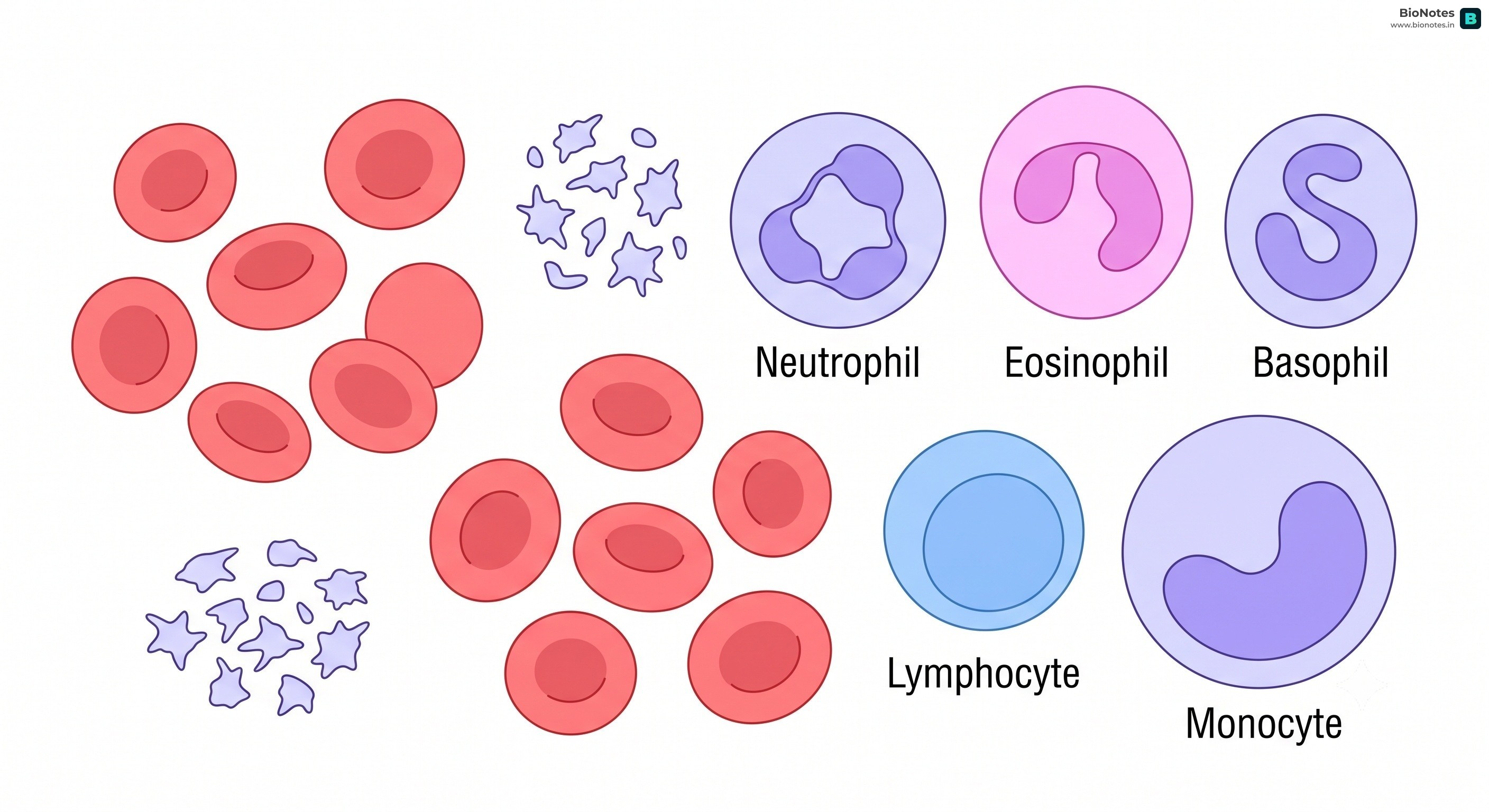
Blood is a complex fluid made up of several components:
Natural Band-Aids When you get a cut, platelets rush to the area and stick together to form a "plug." This stops the bleeding and helps the body start the healing process.
Human blood is classified into different groups based on the presence or absence of specific antigens on the surface of red blood cells. The four main ABO blood groups are:
Concept: Blood pressure is the force exerted by circulating blood against the walls of the body's arteries, the major blood vessels. It is usually measured as systolic pressure (when the heart beats) over diastolic pressure (when the heart rests between beats).
NGSS-MS-LS1-3AQA-KS3-BiologyIB-MYP-Science