CBSE/NCERT/Notes/Class_12_Biology
Human Reproduction
Note on Human Reproduction (Chapter 2)
Human Reproduction
Key Concepts
The Male Reproductive System
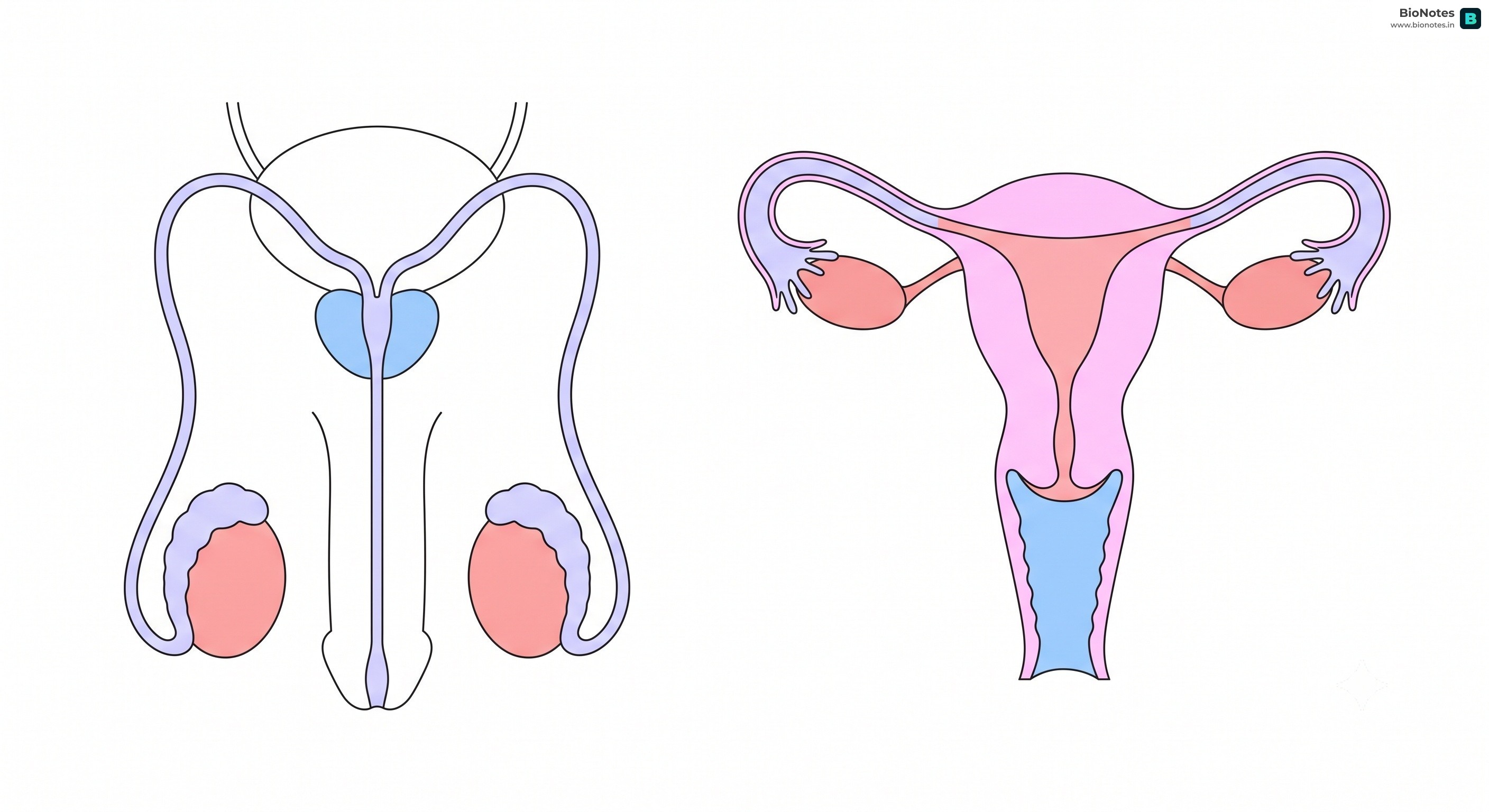
The male reproductive system is located in the pelvis region and includes a pair of testes, accessory ducts, glands, and external genitalia.
- Testes: Situated outside the abdominal cavity in the scrotum, which maintains a temperature 2–2.5°C lower than the internal body temperature, essential for spermatogenesis.
- Testicular Lobules: Each testis has about 250 compartments. Each lobule contains 1–3 highly coiled seminiferous tubules.
- Cells in Seminiferous Tubules:
- Male Germ Cells (Spermatogonia): Undergo meiotic divisions to form sperms.
- Sertoli Cells: Provide nutrition to the germ cells.
- Leydig Cells (Interstitial Cells): Located outside tubules; synthesize and secrete testicular hormones called androgens.
- Accessory Ducts: Include rete testis, vasa efferentia, epididymis, and vas deferens.
- Accessory Glands: Include paired seminal vesicles, a prostate, and paired bulbourethral glands. Their secretions form seminal plasma (rich in fructose, calcium, and enzymes).
The Female Reproductive System
Located in the pelvic region, it consists of a pair of ovaries, oviducts, uterus, cervix, vagina, and external genitalia, along with mammary glands.
- Ovaries: Primary female sex organs. Produce the ovum and steroid hormones (estrogen and progesterone).
- Accessory Ducts:
- Oviducts (Fallopian Tubes): 10–12 cm long. Parts include the infundibulum (with finger-like fimbriae), ampulla, and isthmus.
- Uterus (Womb): Supported by ligaments. The wall has three layers: perimetrium (outer), myometrium (middle smooth muscle), and endometrium (inner glandular layer).
- External Genitalia: Includes mons pubis, labia majora, labia minora, hymen, and clitoris.
- Mammary Glands: Paired structures containing glandular tissue and fat. Divided into 15–20 mammary lobes containing alveoli, which secrete milk.
Gametogenesis
The process of gamete formation.
- Spermatogenesis:
- Starts at puberty due to increase in GnRH.
- GnRH stimulates LH (acts on Leydig cells for androgens) and FSH (acts on Sertoli cells).
- Spermiogenesis: Transformation of spermatids into spermatozoa (sperms).
- Spermiation: Release of sperms from seminiferous tubules.
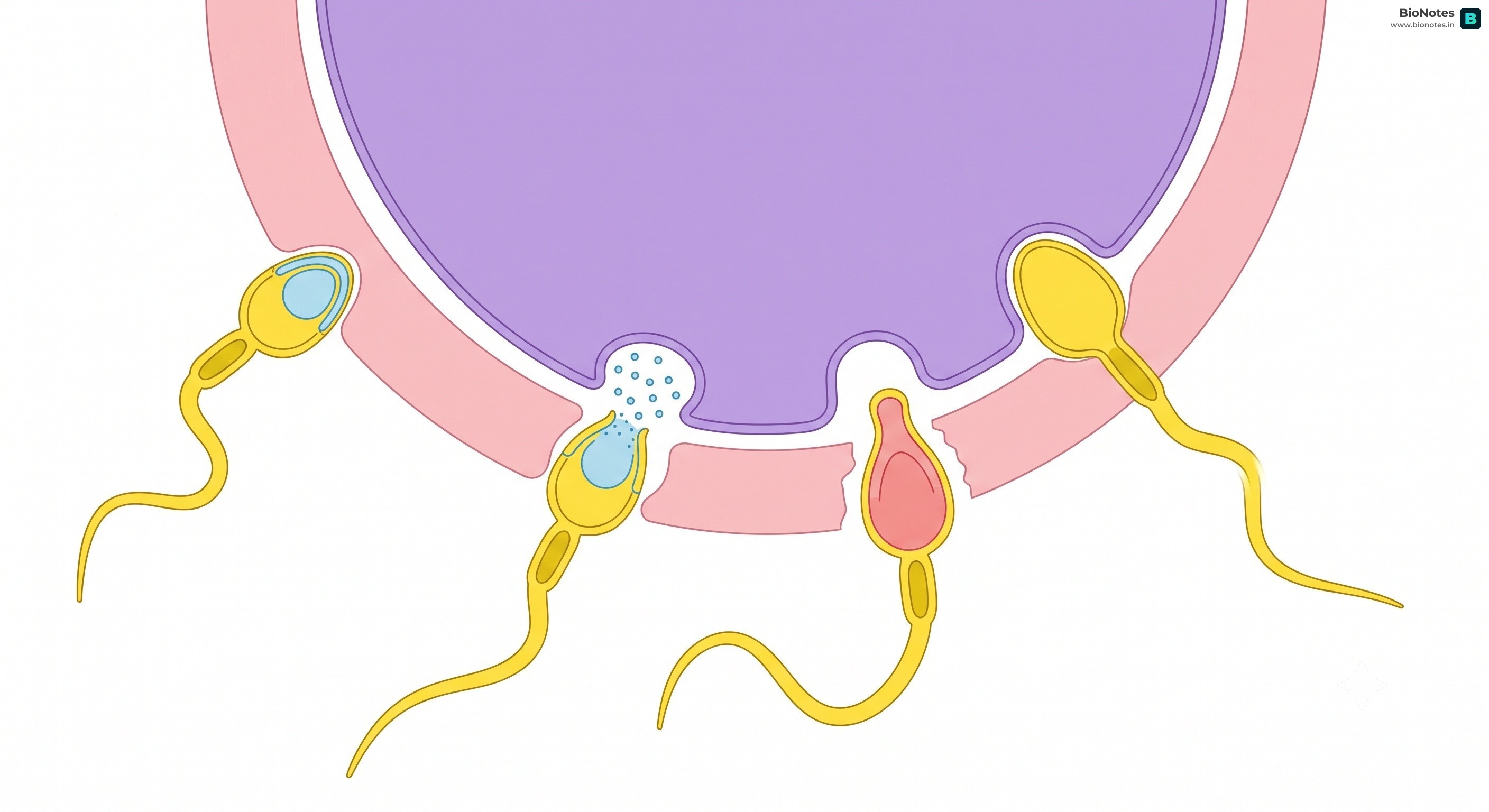
- Structure of Sperm: Composed of a head (with a haploid nucleus and an acrosome filled with enzymes), neck, middle piece (with mitochondria for energy), and a tail.
- Oogenesis:
- Initiated during embryonic development.
- Primary oocytes are arrested at Prophase-I.
- At puberty, only 60,000–80,000 primary follicles remain in each ovary.
- Ovulation: Rupture of the Graafian follicle to release the secondary oocyte (ovum).
Menstrual Cycle
The reproductive cycle in female primates (e.g., humans).
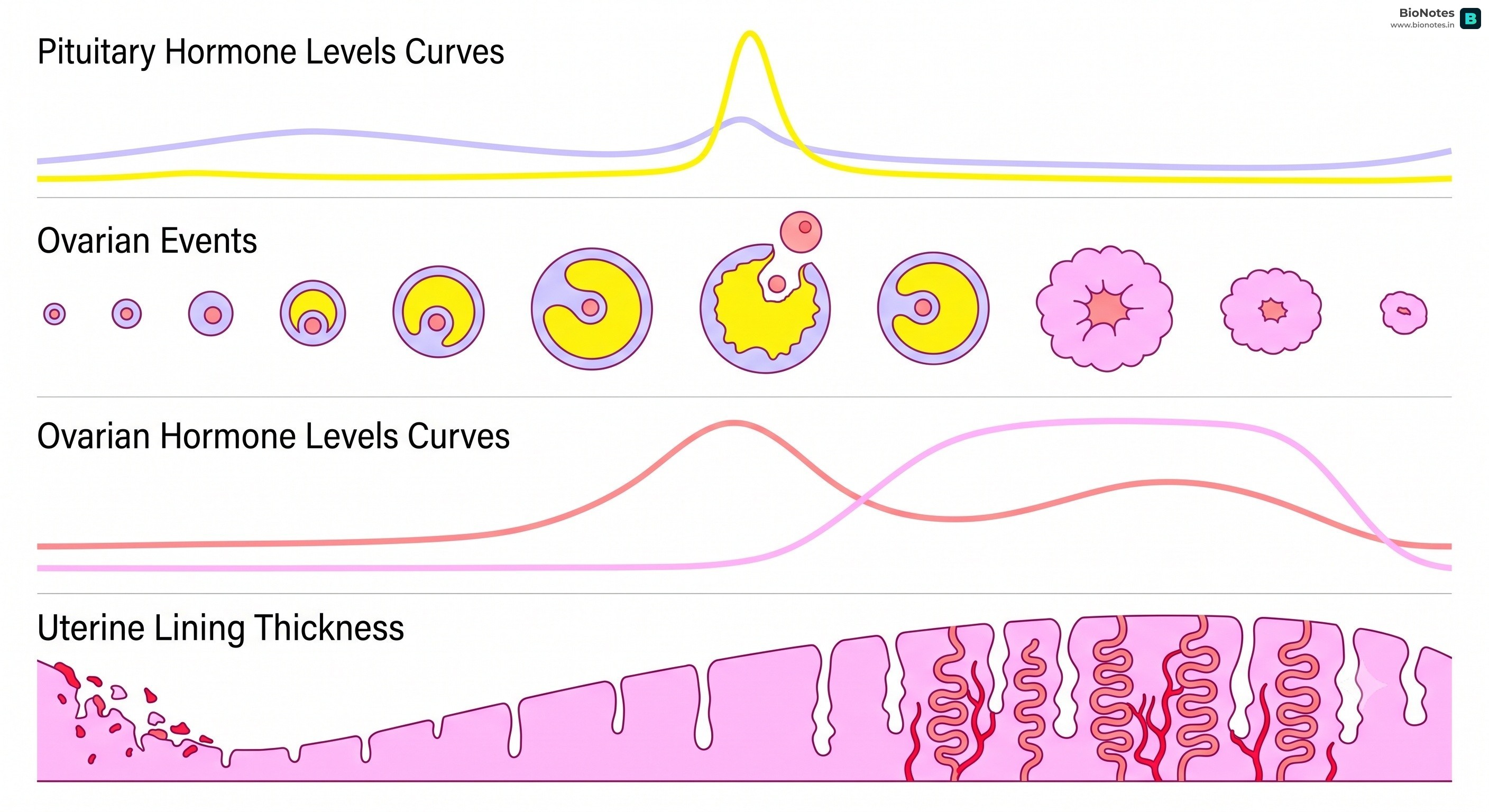
- Menstrual Phase (Days 1–5): Breakdown of endometrial lining; occurs if the ovum is not fertilized.
- Follicular Phase: Primary follicles grow into Graafian follicles; endometrium regenerates. Induced by LH and FSH.
- Ovulatory Phase (Mid-cycle): LH surge induces rupture of Graafian follicle and release of ovum.
- Luteal Phase: Remaining Graafian follicle transforms into corpus luteum, which secretes progesterone to maintain the endometrium.
Fertilisation and Implantation
- Fertilisation: Fusion of sperm and ovum in the ampullary region of the fallopian tube.
- Sex Determination: The sex of the baby is determined by the father. Sperms carry either X or Y chromosomes, while ova only carry X. XX = Female, XY = Male.
- Cleavage: Mitotic division of the zygote to form 2, 4, 8, 16 daughter cells called blastomeres.
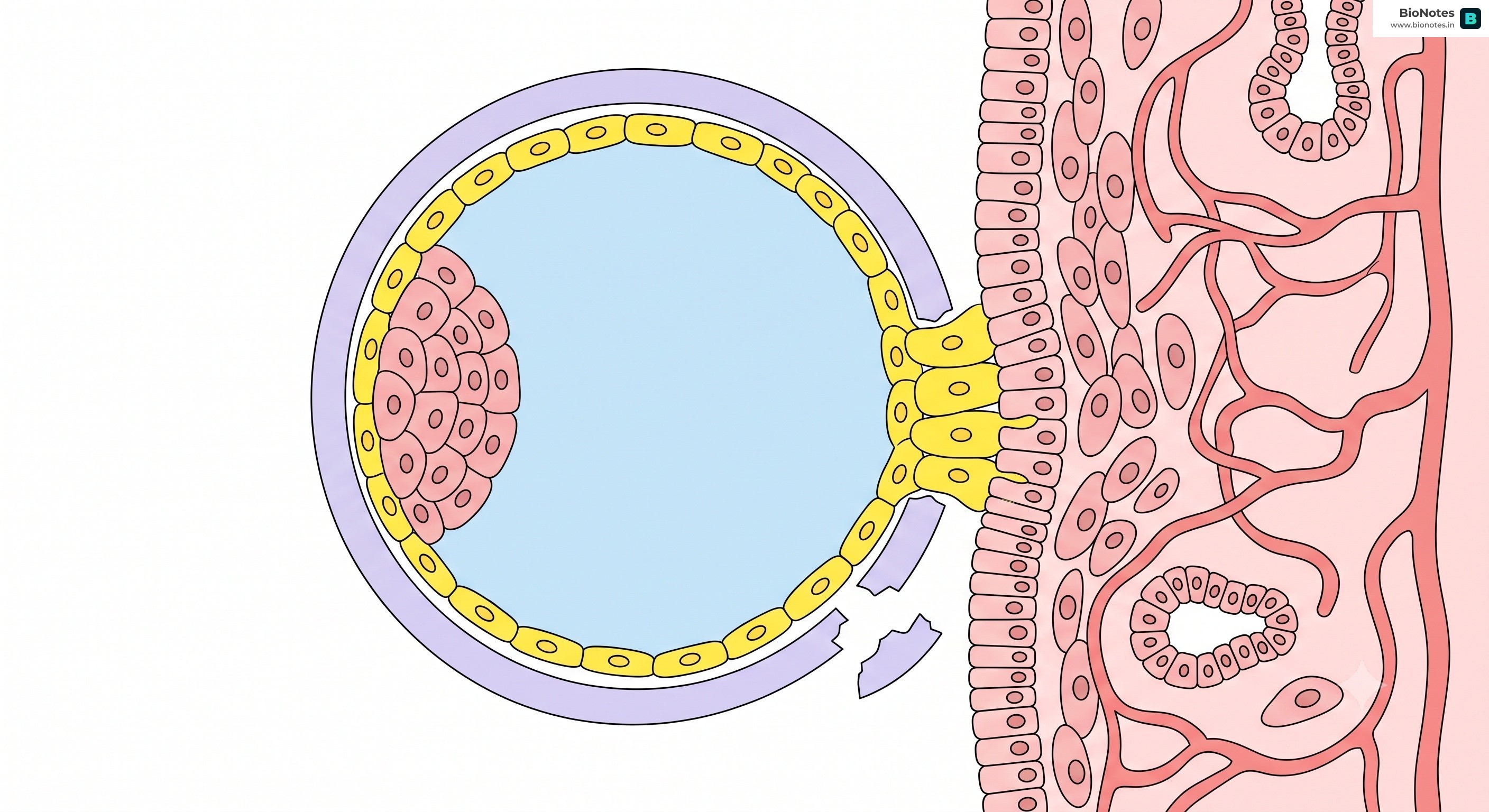
- Implantation: The blastocyst (with trophoblast and inner cell mass) embeds into the endometrium.
Pregnancy and Embryonic Development
- Placenta: A structural and functional unit between the foetus and maternal body. Facilitates nutrient/oxygen supply and waste removal.
- Hormones: Placenta produces hCG, hPL, estrogens, and progestogens. Relaxin is secreted by the ovary in the later phase.
- Germ Layers: Inner cell mass differentiates into ectoderm, endoderm, and mesoderm.
- Developmental Milestones:
- 1 Month: Heart formed.
- 2 Months: Limbs and digits develop.
- 12 Weeks (First Trimester): Major organ systems formed.
- 5 Months: First movements and head hair.
- 24 Weeks: Body hair, eyelids separate, eyelashes form.
Parturition and Lactation
- Parturition: The process of delivery of the foetus (childbirth). Induced by a neuroendocrine mechanism involving oxytocin.
- Lactation: Production of milk by mammary glands.
- Colostrum: The milk produced during the initial few days; rich in antibodies (IgA) essential for the newborn’s resistance.
Location:
/CBSE/NCERT/Notes/Class_12_Biology/Chapter_02_Human_Reproduction.mdx