BioNotes
CBSE/NCERT/Notes/Class_12_Biology

Evolution

Note on Evolution (Chapter 6)

Evolution

Key Concepts

Origin of Life

Evolutionary Biology is the study of the history of life forms on earth.

  • The Big Bang Theory: Explains the origin of the universe (~13.8 billion years ago). Earth formed ~4.5 billion years ago.
  • Early Earth Conditions: High temperature, reducing atmosphere (CH4, NH3, H2O vapour, CO2), no ozone layer.
  • Theories on Origin of Life:
    • Panspermia: Units of life (spores) came from outerspace.
    • Spontaneous Generation: Life arose from decaying matter (dismissed by Louis Pasteur).
    • Chemical Evolution (Oparin and Haldane): First form of life arose from non-living organic molecules.
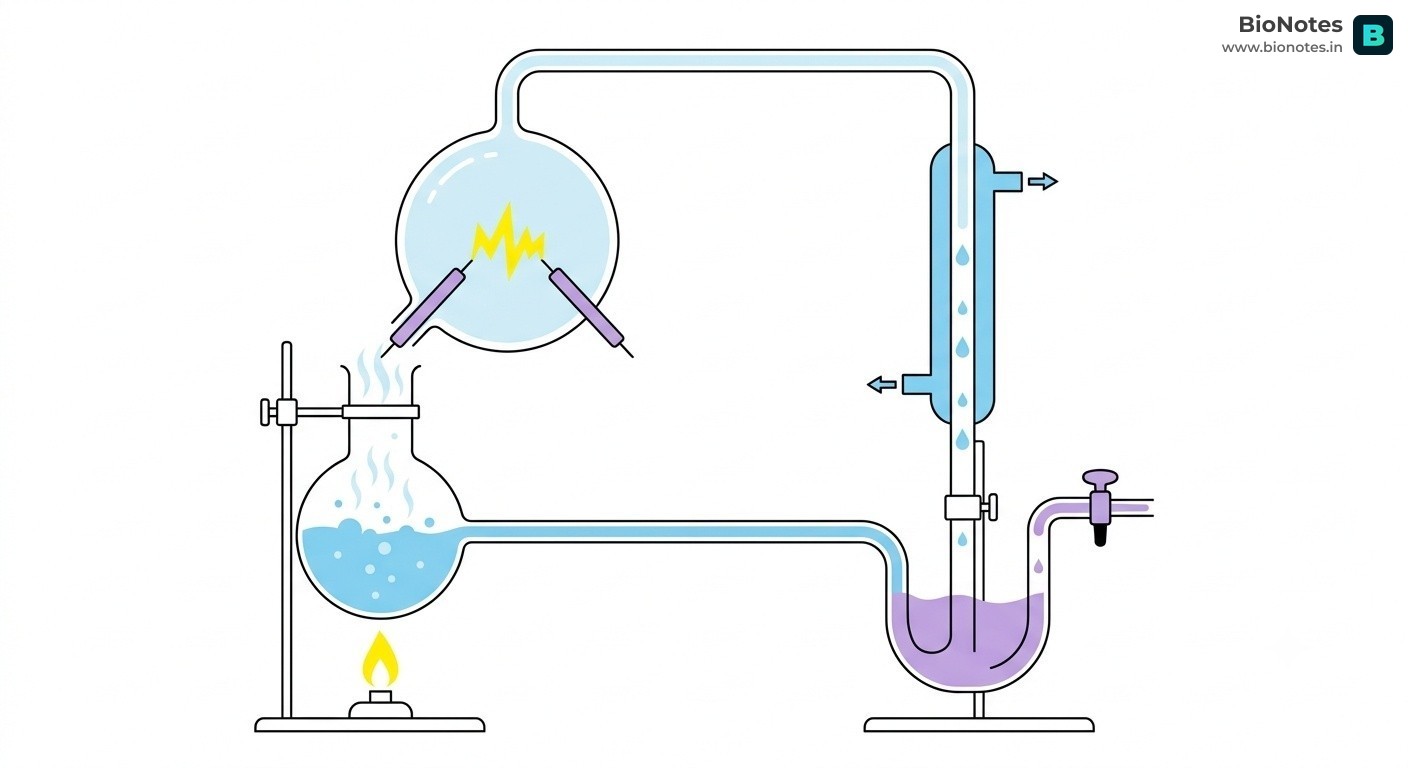
  • Miller’s Experiment (1953): S.L. Miller created similar conditions (electric discharge, 800°C) and observed the formation of amino acids, supporting chemical evolution.

Evolution of Life Forms - A Theory

  • Theory of Special Creation: Conventional religious belief (dismissed by scientific evidence).
  • Charles Darwin: Based on his voyage on H.M.S. Beagle, he concluded that existing life forms share similarities and common ancestors.
  • Natural Selection: Individuals with better adaptive characteristics (reproductive fitness) leave more progeny and are selected by nature.
  • Alfred Wallace: A naturalist who reached similar conclusions independently.

Evidences for Evolution

  • Paleontological Evidence: Study of fossils (remains of life forms in sedimentary rocks).
  • Comparative Anatomy and Morphology:
    • Homologous Organs: Same structure, different functions (e.g., forelimbs of humans, cheetahs, bats, and whales). Indicates divergent evolution and common ancestry.
    • Analogous Organs: Different structure, same function (e.g., wings of butterfly and birds, eye of octopus and mammals). Indicates convergent evolution.
  • Biochemical Evidence: Similarities in proteins and genes among diverse organisms.
  • Anthropogenic Action: Selection of resistant varieties due to herbicides, pesticides, or antibiotics.

Adaptive Radiation

The process of evolution of different species in a given geographical area starting from a point and radiating to other areas (habitats).

  • Darwin’s Finches: Varieties of birds in Galapagos Islands with different beaks adapted to different food sources.
  • Australian Marsupials: Diversity of marsupials evolving from a single ancestral stock in Australia.

Mechanism of Evolution

  • Lamarckism: Theory of use and disuse of organs (e.g., Giraffe's neck). Mostly dismissed.
  • Mutation Theory (Hugo de Vries): Believed that mutation (large, sudden change) is the cause of evolution. Coined the term saltation (single step large mutation).
  • Darwinian Variation: Small and directional; evolution is gradual.

Hardy-Weinberg Principle

States that allele frequencies in a population are stable and constant from generation to generation (Genetic Equilibrium).

  • Equation: p² + 2pq + q² = 1.
  • Factors affecting equilibrium: Gene migration, Genetic drift, Mutation, Genetic recombination, and Natural Selection.
  • Founder Effect: When a small group drifts from a population and becomes the founders of a new species.

A Brief Account of Evolution

  • First cellular life: ~2000 mya.
  • Invertebrates: ~500 mya.
  • Jawless fish: ~350 mya.
  • Dinosaurs: Dominated for 200 million years, disappeared ~65 mya.
  • First mammals: Like shrews.

Origin and Evolution of Man

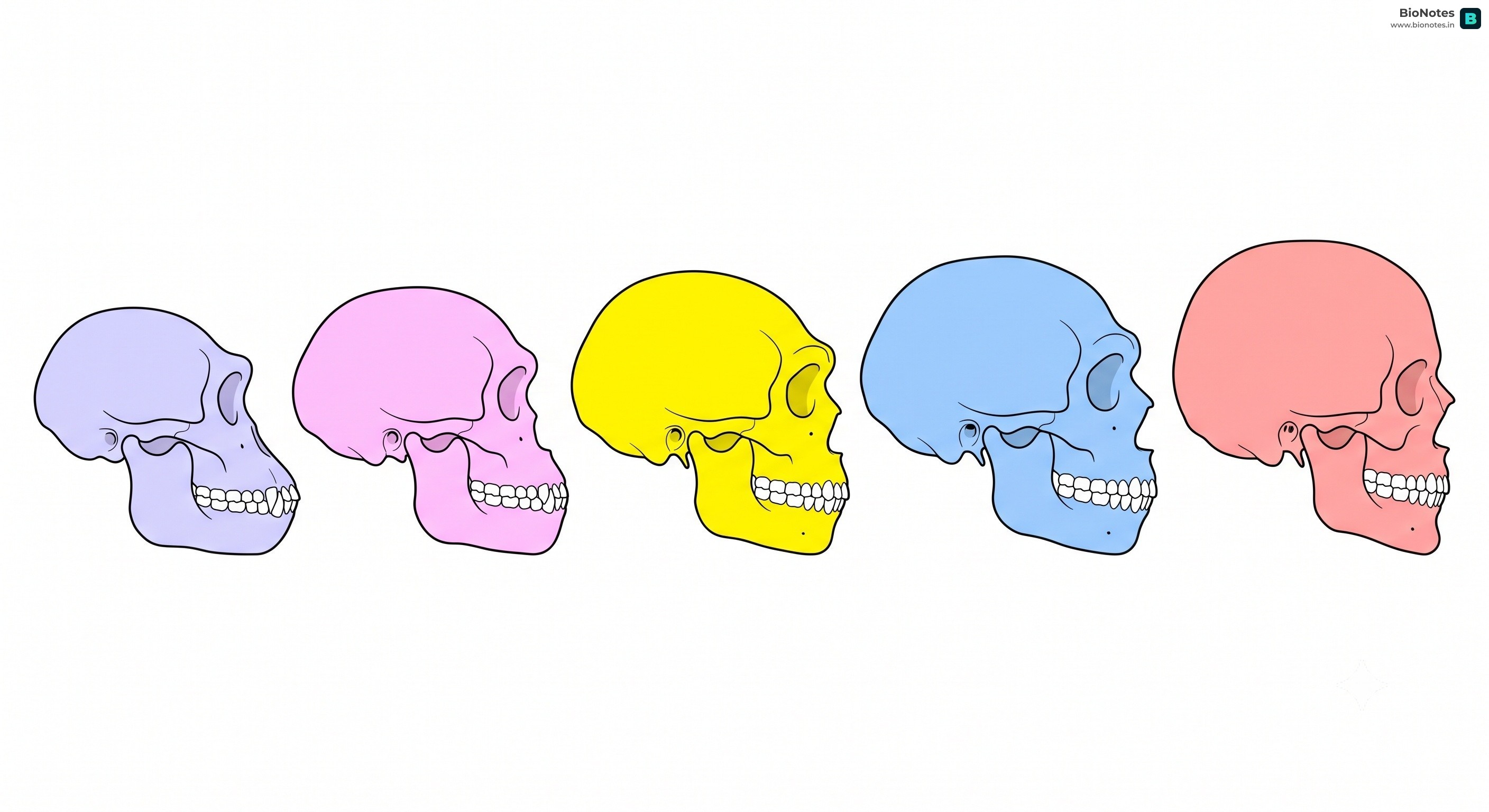
  1. Dryopithecus & Ramapithecus: ~15 mya (ape-like and man-like).
  2. Australopithecines: ~2 mya (walked upright, used stone weapons).
  3. Homo habilis: First hominid (650–800cc brain, did not eat meat).
  4. Homo erectus: ~1.5 mya (900cc brain, ate meat).
  5. Neanderthal Man: 1,00,000–40,000 years ago (1400cc brain, buried dead).
  6. Homo sapiens: Arose in Africa ~75,000–10,000 years ago (modern man).
Location:/CBSE/NCERT/Notes/Class_12_Biology/Chapter_06_Evolution.mdx

Created by Titas Mallick

Biology Teacher • M.Sc. Botany • B.Ed. • CTET Qualified • 10+ years teaching experience