BioNotes
CBSE/NCERT/Notes/Class_12_Biology

Biotechnology: Principles and Processes

Note on Biotechnology: Principles and Processes (Chapter 9)

Biotechnology: Principles and Processes

Key Concepts

Definition of Biotechnology

Techniques of using live organisms or enzymes from organisms to produce products and processes useful to humans.
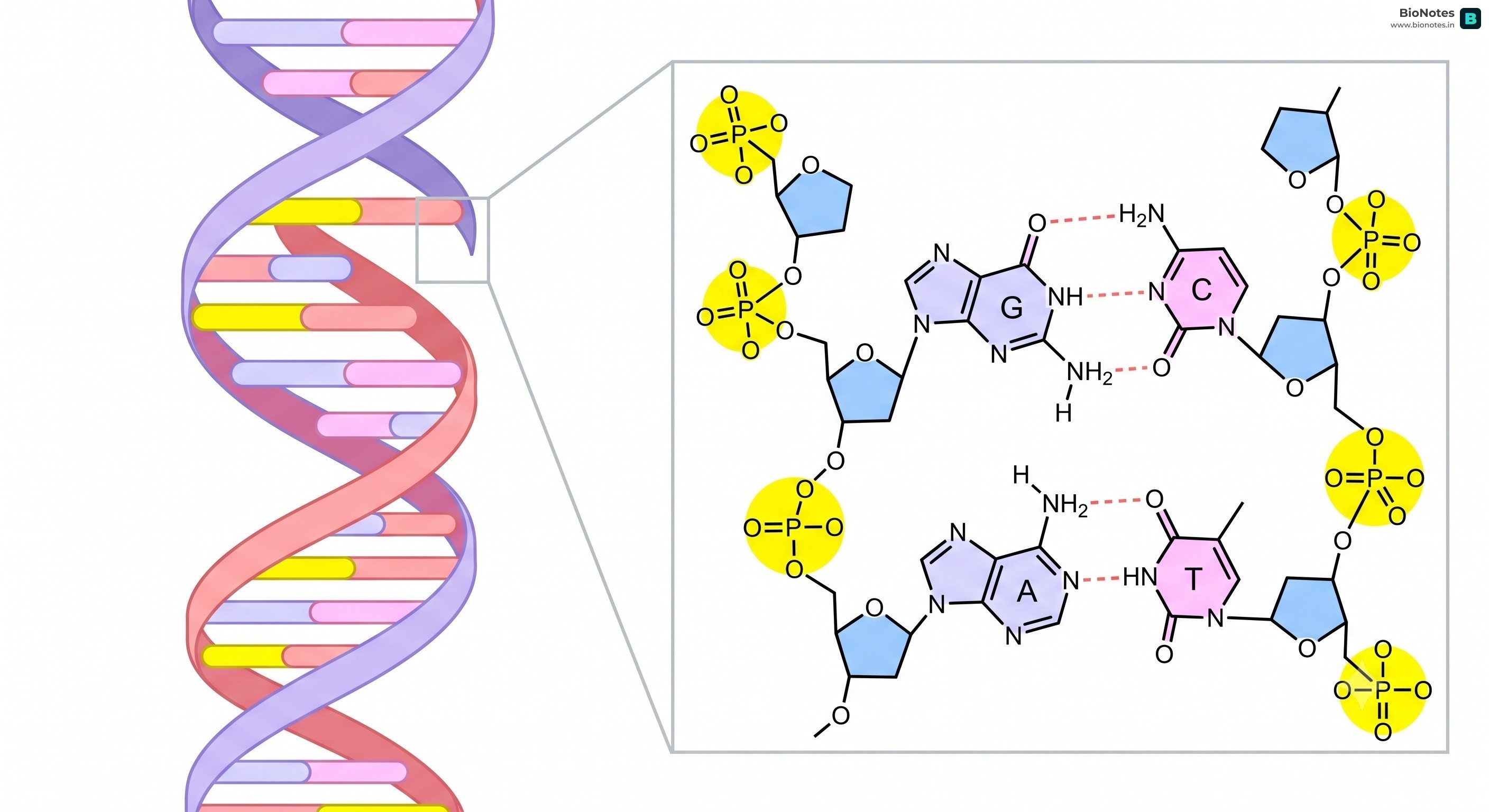
  • European Federation of Biotechnology (EFB) Definition: 'The integration of natural science and organisms, cells, parts thereof, and molecular analogues for products and services'.

Principles of Biotechnology

  1. Genetic Engineering: Techniques to alter the chemistry of genetic material (DNA and RNA) and introduce them into host organisms to change the phenotype.
  2. Bioprocess Engineering: Maintenance of sterile ambience to enable the growth of only desired microbes/cells in large quantities for products like vaccines and enzymes.

Tools of Recombinant DNA Technology

  1. Restriction Enzymes (Molecular Scissors):
    • Hind II: First restriction endonuclease isolated; cuts DNA at specific 6-bp recognition sequences.
    • Nomenclature: e.g., EcoRI (E = Escherichia, co = coli, R = RY13 strain, I = order of isolation).
    • Types: Exonucleases (remove nucleotides from ends) and Endonucleases (cut at specific positions within DNA).
    • Palindromes: DNA sequences that read the same on two strands in the 5'→3' direction.
    • Sticky Ends: Overhanging single-stranded portions that facilitate ligation.
  2. Cloning Vectors:
    • Plasmids and Bacteriophages are common vectors.
    • Features: Origin of replication (ori), Selectable markers (antibiotic resistance genes like ampR, tetR), and Cloning sites.
    • Insertional Inactivation: e.g., Inactivating β-galactosidase gene results in white colonies (recombinants) vs blue colonies (non-recombinants).
    • Vectors for Plants/Animals: Agrobacterium tumifaciens (Ti-plasmid) for plants and disarmed Retroviruses for animals.
  3. Competent Host:
    • Cells made competent by divalent cation treatment (e.g., Calcium) followed by heat shock (42°C).
    • Other methods: Micro-injection, Biolistics (Gene gun) using gold/tungsten particles.

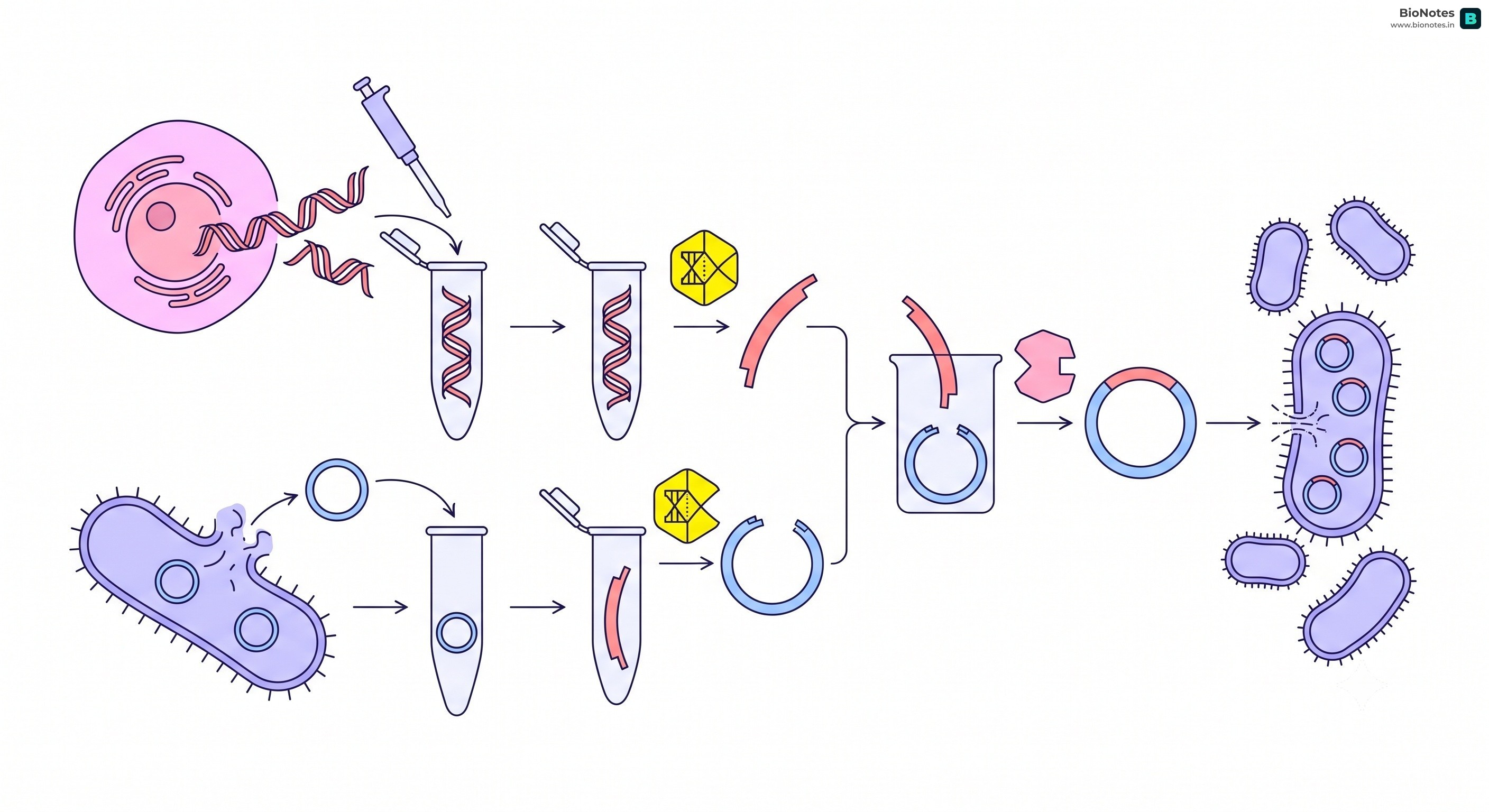
Processes of Recombinant DNA Technology

  1. Isolation of DNA: Breaking cells with enzymes (Lysozyme, Cellulase, Chitinase) and precipitating DNA with chilled ethanol.
  2. Fragmentation: Digestion with restriction enzymes.
  3. Separation: Gel Electrophoresis (DNA moves toward anode; smaller fragments move farther). DNA visualized with Ethidium Bromide and UV light. Elution is the extraction of DNA from gel.
  4. Amplification (PCR):
    • Denaturation: High temp (94°C) to separate strands.
    • Annealing: Primers bind to complementary regions.
    • Extension: Taq polymerase (thermostable) extends primers.
  5. Ligation: Joining gene of interest and vector using DNA Ligase.
  6. Transformation: Introducing recombinant DNA into the host.
  7. Large-scale Production:
    • Bioreactors: Large vessels (100–1000 L) providing optimal growth conditions (temp, pH, O2).
    • Stirred-tank Bioreactor: Facilitates mixing and aeration.
  8. Downstream Processing: Separation, purification, formulation with preservatives, and quality control testing before marketing.
Location:/CBSE/NCERT/Notes/Class_12_Biology/Chapter_09_Biotechnology_Principles_and_Processes.mdx

Created by Titas Mallick

Biology Teacher • M.Sc. Botany • B.Ed. • CTET Qualified • 10+ years teaching experience