Class 12
Created by Titas Mallick
Biology Teacher • M.Sc. Botany • B.Ed. • CTET (CBSE) • CISCE Examiner
 BioNotes
Created by Titas Mallick
Biology Teacher • M.Sc. Botany • B.Ed. • CTET (CBSE) • CISCE Examiner
Online
Note on Sexual Reproduction in Flowering Plants
Common Misconceptions
Watch Out! Plant reproduction is full of terminology traps. Watch out for these:
 www.bionotes.in
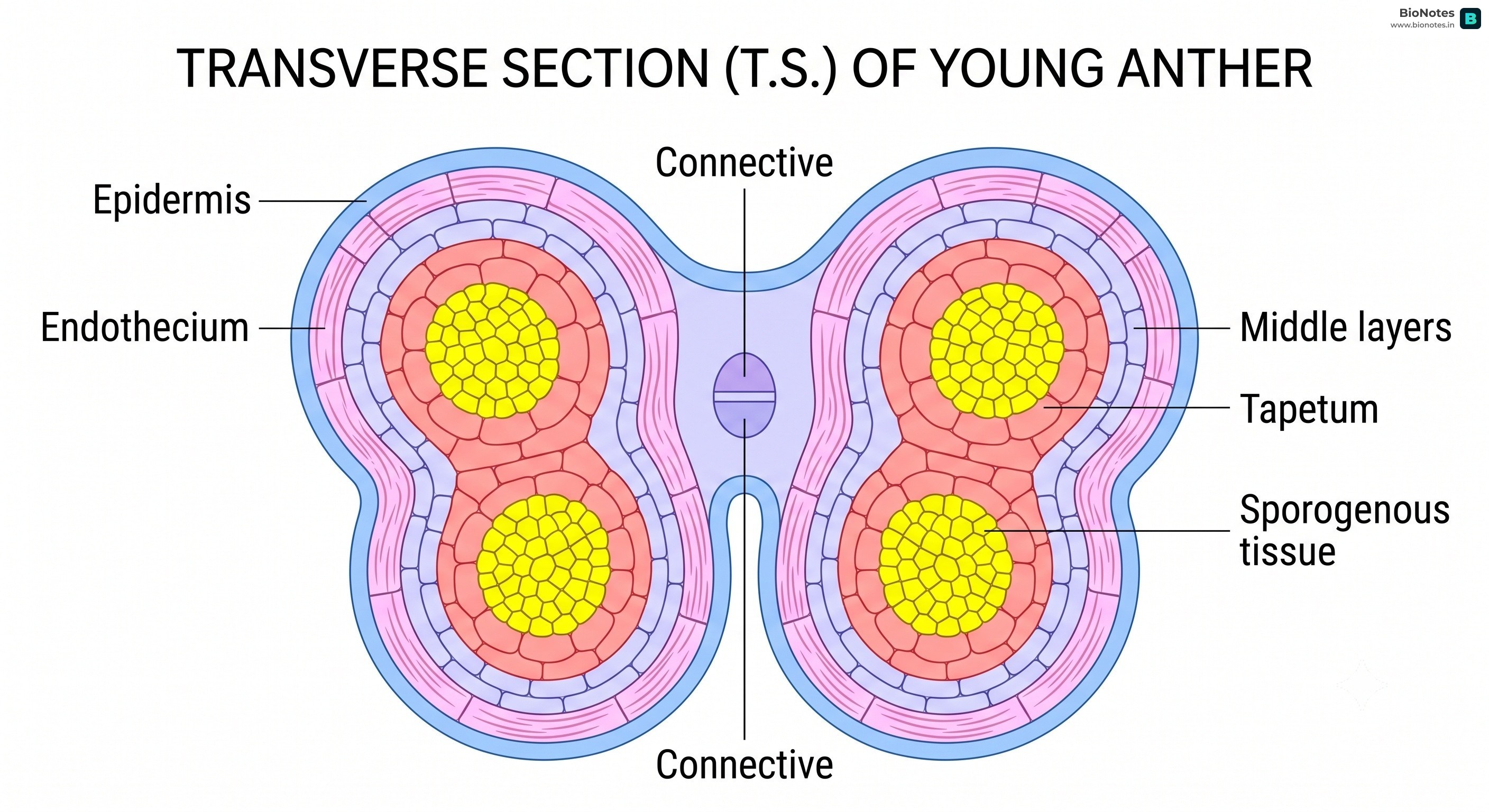
Microsporangium (Pollen Sac) Structure:
Microsporogenesis:
Pollen Grain Development:
Nature's Toughest Polymer Sporopollenin is so resistant that no known enzyme can degrade it! This allows pollen grains to survive for thousands of years in the soil and even become part of the fossil record.
 www.bionotes.in
 www.bionotes.in
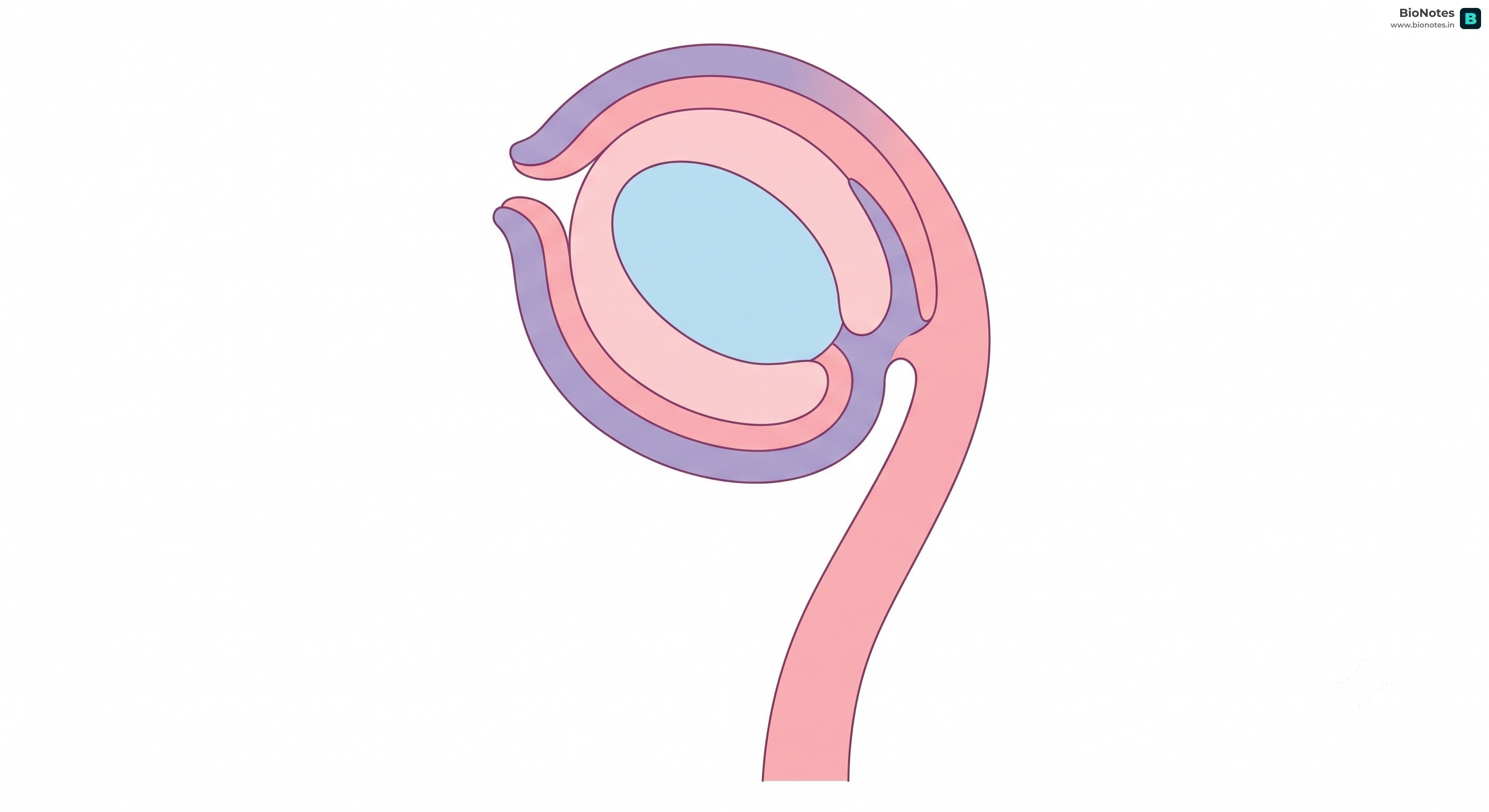
Ovule (Megasporangium) Structure (Anatropous):
Megasporogenesis:
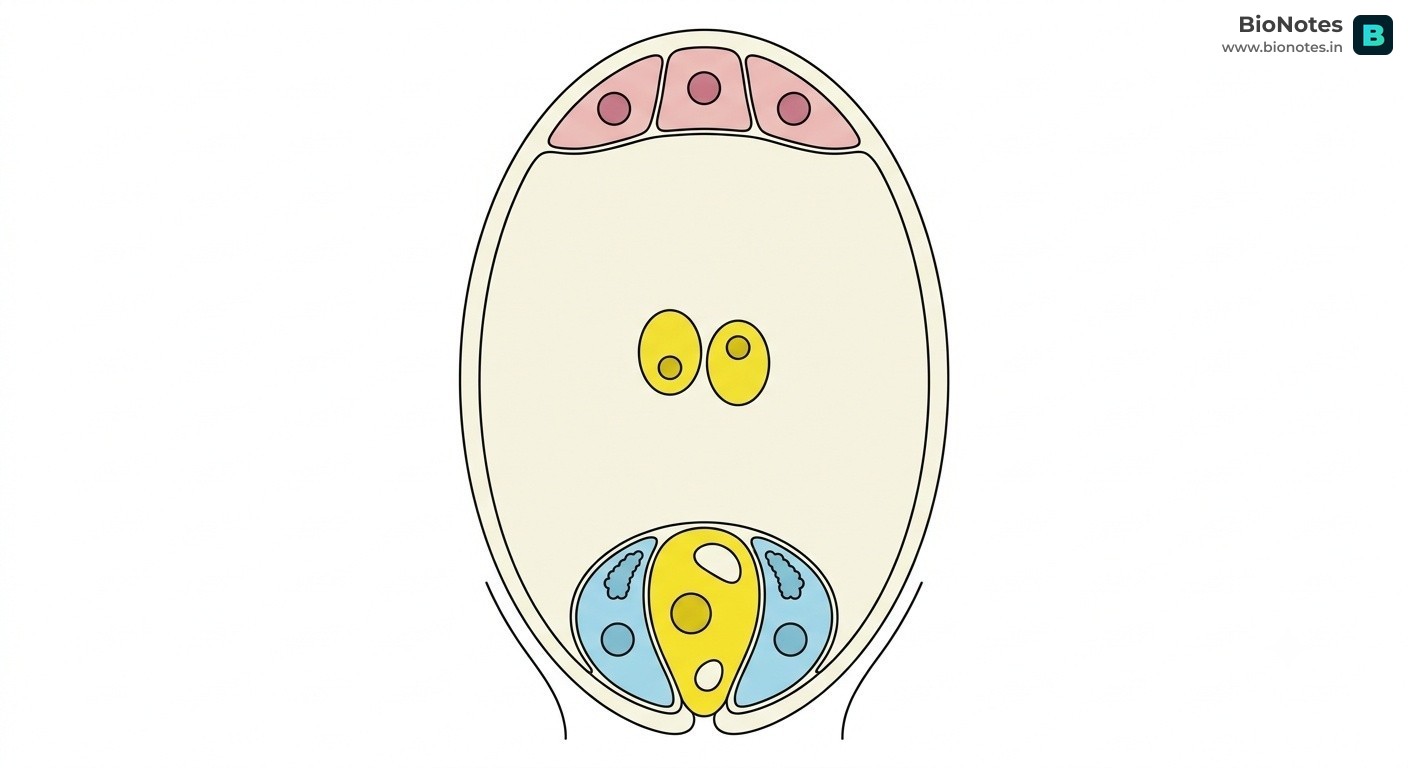
Embryo Sac Development (Monosporic Development - Polygonum Type):
Definition: The transfer of pollen grains from the anther to the stigma of a flower.
Types of Pollination:
Agents of Pollination:
Outbreeding Devices (Contrivances for Cross-Pollination): Mechanisms evolved by plants to discourage self-pollination and encourage cross-pollination, promoting genetic diversity.
Pollen-Pistil Interaction:
Artificial Hybridization:
Post-Fertilization Events: Changes in the flower after double fertilization, leading to the formation of seed and fruit.
Endosperm:
Embryo Development (Embryogeny):
Definition: The process of development of the embryo from the zygote.
Process: The zygote divides mitotically to form the embryo. The development of the embryo occurs at the micropylar end of the embryo sac where the zygote is situated.
Dicot Embryo Development:
Monocot Embryo Development:
Seed Formation:
Fruit Types:
Albuminous vs. Non-Albuminous Seeds:
Apomixis:
Parthenocarpy:
Polyembryony:
Seed Dispersal: The movement or transport of seeds away from the parent plant.
Fruit Dispersal: The movement or transport of fruits (which contain seeds) away from the parent plant.
Agents of Dispersal:
NGSS-HS-LS1-4AQA-ALevel-3.4.6IB-Biology-9.4