Introduction to the Immune System
Types of Immunity
Immune System Cells
The Genetics of Immunity
Major Histocompatibility Complex (MHC)
Organs of the Immune System
The Journey: Novel Virus Invasion and Immune Response
Memory and Future Protection
Clinical Applications
The immune system is your body's sophisticated defense network, designed to protect against harmful invaders like bacteria, viruses , parasites, and toxins. Think of it as a highly trained army with different specialized units working together to keep you healthy.
Recognition : Distinguish between "self" (your own cells ) and "non-self" (foreign substances)Response : Mount appropriate defensive actionsMemory : Remember past encounters for faster future responsesTolerance : Avoid attacking your own healthy tissues
What it is : Your first line of defense, present from birthSpeed : Responds within minutes to hoursSpecificity : Non-specific (attacks all invaders similarly)Memory : No memory of past encounters
Components:
Physical barriers (skin, mucous membranes)
Chemical barriers (stomach acid, antimicrobial proteins )
Cellular defenses (neutrophils, macrophages, NK cells)
What it is : Highly specific, learned responsesSpeed : Takes days to weeks to fully developSpecificity : Highly specific to particular antigensMemory : Creates lasting memory for future protection
Components:
Humoral immunity (antibodies from B cells)
Cell-mediated immunity (T cells)
Adaptive immunity consists of two main branches:
Cell-Mediated Immunity (CMI) - Direct cellular responsesHumoral Immunity - Antibody-mediated responses
Both work together to provide specific, long-lasting protection against pathogens.
Cell-mediated immunity involves direct cellular responses against antigens, primarily mediated by T lymphocytes. It does not involve antibodies but relies on cellular interactions to eliminate threats.
Location : Secondary lymphoid organs, tissuesFunction : Coordinate immune responsesSubtypes :
Th1 cells : Activate macrophages, promote cellular immunityTh2 cells : Help B cells, promote humoral immunityTh17 cells : Recruit neutrophils, fight extracellular bacteriaTfh cells : Help B cells in germinal centers
Location : Circulate in blood and lymph, migrate to tissuesFunction : Direct killing of infected, cancerous, or foreign cellsMechanism : Release perforin and granzymes, induce apoptosis
Location : Throughout the bodyFunction : Suppress excessive immune responsesImportance : Prevent autoimmunity, maintain tolerance
Location : Lymphoid tissues and circulationFunction : Rapid response upon re-exposure to antigensTypes : Central memory and effector memory T cells
Dendritic Cells : Primary activators of naive T cellsMacrophages : Process and present antigens, execute effector functionsB Cells : Present antigens to T helper cells
Intracellular Pathogen Elimination : Targets viruses, some bacteria, parasites inside cellsTumor Surveillance : Recognizes and eliminates cancerous cellsTransplant Rejection : Recognizes foreign tissue as non-selfDelayed-Type Hypersensitivity : Inflammatory responses to persistent antigensImmune Memory : Long-term protection through memory T cells
Antigen Recognition : T cells recognize processed antigens presented on MHC moleculesActivation : Requires two signals - antigen recognition and co-stimulationClonal Expansion : Activated T cells proliferate rapidlyDifferentiation : Develop into effector cells with specific functionsEffector Phase : Execute immune functions (killing, cytokine production)Memory Formation : Some cells become long-lived memory cells
Humoral immunity involves the production of antibodies by B lymphocytes that circulate in body fluids (humors) to neutralize extracellular pathogens and toxins.
Location : Bone marrow, spleen, lymph nodes, bloodFunction : Produce and secrete antibodiesDevelopment : Mature in bone marrow
Location : Bone marrow, lymphoid tissuesFunction : Antibody-secreting factoriesLifespan : Short-lived (days to weeks)
Location : Secondary lymphoid organs, circulationFunction : Rapid antibody production upon re-exposureLifespan : Long-lived (years to lifetime)
Interactive Diagram • study Mode
Study Quiz | Save Image | Save Diagram
www.bionotes.in
IgG : Most abundant in blood, crosses placentaIgM : First antibody produced, pentameric structureIgA : Secretory immunity (mucous membranes)IgE : Allergic reactions, parasitic infectionsIgD : B cell receptor, unknown circulating function
Function : Enhances antibody effectivenessComponents : C1-C9 proteinsActions : Cell lysis, opsonization, inflammation
Neutralization : Blocks pathogen binding to host cellsOpsonization : Marks pathogens for destruction by phagocytesComplement Activation : Triggers cascade leading to pathogen lysisAgglutination : Clumps pathogens for easier removalMucosal Protection : IgA protects body surfacesPassive Immunity : Maternal antibodies protect newborns
Antigen Recognition : B cells recognize native antigens via BCRHelper T Cell Interaction : T-dependent activation requires Th cell helpActivation and Proliferation : B cells expand clonallyClass Switching : Change antibody type while maintaining specificitySomatic Hypermutation : Increases antibody affinityDifferentiation : Become plasma cells or memory B cellsAntibody Secretion : Plasma cells produce specific antibodies
Aspect Cell-Mediated Immunity Humoral Immunity Primary Cells T lymphocytes B lymphocytes Effector Molecules Cytokines, cytotoxic granules Antibodies Target Location Intracellular pathogens Extracellular pathogens Recognition Method Processed antigens on MHC Native antigens directly MHC Requirement Essential (MHC I & II) Not required for recognition Antigen Processing Required Not required Memory Duration Long-term (years) Long-term (years) Speed of Response Slower (days) Faster (hours to days) Transfer Method Cannot be transferred Transferable via serum Main Functions Kill infected cells, activate macrophages Neutralize toxins, opsonize pathogens
CMI : Recognizes peptide fragments presented on MHC moleculesHumoral : Recognizes conformational epitopes on native antigens
CMI : Viruses, intracellular bacteria (TB, Listeria), fungi, tumors, transplanted tissuesHumoral : Bacteria, toxins, viruses (before cell entry), parasites
CMI :
Cytotoxic killing (perforin/granzyme)
Cytokine production (IFN-γ, TNF-α)
Macrophage activation
Humoral :
Neutralization
Complement activation
Opsonization
Antibody-dependent cellular cytotoxicity
CMI : Tissues, lymphoid organs, sites of infectionHumoral : Blood, lymph, secretions, extracellular spaces
CMI : Develops over 3-7 days, peaks at 1-2 weeksHumoral : Primary response 7-10 days, secondary response 2-3 days
Helper T cells activate both cytotoxic T cells and B cellsAntibodies can enhance T cell responses through opsonizationComplement activated by antibodies can enhance T cell activationMemory responses involve both T and B memory cells
Th1/Th2 balance determines CMI vs humoral dominanceRegulatory T cells control both responsesCytokine networks coordinate both arms
CMI defects : Increased susceptibility to viral, fungal infections (SCID, DiGeorge syndrome)Humoral defects : Increased bacterial infections (agammaglobulinemia, common variable immunodeficiency)
Live attenuated vaccines : Stimulate strong CMIInactivated/subunit vaccines : Primarily humoral responsesAdjuvants : Enhance both responses
Monoclonal antibodies : Harness humoral mechanismsCAR-T therapy : Engineered cell-mediated responsesImmunosuppression : Target specific arms for transplantation
Role : First responders to infectionPercentage : 50-70% of white blood cellsFunction : Engulf and destroy bacteria, release toxic substancesLifespan : Very short (hours to days)
Role : "Big eaters" - clean up debris and pathogensLocation : Found in tissues throughout the bodyFunctions :
Phagocytosis (eating pathogens)
Antigen presentation to T cells
Tissue repair
Cytokine production
Role : Professional antigen-presenting cellsFunction : Bridge between innate and adaptive immunityLocation : Skin, mucous membranes, lymph nodesSpecialty : Best at activating naive T cells
Role : Eliminate virus-infected and cancerous cellsMechanism : Detect cells with reduced MHC-I expressionFunction : Release cytotoxic granules to kill target cells
Role : Combat parasites and involved in allergic reactionsPercentage : 1-4% of white blood cellsFunction : Release toxic proteins against large parasites
Role : Allergic reactions and inflammationFunction : Release histamine and other inflammatory mediatorsLocation : Basophils in blood, mast cells in tissues
Originate in bone marrow, mature in thymus.
CD4+ T Cells (Helper T Cells)
Function : Orchestrate immune responsesSubtypes :
Th1 : Help fight intracellular pathogens (viruses, some bacteria)Th2 : Help fight extracellular parasites, involved in allergiesTh17 : Fight extracellular bacteria and fungiTreg : Suppress immune responses to prevent autoimmunity
CD8+ T Cells (Cytotoxic T Cells)
Function : Kill virus-infected cells, cancer cellsMechanism : Release perforin and granzymes to induce cell deathRecognition : Recognize antigens presented on MHC-I molecules
Origin : Bone marrowFunction : Produce antibodiesTypes :
Naive B cells : Haven't encountered antigen yetPlasma cells : Antibody-producing factoriesMemory B cells : Long-lived cells for rapid future responses
Function : Provide long-lasting immunityTypes : Memory T cells and Memory B cellsAdvantage : Respond faster and stronger to previously encountered antigens
Location : Heavy chains on chromosome 14, light chains on chromosomes 2 and 22Process : V(D)J recombination creates antibody diversityResult : Each B cell produces unique antibodies
Function : Allow T cells to recognize specific antigensDiversity : Created through similar recombination processes as antibodiesTypes : Alpha-beta TCRs (most common) and gamma-delta TCRs
Function : Control immune cell communicationExamples : Interleukins (IL-1, IL-2, etc.), interferons, tumor necrosis factorRegulation : Precisely controlled expression patterns
Function : Enhance ability to clear pathogensComponents : Over 30 proteins working in cascadePathways : Classical, alternative, and lectin pathways
Process : Random joining of gene segmentsResult : Creates millions of different antibodies and TCRsEnzymes : RAG1 and RAG2 proteins facilitate recombination
Process : B cells mutate their antibody genesTiming : Occurs during immune responsesResult : Higher affinity antibodies (affinity maturation)
Process : B cells change antibody type (IgM to IgG, IgA, or IgE)Trigger : Cytokine signals from helper T cellsResult : Antibodies with different effector functions
The MHC is a cluster of genes that encode proteins crucial for immune recognition. In humans, it's called Human Leukocyte Antigen (HLA) system.
Location : Found on all nucleated cellsStructure : Heavy chain + β2-microglobulin + peptideFunction : Present intracellular peptides to CD8+ T cellsGenes : HLA-A, HLA-B, HLA-CPeptide Source : Proteins from inside the cell (including viral proteins)
Location : Found on antigen-presenting cells (dendritic cells, macrophages, B cells)Structure : Alpha and beta chains + peptideFunction : Present extracellular antigens to CD4+ T cells
The Rule of 8
A simple way to remember MHC interactions:
MHC I × CD8 = 8
MHC II × CD4 = 8
If the product is 8, you've got the right match!
Genes : HLA-DR, HLA-DQ, HLA-DPPeptide Source : Proteins from outside the cell (phagocytosed material)
Self vs. Non-self Recognition : Helps immune system distinguish your cells from foreign cellsT Cell Education : Shapes T cell repertoire in the thymusTransplant Compatibility : MHC matching crucial for organ transplantsDisease Susceptibility : Certain HLA alleles associated with autoimmune diseasesMate Selection : May influence mate choice through odor preferences
Diversity : Most polymorphic genes in human genomeAdvantage : Population-level protection against diverse pathogensInheritance : Co-dominant expression (express both parental alleles)Evolution : Maintained by balancing selection
Function : Birthplace of all blood cells (hematopoiesis)B Cell Development : B cells complete maturation hereStem Cells : Contains hematopoietic stem cells
Function : T cell education and selectionLocation : Behind sternum, above heartProcess : Positive and negative selection of T cellsAge Changes : Shrinks with age (thymic involution)
Function : Filter lymph fluid, initiate immune responsesStructure : Cortex (B cells), paracortex (T cells), medulla (plasma cells)Location : Throughout body, concentrated in neck, armpits, groin
Function : Filter blood, remove old red blood cells, immune responsesStructure : White pulp (immune function), red pulp (blood filtering)Importance : Critical for fighting encapsulated bacteria
Examples : Tonsils, Peyer's patches, appendixFunction : Protect mucosal surfacesImportance : First line of defense at entry points
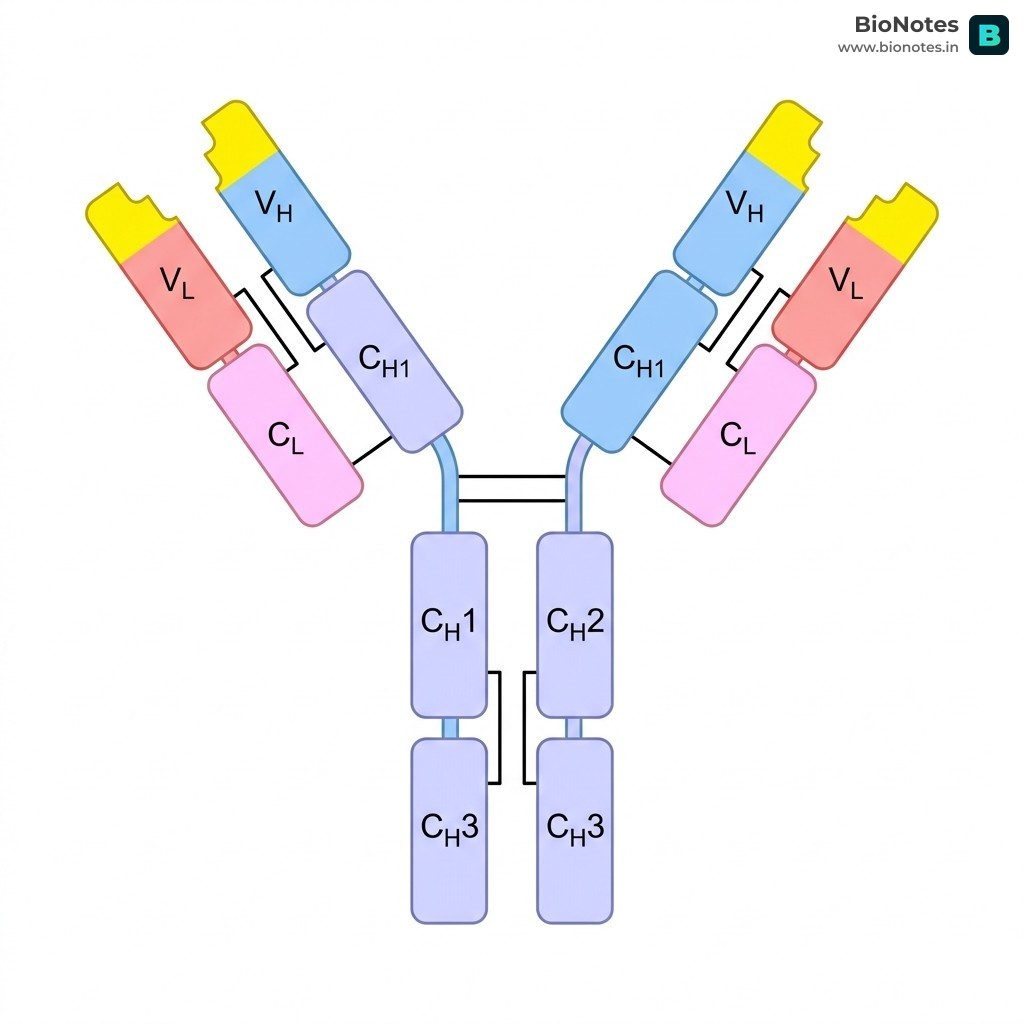
All immunoglobulins share a basic four-chain structure:
Two Heavy Chains (H) : Larger polypeptide chains (50-70 kDa each)Two Light Chains (L) : Smaller polypeptide chains (25 kDa each)Disulfide Bonds : Covalently link the chains togetherHinge Region : Provides flexibility between Fab and Fc regions
Fab Region (Fragment antigen-binding)
Contains variable domains (VH and VL)
Responsible for antigen recognition and binding
Each antibody has two identical Fab regions
Fc Region (Fragment crystallizable)
Contains constant domains of heavy chains
Responsible for effector functions
Binds to Fc receptors on immune cells
Variable Regions (V) : Highly variable amino acid sequences that determine antigen specificityConstant Regions (C) : Relatively conserved sequences that determine antibody class and functionComplementarity Determining Regions (CDRs) : Hypervariable regions within V domains that directly contact antigens
Structure and Properties:
Molecular weight: ~150 kDa
Heavy chain: γ (gamma)
Light chain: κ (kappa) or λ (lambda)
Subclasses: IgG1, IgG2, IgG3, IgG4
Half-life: 21 days (longest among all Ig classes)
Location and Distribution:
Most abundant antibody in serum (75-80% of total Ig)
Present in extravascular spaces
Can cross placental barrier (provides passive immunity to newborns)
Found in secondary lymphoid organs
Production:
Produced by plasma cells in bone marrow, lymph nodes, and spleen
Secondary immune response (memory response)
Requires T-cell help for class switching
Functions:
Neutralization of toxins and pathogens
Opsonization (marking pathogens for phagocytosis)
Complement activation (classical pathway)
Antibody-dependent cellular cytotoxicity (ADCC)
Clinical Significance:
Elevated in chronic infections, autoimmune diseases
Decreased in immunodeficiencies
Used in passive immunization therapies
Structure and Properties:
Molecular weight: ~970 kDa (pentameric structure)
Heavy chain: μ (mu)
Contains J chain that links pentameric units
Largest antibody molecule
Half-life: 5 days
Location and Distribution:
Primarily found in blood and lymphatic fluid
Cannot cross placental barrier
Constitutes 5-10% of total serum immunoglobulins
Production:
First antibody produced in immune response
Produced by plasma cells in lymphoid organs
Primary immune response
Can be produced without T-cell help (T-independent antigens)
Functions:
Most efficient complement activator
Agglutination of pathogens
First line of defense against bloodborne infections
Immune complex formation
Clinical Significance:
Elevated IgM indicates recent or acute infection
Used as marker for primary immune responses
Waldenstrom's macroglobulinemia involves IgM overproduction
Structure and Properties:
Molecular weight: ~160 kDa (monomeric), ~400 kDa (dimeric)
Heavy chain: α (alpha)
Subclasses: IgA1, IgA2
Contains secretory component in mucosal secretions
Half-life: 6 days
Location and Distribution:
Serum IgA: monomeric form (10-15% of total serum Ig)
Secretory IgA: dimeric form in mucosal secretions
Found in saliva, tears, breast milk, respiratory and GI tract secretions
Production:
Produced by plasma cells in mucosal-associated lymphoid tissue (MALT)
Requires cytokines like TGF-β for class switching
Secretory component added by epithelial cells
Functions:
Mucosal immunity (first line of defense at mucosal surfaces)
Prevents bacterial and viral attachment to epithelial cells
Neutralizes toxins and pathogens in secretions
Immune exclusion
Clinical Significance:
Selective IgA deficiency (most common immunodeficiency)
Elevated in liver disease, inflammatory bowel disease
Important in breast milk for infant protection
Structure and Properties:
Molecular weight: ~190 kDa
Heavy chain: ε (epsilon)
Lowest concentration in serum (<0.001% of total Ig)
Half-life: 2-3 days
High affinity for Fc receptors on mast cells and basophils
Location and Distribution:
Primarily bound to Fc receptors on mast cells and basophils
Very low levels in serum
Present in respiratory and GI tract mucosa
Production:
Produced by plasma cells in lymphoid tissues
Requires IL-4 and IL-13 for class switching
T-cell dependent response
Functions:
Protection against parasitic infections (especially helminths)
Mediates Type I hypersensitivity reactions (allergies)
Mast cell and basophil degranulation
Release of inflammatory mediators
Clinical Significance:
Elevated in allergic diseases, asthma, parasitic infections
Target for anti-allergy therapies (omalizumab)
Hyper-IgE syndrome
Structure and Properties:
Molecular weight: ~180 kDa
Heavy chain: δ (delta)
Highly susceptible to proteolytic degradation
Half-life: 3 days
Monomeric structure
Location and Distribution:
Low levels in serum (<1% of total Ig)
Primarily membrane-bound on naive B cells
Present in respiratory tract secretions
Production:
Expressed on surface of naive B cells as part of B-cell receptor
Produced by plasma cells in small amounts
Co-expressed with IgM on naive B cells
Functions:
B-cell activation and differentiation
Antigen recognition by naive B cells
May play role in mucosal immunity
Unclear definitive biological function
Clinical Significance:
Elevated in some autoimmune diseases
Multiple myeloma can involve IgD
Used as marker for B-cell maturation
Bone Marrow Phase:
Hematopoietic stem cells differentiate into pro-B cells
Heavy chain rearrangement occurs
Light chain rearrangement follows
Immature B cells express surface IgM
Peripheral Maturation:
Migration to secondary lymphoid organs
Co-expression of IgM and IgD
Antigen encounter and activation
Activation and Class Switching:
T-helper cell interaction
Cytokine signals determine class switching
Somatic hypermutation increases affinity
Differentiation into plasma cells or memory B cells
The process by which B cells change from producing IgM to other antibody classes:
Mechanism : DNA recombination involving switch regionsRegulation : Cytokines and co-stimulatory signalsIL-4/IL-13 : Switch to IgETGF-β : Switch to IgAIFN-γ : Switch to IgG subclasses
Humoral Immunity (Antibody-mediated):
Mediated by B cells and antibodies
Effective against extracellular pathogens
Involves complement activation
Provides immunological memory
Cellular Immunity:
Mediated by T cells
Effective against intracellular pathogens
Direct cell-to-cell contact
No antibody involvement
Specificity : Each antibody recognizes specific epitopesMemory : Secondary responses are faster and strongerDiversity : Billions of different antibodies possibleNeutralization : Direct inactivation of pathogens and toxinsComplement Activation : Cascade of immune reactionsOpsonization : Enhanced phagocytosisCross-protection : Some antibodies provide broad protection
Neutralization:
Blocking pathogen binding sites
Preventing infection of host cells
Inactivating bacterial toxins
Opsonization:
Coating pathogens for enhanced phagocytosis
Fc receptor recognition by phagocytes
Increased clearance efficiency
Complement Activation:
Classical pathway initiation
Formation of membrane attack complex
Enhanced inflammation and lysis
Antibody-Dependent Cellular Cytotoxicity (ADCC):
NK cell activation through Fc receptors
Direct killing of antibody-coated cells
Important in antiviral and antitumor responses
Immune complex formation
Antigen presentation enhancement
Regulation of immune responses
Maintenance of immune tolerance
Infection Diagnosis:
IgM: Acute infection
IgG: Past infection or immunity
IgA: Mucosal infections
Immunodeficiency Screening:
Quantitative immunoglobulin levels
Functional antibody responses
Specific antibody deficiencies
Autoimmune Disease Monitoring:
Autoantibody detection
Disease activity markers
Treatment response assessment
Passive Immunization:
Intravenous immunoglobulin (IVIG)
Specific hyperimmune globulins
Monoclonal antibody therapies
Immunomodulation:
Treatment of autoimmune diseases
Immunodeficiency replacement therapy
Anti-inflammatory effects
X-linked Agammaglobulinemia (XLA):
Absence of mature B cells
No antibody production
Recurrent bacterial infections
Common Variable Immunodeficiency (CVID):
Low IgG, IgA levels
Variable B-cell defects
Increased infection susceptibility
Selective IgA Deficiency:
Most common primary immunodeficiency
Increased mucosal infections
Often asymptomatic
Malnutrition
Chronic diseases
Immunosuppressive medications
Malignancies affecting B cells
Chronic infections
Autoimmune diseases
Liver disease
Multiple myeloma
Therapeutic applications in cancer, autoimmunity
Humanized and fully human antibodies
Antibody-drug conjugates
Bispecific antibodies
Single-chain variable fragments (scFv)
Nanobodies
Enhanced effector functions
Extended half-life variants
Individualized antibody therapy
Pharmacogenomics of antibody responses
Precision immunology approaches
Meet "NovelVirus-X" (NVX) - a completely new respiratory virus that humanity has never encountered. It's 10:30 AM, and you've just inhaled a single droplet containing 10,000 viral particles from an infected person's cough. Your immune system has no memory, no antibodies, no prepared defenses. This is biological warfare at its most fundamental level. Let's follow this microscopic battle step by step.
The droplet lands in your nasal passage, a warm, moist environment perfect for viral survival. But your body isn't defenseless.
The Mucus Trap:
The droplet encounters a thick layer of mucus containing antimicrobial proteins like lactoferrin and lysozyme
Secretory IgA antibodies (from previous bacterial encounters) float in the mucus but don't recognize NVX
Approximately 3,000 viral particles get trapped in mucus strands
Ciliary cells with hair-like projections beat rhythmically, moving trapped viruses toward your throat to be swallowed
Your stomach acid will destroy these captured viruses
The Breakthrough:
7,000 viral particles penetrate through the mucus layer
They encounter the epithelial cell surface of your respiratory tract
Each virus particle is spherical, about 100 nanometers across, with spike proteins protruding from its surface
The Lock and Key:
NVX spike proteins act as molecular keys, searching for their cellular lock - the ACE2 receptor on epithelial cells
A single epithelial cell has approximately 10,000 ACE2 receptors on its surface
When a viral spike protein binds to ACE2, it's like a key fitting into a lock
The binding triggers conformational changes in the spike protein
The viral membrane fuses with the cell membrane - like two soap bubbles merging
Inside the Cell:
The viral RNA genome (30,000 nucleotides long) is released into the cytoplasm
The cell's ribosomes mistake viral RNA for cellular mRNA
Translation begins immediately - the cell unknowingly starts producing viral proteins
Within 15 minutes, the first viral proteins appear in the infected cell
Pattern Recognition Receptors (PRRs) Activate:
Inside infected cells, RIG-I sensors detect unusual double-stranded viral RNA
This is like a smoke detector going off - RIG-I has never seen this particular RNA pattern before
The detection triggers a molecular cascade involving MAVS protein on mitochondria
Meanwhile, endosomal TLR7 receptors also detect single-stranded viral RNA
The Interferon Response:
Infected cells begin producing Type I interferons (IFN-α and IFN-β)
These are molecular "fire alarms" that scream "VIRAL INFECTION!"
The first IFN molecules are released 20 minutes after infection
They bind to interferon receptors on neighboring uninfected cells
This activates the JAK-STAT pathway in recipient cells
The Antiviral State:
Neighboring cells receive the interferon signal and immediately:
Upregulate antiviral proteins like PKR and 2'5'-OAS
Reduce protein synthesis to starve potential viruses
Increase MHC-I expression to display their contents to immune cells
Prepare for apoptosis if they become infected
Chemokine Release:
Infected epithelial cells release CXCL8 (IL-8), CCL2, and CCL5
These are molecular breadcrumbs that create a chemical gradient
The gradient acts like a highway directing immune cells to the infection site
Vascular Changes:
Local blood vessels receive inflammatory signals
Endothelial cells lining blood vessels begin expressing selectins (P-selectin, E-selectin)
Vessels dilate and become more permeable
Blood flow increases - you might feel slight warmth in your nasal area
Plasma proteins leak into tissues, causing mild swelling
The Rolling and Sticking:
Neutrophils in nearby capillaries detect the chemokine gradient
They begin "rolling" along blood vessel walls, slowing down due to selectin interactions
CXCL8 activates neutrophil integrins, causing firm adhesion to vessel walls
Neutrophils squeeze between endothelial cells (diapedesis) - imagine squeezing through a fence
The Search and Destroy:
50,000 neutrophils arrive at the infection site within 2 hours
Each neutrophil carries 200 cytoplasmic granules filled with antimicrobial proteins
They release neutrophil extracellular traps (NETs) - sticky DNA webs that can trap viruses
However, NVX is intracellular, so neutrophils have limited direct effect
Many neutrophils die in the process, creating pus (a mixture of dead neutrophils and tissue fluid)
The Awakening:
Tissue-resident macrophages (about 1,000 per lung region) detect interferons and inflammatory signals
They transform from a resting state to an activated, aggressive phenotype
Their size increases by 50%, and they develop more phagocytic capacity
Surface expression of MHC-II molecules increases 10-fold
The Clean-Up Crew:
Macrophages begin phagocytosing (eating) virus particles, infected cell debris, and dead neutrophils
Each macrophage can engulf 100 viral particles per hour
They produce nitric oxide and reactive oxygen species that destroy engulfed viruses
Most importantly, they process viral antigens for presentation to adaptive immune cells
The Quality Control:
NK cells circulating in blood are attracted to the infection site by chemokines
They use inhibitory receptors to scan cells for "healthy" signals
Normal cells display MHC-I molecules that tell NK cells "I'm healthy, don't kill me"
Virus-infected cells often downregulate MHC-I to avoid T cell recognition
The Execution:
NK cells recognize stressed or infected cells through activating receptors
They form immunological synapses with target cells
Release perforin proteins that create pores in target cell membranes
Inject granzyme proteases that trigger apoptosis in infected cells
A single NK cell can kill 5-10 infected cells per hour
The Sentinels Activate:
Immature dendritic cells in respiratory tissue detect the inflammatory environment
Danger signals (DAMPs and PAMPs) trigger their maturation program
They extend dendrites (arm-like projections) to sample their environment
Surface area increases 5-fold to maximize antigen capture
The Feast:
Dendritic cells engulf virus particles, infected cell fragments, and apoptotic bodies
They can process 1,000 different protein fragments simultaneously
Viral proteins are broken down in phagolysosomes by cathepsins and other proteases
Fragments are loaded onto MHC-I and MHC-II molecules
Following the Chemical Trail:
Mature dendritic cells downregulate tissue-retention signals
They upregulate CCR7, a receptor for lymph node-homing chemokines
The journey to the nearest lymph node begins via lymphatic vessels
Travel speed: approximately 1-5 micrometers per minute
Cargo Manifest:
Each dendritic cell carries:
10,000 MHC-I molecules displaying viral peptides
50,000 MHC-II molecules with processed viral fragments
Co-stimulatory molecules (CD80, CD86) for T cell activation
Cytokines stored in vesicles for immediate release
The Security Checkpoint:
Dendritic cells enter lymph nodes through afferent lymphatics
They migrate to T cell-rich paracortical areas
Position themselves at strategic locations where T cells pass by
Begin displaying their antigenic cargo like molecular billboards
The Waiting Game:
Each dendritic cell will interact with 5,000-10,000 different T cells
Most interactions last only seconds - no recognition, no activation
They're searching for the rare T cells with exactly the right receptor
Statistical probability: 1 in 100,000 T cells might recognize any given viral peptide
The Molecular Handshake:
A naive CD8+ T cell named "T-Alpha" slowly approaches a dendritic cell
T-Alpha's T cell receptor (TCR) scans the MHC-I molecules like reading barcodes
Suddenly - RECOGNITION! - T-Alpha's TCR perfectly fits a viral peptide from NVX spike protein
The binding affinity is perfect: KD = 10 μM (strong binding)
Signal 1 - Recognition:
TCR binding to peptide-MHC complex triggers intracellular signaling
CD3 proteins associated with TCR become phosphorylated
Calcium ions flood into the cell
T-Alpha stops moving and forms a stable contact with the dendritic cell
Signal 2 - Co-stimulation:
CD28 on T-Alpha binds to CD80/CD86 on the dendritic cell
This is the "permission to proceed" signal
Without this, T-Alpha would become anergic (unresponsive)
The dendritic cell releases IL-12, promoting Th1 differentiation
The Molecular Changes:
T-Alpha's metabolism shifts dramatically
Glucose uptake increases 20-fold to fuel rapid division
The cell grows from 6 μm to 12 μm in diameter
DNA synthesis begins as the cell prepares to divide
Signal 3 - Differentiation:
IL-12 from dendritic cells programs T-Alpha toward cytotoxic function
T-bet transcription factor is upregulated
Genes for perforin, granzymes, and IFN-γ are activated
The cell commits to becoming a killer T cell
The Population Explosion:
T-Alpha begins dividing every 8 hours
Day 3: 1 cell becomes 8 cells
Day 4: 64 cells
Day 5: 512 cells
Day 6: 4,096 identical "T-Alpha clone" cells
The Helper Response:
Similarly, CD4+ helper T cells recognizing different viral peptides activate
"Th-Beta" recognizes nucleocapsid protein fragments on MHC-II
Th-Beta clones produce IL-2, IFN-γ, and IL-21
These cytokines amplify the CD8+ response and help B cells
The Antibody Search:
In lymph node follicles, naive B cells display surface antibodies (BCRs)
B-cell "B-Gamma" has an antibody that weakly binds to NVX spike protein
Binding affinity is initially low (KD = 100 μM) but sufficient for activation
The T-B Cell Dance:
B-Gamma presents spike protein fragments on MHC-II molecules
Th-Beta recognizes these fragments and provides help
CD40L on Th-Beta binds CD40 on B-Gamma - the "license to proliferate"
IL-4 and IL-21 from Th-Beta trigger B-Gamma's activation program
The Training Ground:
Activated B cells migrate to lymph node follicles
They form germinal centers - specialized structures for antibody improvement
Two zones form: dark zone (proliferation) and light zone (selection)
The Improvement Process:
In the dark zone, B cells undergo rapid division (every 6 hours)
Activation-induced cytidine deaminase (AID) introduces random mutations
Mutations occur at 10,000 times the normal rate in antibody genes
Most mutations are harmful, but some improve binding to NVX
Selection Pressure:
In the light zone, follicular dendritic cells display viral antigens
B cells with improved antibodies bind more antigen
These "winners" receive survival signals from helper T cells
B cells with worse antibodies undergo apoptosis
The Army Mobilizes:
100,000 activated CD8+ T cells exit lymph nodes
They express tissue-homing receptors matching the infection site
CXCR3 and CCR5 guide them toward infected lung tissue
Travel time from lymph node to lungs: 6-12 hours
First Antibodies Appear:
Early plasma cells begin producing IgM antibodies
Each plasma cell secretes 2,000 antibodies per second
Initial antibodies have moderate affinity (KD = 50 μM)
They're pentameric (five units joined) for high avidity binding
Target Identification:
CD8+ T cells scan lung epithelial cells using their TCR
Infected cells display viral peptides on MHC-I molecules
Perfect match detected! T cell forms immunological synapse
Contact time: 6-10 minutes per target cell
The Execution Protocol:
Cytotoxic granules move toward the contact site
Perforin molecules insert into target cell membrane like molecular drills
Granzyme B enters through perforin pores and cleaves caspase-3
Target cell undergoes apoptosis within 30 minutes
Viral replication stops immediately
The Serial Killer:
Each CD8+ T cell can kill 5-10 infected cells per day
After each kill, the T cell detaches and searches for new targets
Degranulation and regranulation cycle takes 2-4 hours
Dead infected cells are rapidly cleared by macrophages
Class Switching:
B cells in germinal centers receive IL-4 signals
They switch from producing IgM to IgG antibodies
IgG has better tissue penetration and longer half-life
Fc regions can activate complement and immune cells
Affinity Maturation:
Continuous cycles of mutation and selection
Antibody affinity improves 100-1000 fold
Final KD values reach 0.1-1 nM (extremely tight binding)
High-affinity clones dominate the response
The Molecular Shield:
High-affinity IgG antibodies coat viral particles
They bind to spike proteins and prevent cellular attachment
Virus particles become neutralized - unable to infect new cells
Each antibody can neutralize 1-2 viral particles
Complement Activation:
Antibody-coated viruses activate classical complement pathway
C1q binds to antibody Fc regions
Complement cascade generates C3b opsonins and C5-9 membrane attack complex
Viruses are marked for destruction and directly lysed
The Tide Turns:
Viral load peaks at day 5-7, then rapidly declines
Combination of CTLs and neutralizing antibodies overwhelm virus
Infected cells are eliminated faster than virus can spread
Tissue damage is minimized by rapid clearance
Resolution of Inflammation:
Anti-inflammatory signals (IL-10, TGF-β) increase
Neutrophil recruitment stops
Macrophages switch to healing phenotype (M2)
Tissue repair begins with fibroblast activation
Programmed Death:
90-95% of activated immune cells undergo apoptosis
This prevents excessive inflammation and autoimmunity
Process is mediated by reduced IL-2 and increased death signals
Only the "fittest" cells survive
Selection for Memory:
Cells with optimal TCR/BCR affinity are preferentially saved
Those receiving appropriate survival signals become memory cells
Location imprinting occurs - lung-resident memory T cells form
Approximately 5-10% of activated cells survive as memory
Memory T Cell Subsets:
Central Memory T Cells (TCM):
Migrate to lymph nodes and spleen
Express CCR7 and CD62L (lymphoid homing receptors)
Function: Rapid proliferation upon reencounter
Numbers: 10,000 NVX-specific TCM cells remain
Effector Memory T Cells (TEM):
Circulate in blood and peripheral tissues
Lack CCR7 but express tissue-homing receptors
Function: Immediate effector functions
Numbers: 5,000 NVX-specific TEM cells
Tissue-Resident Memory T Cells (TRM):
Permanently reside in lung tissue
Express CD103 and CD69 (tissue retention markers)
Function: Fastest response to reinfection at original site
Numbers: 2,000 cells strategically positioned in respiratory tract
The Survivors:
High-affinity B cells from germinal centers become memory B cells
They carry the "improved" antibodies from affinity maturation
Surface IgG instead of IgM for faster, stronger responses
Numbers: 1,000 high-affinity memory B cells specific for NVX
Long-lived Plasma Cells:
A subset of plasma cells migrates to bone marrow
They establish residence in specialized survival niches
Produce low levels of anti-NVX antibodies continuously
Lifespan: Years to decades without requiring antigen stimulation
Circulating Antibodies:
Bone marrow plasma cells maintain detectable anti-NVX antibodies
Levels: 1:100-1:500 serum dilution still neutralizes virus
Half-life of IgG: 21 days, continuously replenished
Cross-reactive antibodies may recognize variant viruses
Tissue Surveillance:
TRM cells patrol respiratory tract indefinitely
They survey epithelial cells for viral peptide presentation
Position themselves at entry points (nasal passages, bronchi)
Can detect infection within hours of reexposure
Rapid Recognition (Hours 1-6):
TRM cells immediately recognize infected cells
No lag time - memory cells are pre-activated and ready
They begin producing IFN-γ within 2 hours
Local inflammatory response is faster and more controlled
Memory Activation (Days 1-3):
Memory B cells recognize viral antigens with high affinity
They rapidly differentiate into plasma cells (24-48 hours)
Antibody production begins within 2 days vs. 7-14 for primary response
Antibody levels reach 10-100 times higher than primary response
Enhanced Clearance (Days 2-5):
High-affinity antibodies neutralize virus more effectively
Memory T cells expand rapidly - doubling time of 4-6 hours
Viral clearance occurs before significant symptoms develop
Total immune response duration: 5-7 days vs. 14-21 for primary
Molecular Memory:
Memory cells may recognize conserved epitopes in viral variants
Cross-reactive responses provide partial protection
Even if illness occurs, it's typically milder and shorter
Epitope spreading may broaden recognition over time
Initial exposure : 10,000 particlesPeak infection (Day 5-7): 10^8-10^9 particles/ml respiratory secretionsClearance phase (Days 10-14): 99.9% reduction every 2-3 daysResolution (Day 14-21): Below detection limits
Neutrophils : Peak 100,000 at infection site (Day 1-2)Dendritic cells : 500-1,000 migrate to lymph nodesNaive T cells screened : 10-50 million in lymph nodeActivated clones : 10,000-100,000 specific T cellsPlasma cells : 1,000-10,000 producing antibodiesMemory cells formed : 10,000 T cells, 1,000 B cells
Time to first antibodies : 7-10 days (IgM)Peak antibody levels : Day 14-21 (IgG)Affinity improvement : 100-1000 fold increaseNeutralization titer : 1:100-1:10,000 dilutionDuration : Detectable for years
This intricate dance of cellular interactions, molecular recognition, and immune memory formation represents one of biology's most remarkable achievements - the ability to learn, remember, and protect against virtually any pathogen nature can create.
The Villain: NovelVirus-X (NVX)
Size : 120 nanometers in diameter (1/1000th the width of a human hair)Genome : Single-strand positive-sense RNA, 29,891 nucleotides longSurface : 100-200 spike proteins protruding like molecular crownsMission : Hijack human cells to replicate and spreadWeakness : Has never encountered human immune defenses
The Setting : Your respiratory tract on a Tuesday morning at 10:47 AM
The Stakes : Your life and the future immunity of your species
The Moment of Contact:
You're standing in a coffee shop when someone 2 meters away coughs. A single respiratory droplet, 5 micrometers in diameter, travels through the air at 10 meters per second. It contains:
10,247 NovelVirus-X particles
500,000 water molecules
50,000 salt ions (Na+, Cl-)
1,000 protein molecules from the infected person's saliva
100 bacteria (normal oral flora)
The droplet enters your left nostril at coordinates approximately 2cm deep from the nasal opening, impacting the respiratory epithelium at a temperature of 37°C and pH 7.4.
The Biological Trap:
Your nasal mucus is a complex hydrogel, 97% water and 3% mucins - massive glycoproteins with molecular weights of 0.5-20 million Daltons. The mucus layer is 10-15 micrometers thick, constantly moving at 1-2 cm per minute toward your throat.
Molecular Interactions:
Mucin MUC5AC molecules form net-like structures with mesh sizes of 50-200 nanometersNVX particles (120nm diameter) are too large to pass through most mesh openingsPhysical entanglement : 3,847 viral particles become physically trappedElectrostatic interactions : Negatively charged mucins interact with viral surface proteins
The Antimicrobial Arsenal in Mucus:
Lactoferrin (80 kDa protein): 10^6 molecules/mL, binds iron and has antiviral propertiesLysozyme (14 kDa): 10^5 molecules/mL, cleaves peptidoglycan (ineffective against viruses but part of general defense)Secretory IgA (385 kDa): 10^4 molecules/mL, dimeric antibodies from previous exposures
These IgA molecules scan viral surfaces for familiar epitopes
RESULT : No recognition - NVX is completely novel
Defensins (3-5 kDa): Small antimicrobial peptides at 10^3 molecules/mLSurfactant proteins A and D : Collect viral particles for removal
Ciliary Clearance:
Ciliated epithelial cells : Each cell has 200-300 cilia, each 6 micrometers longBeat frequency : 1,000 times per minute (16.7 Hz)Coordinated wave motion : Creates upward flow at 1-2 cm/minuteTrapped particles : 3,847 viral particles begin journey toward throatDestination : Stomach acid (pH 1.5-2.0) will denature these viruses
The Survivors:
Remaining viral load : 6,400 particles penetrate mucus barrierMechanism : Combination of viral enzymes and random Brownian motionViral neuraminidase : Some viruses carry enzymes that cleave mucin sialic acidsPenetration rate : 50 viral particles per second reach epithelial surface
First Cellular Contact:
The respiratory epithelium consists of:
Ciliated cells (60%): 4×10^6 cells/cm² with ACE2 receptorsGoblet cells (20%): Produce mucus, fewer receptorsBasal cells (15%): Stem cells with moderate receptor densityClub cells (5%): Specialized cells with high ACE2 expression
The Receptor Hunt:
Each NVX spike protein is searching for its cellular receptor - Angiotensin Converting Enzyme 2 (ACE2):
ACE2 structure : 805 amino acid protein, 90 kDa molecular weightExpression level : 10^4 receptors per epithelial cellReceptor density : 1,000 receptors per μm² of cell surfaceBinding domain : Amino acids 19-615 form the viral binding site
The Binding Event - Molecular Level:
At 0:23:15 (23 minutes, 15 seconds), the first successful binding occurs:
Viral Spike Protein Receptor Binding Domain (RBD):
Amino acids 319-541 of the spike proteinKey residues : Tyr453, Leu455, Phe486, Asn501, Tyr505Surface area : 1,700 Ų (square angstroms)
ACE2 Binding Interface:
Key residues : Lys31, Glu35, Asp38, Lys353, Asp355Hydrogen bonds : 14 direct bonds form between RBD and ACE2Salt bridges : 2 ionic interactions stabilize bindingVan der Waals forces : 156 contact points provide additional stability
Binding Kinetics:
Association rate (kon) : 3.8 × 10^5 M^-¹s^-¹Dissociation rate (koff) : 8.2 × 10^-³ s^-¹Binding affinity (KD) : 21.6 nM (very strong binding)Binding half-life : 84 seconds
Conformational Changes:
Upon ACE2 binding, the spike protein undergoes dramatic structural changes:
S1 subunit (receptor binding): Rotates 52° upwardS2 subunit (fusion machinery): Extends fusion peptideHinge region : Amino acids 685-692 act as molecular hingeEnergy release : 85 kcal/mol drives conformational change
Membrane Fusion Process:
Fusion peptide insertion (seconds 0-15):
22-amino acid hydrophobic sequence inserts into cell membrane
Creates initial contact between viral and cellular membranes
Membrane curvature changes from 0° to 15°
Pre-hairpin intermediate (seconds 15-45):
Viral membrane pulls closer to cellular membrane
Distance decreases from 150Å to 50Å
HR1 and HR2 regions begin to interact
Hairpin formation (seconds 45-90):
Six-helix bundle formation
540° rotation of fusion machinery
Membranes forced into contact
Pore formation (seconds 90-120):
Initial fusion pore: 2-3 nm diameter
Rapid expansion to 10-20 nm
Viral contents begin entering cell
The Moment of Infection:
At minute 0:43:22, the first viral genome crosses into the cellular cytoplasm:
RNA genome size : 29,891 nucleotidesGenome weight : 3.2 × 10^-¹⁵ gramsEntry speed : 1,000 nucleotides per secondComplete entry time : 30 seconds
Uncoating Process:
Nucleocapsid protein : 419 amino acids, molecular weight 45.6 kDaRNA binding : Each N protein binds 10-12 nucleotidesUncoating trigger : Cellular proteases and pH changesRelease kinetics : 5,000 nucleotides per minute become available
The First Translation:
At minute 52:33, cellular ribosomes encounter viral RNA:
Ribosome binding site : 5' untranslated region (265 nucleotides)Translation initiation : eIF4F complex recognizes 5' capFirst protein : ORF1a polyprotein (4,405 amino acids)Translation rate : 15 amino acids per secondCompletion time : 4.9 minutes for first polyprotein
Innate Immune Sensors Activate:
RIG-I (Retinoic acid-Inducible Gene I) Detection:
Location : Cytoplasm of infected cellTarget : Viral dsRNA intermediates (formed during replication)Molecular weight : 106 kDaDomains :
Helicase domain (amino acids 229-925)
C-terminal domain (amino acids 926-925)
CARD domains (amino acids 1-228)
The Detection Event (Minute 67:45):
dsRNA length detected : 500-2000 base pairsBinding affinity : KD = 20 nM for viral dsRNAConformational change : ATP hydrolysis (7.4 kcal/mol) powers conformational shiftCARD domain exposure : Allows interaction with MAVS protein
MAVS (Mitochondrial Antiviral Signaling) Activation:
Location : Outer mitochondrial membraneMolecular weight : 57 kDaOligomerization : Forms helical filaments upon activationSignal amplification : Each MAVS filament can activate 100 IRF3 molecules
TLR7 Endosomal Detection (Minute 72:12):
Location : Endosomal membranesRecognition : Single-stranded viral RNABinding specificity : GU-rich sequences (common in viral genomes)Leucine-rich repeats : 27 LRRs form horseshoe-shaped recognition domainDimerization : Two TLR7 molecules form functional complex
IRF3 (Interferon Regulatory Factor 3) Activation:
Phosphorylation sites : Ser396, Ser398, Ser402, Thr404, Ser405Kinase responsible : TBK1 (TANK-binding kinase 1)Phosphorylation energy : 30.5 kJ/mol per phosphate groupDimerization : Phosphorylated IRF3 forms homodimersNuclear translocation : 15 minutes for maximum nuclear accumulation
Type I Interferon Gene Transcription:
At minute 98:33, the first IFN-β mRNA is produced:
Promoter elements :
IRF-E (IRF binding element): -77 to -55 bp upstream
NF-κB site: -64 to -55 bp upstream
AP-1 site: -47 to -41 bp upstream
RNA Polymerase II : Recruited with elongation rate of 25 bp/secondmRNA length : 1,809 nucleotidesTranscription time : 72 seconds
Protein Synthesis:
Translation initiation : Minute 101:15IFN-β protein : 187 amino acids, molecular weight 22 kDaSynthesis rate : 8 amino acids per secondFirst complete protein : Minute 101:38Secretion time : 15 minutes for processing and export
Interferon Release and Diffusion:
At minute 116:45, first IFN-β molecules are released:
Initial concentration : 10^-¹² M in immediate vicinityDiffusion coefficient : 1.1 × 10^-⁶ cm²/s in tissueDiffusion distance : 50 micrometers in first hourTarget cells : 200 neighboring epithelial cells within range
Interferon Receptor Binding:
IFNAR1 subunit : 557 amino acids, 50 kDaIFNAR2 subunit : 515 amino acids, 55 kDaBinding affinity : KD = 10^-⁹ M for IFN-βReceptor density : 500-1,000 per cellBinding kinetics : 90% occupancy in 20 minutes
JAK-STAT Pathway Activation:
JAK1 activation (Minute 122:30):
Autophosphorylation on Tyr1022 and Tyr1023
ATP consumption: 30.5 kJ/mol per phosphorylation
Conformational change exposes catalytic site
TYK2 activation (Minute 122:45):
Phosphorylation on Tyr1054 and Tyr1055
Cross-phosphorylation with JAK1
Formation of active kinase complex
STAT1 recruitment and phosphorylation (Minute 123:15):
Phosphorylation on Tyr701
SH2 domain-mediated dimerization
Nuclear translocation signal exposed
STAT2 phosphorylation (Minute 123:30):
Phosphorylation on Tyr690
IRF9 recruitment forms ISGF3 complex
Nuclear import via importin-α
Antiviral Gene Expression:
By minute 150, interferon-stimulated genes (ISGs) are being transcribed:
PKR (Protein Kinase R):
Upregulation : 50-fold increase in mRNAProtein function : Phosphorylates eIF2α, shutting down translationTarget : dsRNA structures (viral replication intermediates)
2'-5'-Oligoadenylate Synthetase (OAS):
Upregulation : 100-fold increaseEnzymatic activity : Synthesizes 2'-5' oligoadenylatesDownstream effect : Activates RNase L to degrade viral RNA
MX1 (Myxovirus resistance protein 1):
Upregulation : 200-fold increaseMechanism : GTPase that interferes with viral replicationCellular location : Cytoplasm and perinuclear region
CXCL8 (IL-8) Production:
Infected cells begin massive chemokine production:
Gene location : Chromosome 4q13-q21mRNA half-life : 2 hours (stabilized by ARE-binding proteins)Protein size : 72 amino acids, 8 kDaSecretion rate : 1,000 molecules per cell per minuteGradient formation : Exponential decay with distance (r^-²)
CCL2 (MCP-1) Release:
Protein structure : 76 amino acids with characteristic CC motifReceptor : CCR2 on monocytes and T cellsAffinity : KD = 0.1 nM for CCR2Biological activity : Induces calcium flux in target cells
Vascular Permeability Changes:
Endothelial gap formation : 0.1-1 μm spaces between cellsProtein leakage : Albumin (66 kDa) begins extravasatingFluid accumulation : 0.1 mL additional fluid per gram tissuePressure changes : Interstitial pressure increases by 5 mmHg
Neutrophil Rolling Phase:
In nearby capillaries (50-100 μm from infection):
Selectin expression : P-selectin appears on endothelium within 5 minutesRolling velocity : Decreases from 1000 μm/s to 50 μm/sContact frequency : 10-20 brief contacts per neutrophil per minuteShear stress : 2-5 dynes/cm² in capillaries
Firm Adhesion:
CXCL8 binding : Neutrophil CXCR1/CXCR2 receptors (KD = 2 nM)Integrin activation : LFA-1 (αLβ2) undergoes conformational changeAdhesion molecules : ICAM-1 on endothelium binds LFA-1Bond strength : 50-100 pN per integrin-ICAM-1 bondTotal adhesion : 500-1000 bonds per neutrophil
Diapedesis - The Squeeze Through:
Time required : 5-15 minutes per neutrophilMechanism : Neutrophil deforms from 8 μm to 2 μm diameterPECAM-1 interactions : Homophilic binding guides transmigrationBasement membrane : Type IV collagen must be temporarily degradedElastase release : 50 ng per neutrophil creates pathway
Degranulation:
Each neutrophil contains three granule types:
Azurophilic granules (50-200 per cell):
Myeloperoxidase : 5% of total neutrophil proteinElastase : 2 pg per cellCathepsin G : 1.5 pg per cell
Specific granules (200-400 per cell):
Lactoferrin : 15 mg/mL granule concentrationVitamin B12-binding protein : 50 μg/mLGelatinase : 200 U/mL
Gelatinase granules (50-100 per cell):
Matrix metalloproteinase-9 : 150 ng per cellAlbumin : Plasma-derived protein stored in granules
Respiratory Burst:
NADPH oxidase assembly : Takes 30-60 seconds after activationSuperoxide production : 10^-¹² mol/10⁶ cells/hourH2O2 formation : Via superoxide dismutase, 2O2^- + 2H⁺ → H2O2 + O2Hypochlorous acid : HOCl formed via myeloperoxidaseAntimicrobial effectiveness : 99.9% of bacteria killed in 30 minutes
NET Formation (Neutrophil Extracellular Traps):
DNA release : 2.7 μg DNA per neutrophil (entire nuclear content)Histone decoration : H1, H2A, H2B, H3, H4 coat DNA fibersAntimicrobial proteins : Elastase, cathepsin G, myeloperoxidase attachedFiber dimensions : 15-25 nm diameter, up to 100 μm lengthFormation time : 2-4 hours from activation to complete NET
Resident Macrophage Activation:
Tissue macrophages (5,000 per lung segment) begin transformation:
Size change : From 10 μm to 25 μm diameterSurface area : Increases 6-fold for enhanced phagocytosisOrganelle expansion : ER and Golgi volume increases 3-foldMitochondria : Number doubles to support metabolic demands
M1 Polarization:
Transcription factors : NF-κB and AP-1 activationGene upregulation : 200+ genes increase expression >2-foldKey changes :
iNOS: 500-fold increase (produces nitric oxide)
TNF-α: 100-fold increase
IL-1β: 200-fold increase
COX-2: 50-fold increase
Enhanced Phagocytosis:
Fc receptor upregulation : CD64 increases 10-foldComplement receptors : CR1 and CR3 increase 5-foldPhagocytic capacity : 100 viral particles per hour per macrophagePhagolysosome formation : 5-15 minutes post-phagocytosis
NK Cell Recruitment:
Circulating NK cells : 200 cells/μL in healthy bloodMigration time : 2-4 hours from blood to tissueChemokine guidance : CCL3, CCL4, and CXCL10Tissue infiltration : 1,000 NK cells per infected lung segment
Target Recognition:
NK cells use inhibitory and activating receptors:
Inhibitory Receptors:
KIR2DL1 : Recognizes HLA-Cw2, Cw4, Cw5, Cw6KIR2DL2/3 : Recognizes HLA-Cw1, Cw3, Cw7, Cw8KIR3DL1 : Recognizes HLA-Bw4 motifNKG2A/CD94 : Recognizes HLA-ESignal strength : -50 to -100 arbitrary units per receptor
Activating Receptors:
NKG2D : Recognizes MICA, MICB, ULBP1-6 (stress ligands)DNAM-1 : Recognizes PVR and Nectin-2NKp46 : Recognizes viral hemagglutininsSignal strength : +20 to +50 arbitrary units per receptor
The Decision Algorithm:
Healthy cell : Inhibitory signals (-200) > Activating signals (+50) = No killingInfected cell : Inhibitory signals (-100) < Activating signals (+150) = KillDecision time : 5-15 minutes of cell contact
Cytotoxic Mechanism:
Immunological synapse formation : 30-60 secondsGranule polarization : Perforin/granzyme granules move to contact siteDegranulation : 100-200 granules released per NK cellPerforin polymerization : Forms 16 nm pores in target membraneGranzyme entry : Proteases enter through perforin poresApoptosis induction : Caspase cascade activated in 15-30 minutes
Danger Signal Detection:
Immature dendritic cells (iDCs) in respiratory tissue detect multiple danger signals:
DAMPs (Damage-Associated Molecular Patterns):
HMGB1 release : 10^-⁹ M concentration from damaged cellsATP release : 10^-⁵ M extracellular concentrationUric acid crystals : From cell death, 10^-⁴ M local concentrationHeat shock proteins : HSP70 at 10^-⁸ M extracellular levels
PAMPs (Pathogen-Associated Molecular Patterns):
Viral dsRNA : 10^-¹⁰ M concentration in tissue5'-triphosphate RNA : Unique to viral replicationViral proteins : Spike protein fragments at 10^-⁹ M
Maturation Signal Integration:
TLR signaling : TLR3, TLR7, TLR8, TLR9 all activatedMyD88 pathway : Leads to NF-κB activation (30 minutes)TRIF pathway : Leads to IRF3 activation (45 minutes)Maturation commitment : Irreversible after 2 hours
Macropinocytosis Enhancement:
Membrane ruffling : Increases 20-fold upon maturationFluid uptake : 2-5% of cell volume per hourAntigen capture : 10,000 viral particles per DC per hourProcessing capacity : 1,000 different proteins simultaneously
The Proteasomal Pathway (MHC-I Presentation):
For endogenously synthesized viral proteins:
Ubiquitination (Minutes 0-30):
E1 enzyme : Activates ubiquitin (76 amino acids)E2 enzyme : Transfers ubiquitin to targetE3 ligase : Provides specificityPolyubiquitin chain : 4+ ubiquitins signal for degradation
Proteasome degradation (Minutes 30-60):
26S proteasome : 2.5 MDa protein complexCatalytic sites : β1 (caspase-like), β2 (trypsin-like), β5 (chymotrypsin-like)Peptide products : 3-25 amino acids longRate : 5-15 peptide bonds cleaved per second
TAP transport (Minutes 60-90):
TAP1/TAP2 : ATP-dependent peptide transporterPeptide length : 8-16 amino acids preferredATP consumption : 2 ATP per peptide transportedTransport rate : 100 peptides per minute
ER processing (Minutes 90-120):
ERAP1 : Trims N-terminal residuesOptimal length : 9 amino acids for HLA-A, 10-11 for HLA-BMHC-I loading : Facilitated by tapasin, ERp57, calreticulinQuality control : Only stable pMHC complexes exported
The Endocytic Pathway (MHC-II Presentation):
For exogenous viral antigens:
Endocytosis (Minutes 0-15):
Receptor-mediated : Mannose receptor, DEC205, CD36Phagocytosis : Large viral particles and cell debrisMacropinocytosis : Bulk fluid and small particlesUptake rate : 10^-¹⁵ L per cell per hour
Phagosome maturation (Minutes 15-45):
pH acidification : From 7.0 to 5.5 via V-ATPaseLysosome fusion : LAMP1+ vesicles fuse with phagosomesProtease activation : Cathepsins B, S, L, and H become activeProtein unfolding : Acidic pH and proteases denature antigens
Peptide generation (Minutes 45-90):
Cathepsin S : Primary enzyme for MHC-II peptide generationCleavage specificity : After hydrophobic and basic residuesPeptide length : 12-25 amino acids (longer than MHC-I)Processing rate : 50 peptides generated per minute
MHC-II loading (Minutes 90-180):
CLIP removal : HLA-DM catalyzes CLIP displacementPeptide binding : DM facilitates high-affinity peptide loadingTransport : MHC-II-peptide complexes traffic to cell surfaceHalf-life : 20-40 hours on cell surface
Pre-migration Changes:
CCR7 upregulation : 50-fold increase in chemokine receptorCD62L downregulation : Loss of tissue retention signalLocomotion apparatus : Increased actin polymerization machineryEnergy production : Mitochondrial biogenesis for ATP demands
The Migration Process:
Hour 18:00 - Departure:
Initial velocity : 2 μm/minute through tissueDirection : Following CCL19/CCL21 chemokine gradientObstacles : Navigate around collagen fibers, other cellsDeformation : Cell shape changes from spherical to elongated
Hour 19:30 - Lymphatic Entry:
Vessel location : Terminal lymphatics 100 μm awayEntry mechanism : Squeeze through 2-5 μm gaps between endothelial cellsFlow rate : Lymph moves at 0.1-0.5 cm/minutePassive transport : No active swimming required in lymph
Hour 22:45 - Lymph Node Approach:
Distance traveled : 8-12 mm total journeyLymph node structure : 1-2 cm diameter, 10^8 lymphocytesEntry point : Afferent lymphatics enter at hilumSpeed increase : Lymph flow accelerates near node
Hour 23:30 - Lymph Node Entry:
Subcapsular sinus : First stop inside lymph nodeMacrophage inspection : Subcapsular macrophages scan incoming DCsClearance : Normal cellular debris filtered outProgression : Virus-laden DCs continue inward
Migration to T Cell Areas:
Target zone : Paracortex (T cell-rich area)Guidance : CXCL12 gradient from stromal cellsFinal position : High-traffic intersection of T cell migration routesDensity : 1 DC per 100 T cells in paracortex
Maturation Completion:
MHC-II expression : Increases 100-fold to 10^5 molecules per cellCo-stimulatory molecules :
CD80: Increases from 10^2 to 10^4 molecules per cell
CD86: Increases from 10^2 to 10^4 molecules per cell
CD40: Increases from 10^2 to 10^3 molecules per cell
Adhesion molecules :
ICAM-1: Increases 20-fold to 10^4 molecules per cell
LFA-3: Increases 10-fold to 10^3 molecules per cell
Antigen Presentation Display:
Each mature dendritic cell presents approximately:
MHC-I complexes : 10^5 molecules displaying ~50 different viral peptidesMHC-II complexes : 5×10^4 molecules displaying ~200 different viral peptidesPeptide diversity : Each peptide species represented 100-1,000 timesTurnover rate : 10% of MHC complexes replaced per hour
T Cell Traffic Patterns:
T cell density : 10^6 cells per mm³ in paracortexMovement speed : 10-15 μm/minute random walkContact frequency : Each T cell contacts 500-1,000 DCs per hourScanning efficiency : 99.9% of T cell repertoire screened in 24 hours
The Search Statistics:
Naive T cells in node : 10^7 total T cellsViral-specific frequency : 1 in 10^5-10^6 T cells (10-100 cells)Contact duration : 0.5-3 minutes per T cell-DC interactionProbability calculation : 10^7 T cells × 500 contacts/hour × 12 hours = 60% chance of contact
T Cell "Alpha-7" - Our Protagonist:
TCR specificity : Recognizes NLVPMVATV (9-mer from NVX spike protein)MHC restriction : HLA-A*02:01 (present in 45% of population)Binding affinity : KD = 1.2 μM (moderate affinity)Previous encounters : Naive - never seen antigen before
The Recognition Event - Hour 49:23:17:
Initial Contact:
Approach speed : T cell moving at 12 μm/minuteContact initiation : TCR scans MHC-I molecules on DC surfaceBinding attempt #1 : Wrong peptide (cellular protein) - no bindingBinding attempt #2 : Wrong peptide (different viral fragment) - no bindingBinding attempt #3 : MATCH! TCR recognizes viral peptide-MHC complex
Molecular Binding Analysis:
TCR α-chain : CDR3 sequence CAVNTGNQFYF makes key contactsTCR β-chain : CDR3 sequence CASSSLAGYNEQFF provides secondary contactsPeptide contacts :
Position 2 (Leucine): Hydrophobic pocket in TCR α-chain
Position 5 (Methionine): Sulfur-aromatic interaction with Phe100β
Position 8 (Threonine): Hydrogen bond with Asn30α
MHC contacts : 22 contact points between TCR and HLA-A*02:01
Signal Strength Measurement:
Binding half-life : 2.3 seconds (weak but sufficient)Bond strength : 12 pN (picoNewtons) - strong enough for signalingOff-rate : 0.3 s^-¹ (relatively fast dissociation)
Signal 1 - TCR Signaling Cascade:
LCK Activation (Seconds 0-30):
Src kinase LCK : Associated with CD8 co-receptorAutophosphorylation : Tyr394 in activation loopPhosphorylation target : CD3 ITAMs (Immunoreceptor Tyrosine-based Activation Motifs)Stoichiometry : 10 LCK molecules per TCR complex
ZAP-70 Recruitment (Seconds 30-60):
Binding : SH2 domains bind phosphorylated CD3ζ ITAMsActivation : LCK phosphorylates ZAP-70 on Tyr315 and Tyr319Kinase activity : 100-fold increase upon phosphorylationSubstrate phosphorylation : LAT, SLP-76, and other adaptors
LAT Phosphorylation (Seconds 60-120):
Linker for Activation of T cells (LAT) : 233 amino acid adapterPhosphorylation sites : Tyr132, Tyr171, Tyr191, Tyr226Membrane localization : Palmitoylation anchors LAT to membraneSignalosome assembly : Platform for multiple signaling complexes
Calcium Signaling (Minutes 2-5):
PLCγ1 activation : Hydrolyzes PIP2 to generate IP3 and DAGIP3 action : Releases Ca²⁺ from ER stores (10^-⁷ M → 10^-⁶ M)Store-operated entry : CRAC channels open when ER is depletedSustained elevation : Ca²⁺ remains elevated for 30-60 minutesCalcineurin activation : Ca²⁺/calmodulin-dependent phosphatase
NFAT Activation (Minutes 5-15):
Dephosphorylation : Calcineurin removes inhibitory phosphatesNuclear translocation : Takes 10 minutes for maximum accumulationGene targets : IL-2, IL-2Rα, IFN-γ, TNF-αTranscriptional activity : 50-100 fold increase in target genes
Signal 2 - Costimulatory Signals:
CD28-CD80/86 Interaction:
Binding affinity : KD = 4 μM for CD28-CD80Contact area : 600 Ų between CD28 and CD80Signaling : PI3K/AKT pathway activationMetabolic reprogramming : Glucose uptake increases 20-foldAnti-apoptotic signals : BCL-xL upregulation prevents cell death
Signal Integration:
Synergistic effect : TCR + CD28 signals are 100× more effective than TCR aloneThreshold : Minimum 2-hour contact time for full activationCommitment : Irreversible activation occurs after 6 hours
Cellular Growth:
Cell diameter : Increases from 6 μm to 10 μmCell volume : Increases 4-foldOrganelle biogenesis :
Mitochondria: 3-fold increase in number
ER: 5-fold increase in volume
Golgi: 4-fold expansion
Metabolic Shifts:
Glucose consumption : Increases 20-fold to 200 pmol/cell/hourGlycolysis : Becomes primary ATP source (even with oxygen present)Lactate production : 80% of glucose converted to lactateAmino acid uptake : Increases 10-fold, especially glutamineLipid synthesis : 5-fold increase for membrane production
Gene Expression Changes:
Immediate early genes (0-2 hours):
c-fos: 100-fold increase
c-jun: 50-fold increase
c-myc: 200-fold increase
Cell cycle genes (2-8 hours):
Cyclin D3: 20-fold increase
CDK4: 10-fold increase
E2F1: 15-fold increase
Effector genes (8-24 hours):
Perforin: 500-fold increase
Granzyme B: 1000-fold increase
IFN-γ: 200-fold increase
Cell Division Kinetics:
G0 → G1 transition : Hours 0-12 after activationS phase entry : Hour 18 after activationFirst division : Hour 24 (1 cell → 2 cells)Division interval : Every 8 hours thereafterMaximum rate : 3 divisions per day
Population Mathematics:
Hour 24 : 2 cells (generation 1)Hour 32 : 4 cells (generation 2)Hour 40 : 8 cells (generation 3)Hour 48 : 16 cells (generation 4)Hour 56 : 32 cells (generation 5)Hour 64 : 64 cells (generation 6)Hour 72 : 128 cells (generation 7)Hour 80 : 256 cells (generation 8)Hour 88 : 512 cells (generation 9)Hour 96 : 1,024 cells (generation 10)
Division Asymmetry:
Equal divisions : 80% of divisions produce two identical daughter cellsAsymmetric divisions : 20% produce one effector, one memory precursorFate determination : Influenced by signal strength and durationMemory bias : Lower affinity TCRs more likely to become memory
Transcription Factor Networks:
T-bet (Th1 master regulator):
Upregulation : 50-fold increase by hour 48Target genes : IFN-γ, perforin, granzyme B, CXCR3Chromatin remodeling : Opens cytolytic gene lociMutual exclusion : Suppresses other T cell lineage programs
EOMES (Eomesodermin):
Expression pattern : High in CD8+ T cellsFunction : Promotes effector differentiationTarget genes : Perforin, granzyme B, CD122Cooperation : Works with T-bet for maximum cytolytic capacity
ID2 (Inhibitor of DNA binding 2):
Role : Blocks memory differentiation initiallyMechanism : Inhibits E2A transcription factorTemporal pattern : High early, decreases over timeEffect : Pushes cells toward short-lived effector fate
Cytolytic Machinery Assembly:
Perforin Production:
Gene location : Chromosome 10q22mRNA half-life : 8 hoursProtein size : 534 amino acids, 60 kDaSynthesis rate : 1,000 molecules per cell per hourStorage : Cytolytic granules (50-200 per cell)
Granzyme B Production:
Gene location : Chromosome 14q11.2Enzyme type : Serine proteaseSpecificity : Cleaves after aspartate residuesSynthesis rate : 5,000 molecules per cell per hourConcentration : 5 mM in cytolytic granules (incredibly high)
Granule Formation:
Biogenesis : Modified secretory lysosomesSize : 0.5-1 μm diameterNumber : 50-200 granules per effector T cellContents per granule :
Perforin: 100,000 molecules
Granzyme B: 500,000 molecules
Granzyme A: 200,000 molecules
Cathepsin B: 50,000 molecules
B Cell "Beta-Prime" - Our Antibody Producer:
Location : Lymph node follicle, primary follicleBCR specificity : Recognizes spike protein receptor-binding domainInitial affinity : KD = 10 μM (relatively weak binding)Antibody class : Surface IgM and IgDPrevious experience : Completely naive
The Antigen Encounter - Hour 102:45:33:
Antigen Presentation:
Source : Follicular dendritic cell (FDC) displaying viral antigensAntigen form : Native spike protein trimerConcentration : 10^-⁹ M on FDC surfaceCompetitors : 10,000 other B cells scanning the same antigens
BCR Binding Event:
Initial contact : Weak electrostatic attractionBinding confirmation : 15-second residence timeCross-linking : Multiple BCRs bind to same antigen moleculeThreshold : Minimum 10 BCR cross-links required for activation
BCR Signal Transduction:
Src Kinase Activation (Seconds 0-30):
Lyn kinase : Phosphorylates BCR ITAMsBlk and Fyn : Secondary kinases amplify signalSHP-1 recruitment : Negative regulator prevents excessive signaling
Syk Recruitment (Seconds 30-90):
Binding : Syk SH2 domains bind phospho-ITAMsActivation : Autophosphorylation and Lyn-mediated phosphorylationSubstrate phosphorylation : BLNK, PLCγ2, Vav
Calcium Mobilization (Minutes 1-3):
PLCγ2 activation : Hydrolyzes PIP2 to IP3 and DAGIP3 receptors : Release Ca²⁺ from ER storesCalcium influx : Store-operated channels maintain elevationPeak concentration : 2 μM intracellular (20× resting levels)
Antigen Processing by B Cells:
Internalization : BCR-antigen complexes endocytosedProcessing time : 2-4 hours for complete peptide generationPeptide loading : MHC-II molecules loaded with viral peptidesSurface display : 10,000 peptide-MHC-II complexes per B cell
Helper T Cell Recognition:
T Helper Cell "Gamma-3":
Specificity : Recognizes nucleocapsid protein peptide QTVTLLPAADLMHC restriction : HLA-DRB1*01:01Activation status : Previously activated by dendritic cells (Day 3)Phenotype : Th1-like with high IL-21 production
The Cognate Interaction - Hour 126:12:45:
Formation of Immunological Synapse:
Contact initiation : T cell recognizes peptide-MHC-II on B cellDuration : Stable contact for 4-6 hoursSynapse structure :
Central supramolecular activation cluster (c-SMAC): TCR-pMHC
Peripheral SMAC (p-SMAC): Adhesion molecules
Distal SMAC (d-SMAC): CD45 and large proteins excluded
Critical Signals:
Signal 1 - TCR Recognition:
Binding affinity : KD = 0.8 μM (strong helper T cell recognition)Residence time : 8.2 seconds per binding eventSignal strength : Sufficient for full T cell help
Signal 2 - Costimulation:
CD40L-CD40 interaction : Essential for B cell licensingBinding kinetics : KD = 400 nM, very stable complexSignaling outcome : NF-κB activation in B cellDuration : Sustained signaling for 6+ hours
Signal 3 - Cytokine Help:
IL-4 : 50 pg/mL locally, drives class switching to IgEIL-21 : 200 pg/mL locally, promotes plasma cell differentiationIFN-γ : 100 pg/mL locally, drives class switching to IgG1/IgG3
Migration to Follicle:
Chemokine guidance : CXCL13 gradient toward follicle centerSpeed : 10 μm/minute migration rateDestination : Primary follicle centerCompanions : 20-50 other activated B cells converge
Germinal Center Structure Formation:
Dark Zone Formation (Hours 144-168):
Cellular composition : Proliferating B cells (centroblasts)Cell density : 10⁶ cells/mm³ (extremely packed)Stromal cells : CXCL12-producing reticular cellsFunction : Rapid proliferation and somatic hypermutation
Light Zone Formation (Hours 168-192):
Cellular composition : Non-dividing B cells (centrocytes)Follicular DCs : Present antigen for selectionHelper T cells : Provide selection signalsFunction : Affinity-based selection
Somatic Hypermutation in Dark Zone:
AID (Activation-Induced Cytidine Deaminase) Expression:
Upregulation : 1000-fold increase over naive B cellsEnzyme activity : Deaminates cytidine to uracil in DNATarget sequence : Hotspot motifs WRCY (W=A/T, R=A/G, Y=C/T)Mutation rate : 10^-³ per base pair per division (10,000× normal rate)
Mutation Process:
Target genes : Immunoglobulin heavy and light chain variable regionsMutations per division : 1-3 mutations per antibody geneMutation types :
Point mutations: 70% (C→T, G→A transitions)
Small deletions: 20%
Small insertions: 10%
Functional outcome :
Beneficial: 5% (improved binding)
Neutral: 25% (no change in binding)
Detrimental: 70% (reduced or lost binding)
Selection in Light Zone:
Antigen Competition:
Antigen amount : Limited viral antigen on follicular DCsCompetition : 1,000 B cell variants compete for antigenBinding threshold : Must capture sufficient antigen for survivalSelection pressure : Only top 2-5% survive each round
Affinity-Based Selection Process:
Round 1 (Day 8-10): Original affinity KD = 10 μMRound 2 (Day 10-12): Survivors have KD = 5 μM (2-fold improvement)Round 3 (Day 12-14): Winners have KD = 1 μM (10-fold total)Round 4 (Day 14-16): Elite have KD = 100 nM (100-fold total)Round 5 (Day 16-18): Champions have KD = 10 nM (1000-fold total)
T Cell Help Competition:
Helper T cells : Limited number (10 Tfh cells per 1000 B cells)Contact time : B cells compete for T cell interactionHelp signals : IL-21, CD40L engagementSelection outcome : Best antigen-presenting B cells get help
Cytokine Milieu:
IL-21 : 500 pg/mL (promotes IgG1 switching)IFN-γ : 200 pg/mL (promotes IgG1/IgG3 switching)IL-4 : 50 pg/mL (promotes IgE switching, but suppressed by IFN-γ)TGF-β : 100 pg/mL (would promote IgA, but not dominant here)
Class Switch Recombination (CSR):
AID-Mediated DNA Breaks:
Target : Switch (S) regions upstream of constant region genesS region structure : 1-10 kb of repetitive G-rich sequencesBreak frequency : 1 break per 100 base pairs in S regionsRepair mechanism : Non-homologous end joining (NHEJ)
IgM to IgG1 Switching (Most Common):
DNA recombination : Sμ region recombines with Sγ1 regionDeleted DNA : 125 kb segment removed and degradedNew transcript : VDJCγ1 instead of VDJCμProtein change : Same antigen binding, different effector functions
Class Switch Statistics:
Switching frequency : 70% of activated B cells switch classIgG1 : 40% of switchers (good complement activation, opsonization)IgG3 : 25% of switchers (strongest complement activation)IgG2 : 20% of switchers (anti-polysaccharide, less relevant for viruses)IgA : 10% of switchers (mucosal immunity)IgE : 5% of switchers (allergic responses, parasite immunity)
Transcriptional Reprogramming:
BLIMP-1 (B Lymphocyte-Induced Maturation Protein-1):
Upregulation : 100-fold increaseFunction : Master regulator of plasma cell differentiationTarget genes : Represses BCL6, c-myc, PAX5 (B cell identity genes)Activates : XBP-1, IRF4 (plasma cell genes)
XBP-1 (X-Box Binding Protein 1):
Spliced form : XBP-1s is the active transcription factorFunction : Expands ER and secretory apparatusTarget genes : Protein folding chaperones, ER expansion genesEffect : 10-fold expansion of rough ER
IRF4 (Interferon Regulatory Factor 4):
Expression : 50-fold increase in plasma cellsFunction : Promotes immunoglobulin transcriptionTargets : Heavy and light chain constant region genesCooperates : With other factors for maximum antibody production
Cellular Transformation:
Size increase : From 8 μm to 15 μm diameterER expansion : Rough ER occupies 50% of cytoplasmic volumeGolgi expansion : 5-fold increase in Golgi apparatus sizeMitochondria : 3-fold increase to power protein synthesisNucleus : Eccentric position due to massive ER expansion
Antibody Production Rates:
Early plasma cells (Day 7-10): 1,000 antibodies/secondMature plasma cells (Day 10-14): 2,000 antibodies/secondPeak producers : Some cells reach 3,000 antibodies/secondDaily output : 200-300 million antibodies per cell per dayMolecular weight : Each IgG antibody is 150 kDa
T Cell Egress from Lymph Node:
Total effector T cells : 100,000 NVX-specific CD8+ T cellsExit mechanism : Downregulate CD62L, upregulate tissue-homing receptorsEgress signals : S1P1 expression allows sphingosine-1-phosphate responseExit route : Efferent lymphatics → thoracic duct → bloodstream
Tissue Homing:
Homing receptors upregulated :
CXCR3: Binds CXCL9, CXCL10, CXCL11 (IFN-γ-induced chemokines)
CCR5: Binds CCL3, CCL4, CCL5 (inflammatory chemokines)
VLA-4: Binds VCAM-1 on inflamed endothelium
Transit time : 2-6 hours from lymph node to infected tissueEfficiency : 60-70% of circulating effector T cells home to lungs
First Antibodies in Circulation:
Plasma cell output : 1,000 newly differentiated plasma cellsAntibody type : Initially IgM, then rapidly shifting to IgGSerum concentration : 1 μg/mL (barely detectable)Affinity : Moderate (KD = 1-10 μM for early antibodies)
CD8+ T Cell Surveillance:
Target Identification Protocol:
Each effector T cell scans 200-500 cells per hour, using this process:
Brief contact (10-30 seconds): Initial TCR scanningMHC-I assessment : Checking for viral peptidesDecision point : Kill signal vs. move onStable synapse (if target): 2-10 minutes of contactCytolytic execution : Granule release and target death
The First Kill - Hour 186:23:41 (Day 7, 18:23):
Target Cell : Respiratory epithelial cell infected 5 days ago
Viral load : 10,000 viral genomes per cellMHC-I presentation : 500 copies of NLVPMVATV peptide on surfaceCellular stress : Visible ER stress, reduced protein synthesis
Effector T Cell "Alpha-7-Clone-2847":
Generation : 10th generation descendant of original Alpha-7Armament : 150 cytolytic granules loaded with weaponsExperience : First kill (all clones are equally naive killers)Mission : Eliminate infected cell before viral release
The Killing Process - Minute by Minute:
Minute 0:00 - Target Recognition:
TCR binding to viral peptide-MHC-I: KD = 1.2 μM
Contact time extends beyond 30 seconds = kill decision
Calcium influx: [Ca²⁺] rises from 100 nM to 1 μM
Stop signal: T cell ceases migration, forms stable contact
Minute 0:30 - Immunological Synapse Formation:
c-SMAC formation : TCR clusters in 2 μm diameter central zonep-SMAC formation : LFA-1/ICAM-1 adhesion ring formsGranule polarization : Cytolytic granules move toward synapseMTOC reorientation : Microtubule organizing center realigns
Minute 1:00 - Degranulation:
Granule fusion : 20-50 granules fuse with plasma membranePerforin release : 2 million perforin monomers per granuleGranzyme release : 10 million granzyme B molecules per granuleDirectional secretion : 95% of contents directed at target cell
Minute 1:30 - Perforin Polymerization:
Membrane insertion : Perforin monomers insert into target membraneOligomerization : 12-18 monomers form transmembrane poresPore diameter : 16 nm (large enough for granzyme passage)Pore density : 100-500 pores per target cell
Minute 2:00 - Granzyme Entry:
Pore passage : Granzymes enter through perforin poresSubstrate cleavage : Granzyme B cleaves BID → truncated BIDMitochondrial targeting : tBID translocates to mitochondriaCytochrome c release : Mitochondrial permeabilization begins
Minute 3:00 - Caspase Activation:
Apoptosome formation : Cytochrome c + Apaf-1 + caspase-9Caspase cascade : Caspase-9 activates caspase-3, -6, -7DNA fragmentation : CAD nuclease activated by caspase-3Point of no return : Target cell committed to death
Minute 5:00 - Target Cell Death:
Nuclear condensation : Chromatin condenses into dense massesCell shrinkage : Volume decreases by 50%Membrane blebbing : Surface forms apoptotic bodiesViral replication : Completely halted
Minute 10:00 - T Cell Detachment:
Mission complete : T cell detaches from dying targetGranule regeneration : New cytolytic granules synthesizedSerial killing : T cell searches for next infected cellEfficiency : Can kill 5-10 targets per day
Plasma Cell Production Peak:
Total plasma cells : 10,000 mature antibody producersDaily antibody output : 2-3 billion antibodies per daySerum concentration : 10 μg/mL (100-fold increase from Day 7)Affinity range : KD = 0.1-1 μM (10-fold improvement)
Antibody Functions in Detail:
Neutralization:
Mechanism : Antibodies bind to spike protein RBDStoichiometry : 2-3 antibodies per spike protein neutralize virusBinding sites : Block ACE2 receptor binding siteKinetics : kon = 10⁵ M^-¹s^-¹, koff = 10^-⁴ s^-¹Neutralization titer : 1:100 dilution still neutralizes 50% of virus
Opsonization:
Fc receptor binding : IgG Fc binds FcγRI, FcγRIIa, FcγRIIIMacrophage enhancement : 50-fold increase in phagocytosis rateComplement fixation : IgG1 and IgG3 activate classical pathwayClearance rate : Opsonized viruses cleared 10× faster
Complement Activation - The Molecular Cascade:
Classical Pathway Initiation:
C1q binding : Recognizes IgG Fc regions (requires 2+ IgG in proximity)C1r/C1s activation : Serine proteases become activeC4 cleavage : C1s cleaves C4 → C4a (anaphylatoxin) + C4b (opsonin)C2 cleavage : C1s cleaves C2 → C2a + C2bC3 convertase formation : C4b2a complex (half-life: 5 minutes)
Amplification Loop:
C3 cleavage : C4b2a cleaves C3 → C3a + C3b (1000 C3 per convertase)C5 convertase : C4b2a3b cleaves C5 → C5a + C5bMembrane attack complex : C5b678 + polyC9 forms transmembrane poresViral destruction : MAC creates 10 nm pores in viral envelope
Viral Load Dynamics:
Peak viral load (Day 5-7): 10^9 viral genomes/mL respiratory secretionsDay 10 viral load : 10^6 viral genomes/mL (1000-fold reduction)Clearance rate : 99% reduction every 24 hoursHalf-life of clearance : 8 hours (exponential decay)
Synergistic Clearance Mechanisms:
CTL-Mediated Clearance:
Infected cell elimination : 50,000 infected cells killed per daySerial killing efficiency : Each CTL kills 5-10 cells/dayTarget finding : CTLs scan 500 cells/hour eachViral factory shutdown : Immediate halt of viral replication upon cell death
Antibody-Mediated Clearance:
Neutralization : 99.9% of free viral particles neutralizedImmune complex formation : Antibody-virus complexes formedFc receptor binding : Complexes rapidly endocytosed by macrophagesComplement lysis : Direct viral destruction by MAC
Innate-Adaptive Synergy:
Enhanced presentation : Antibodies facilitate antigen uptake by DCsImproved CTL priming : Better cross-presentation of viral antigensInflammatory resolution : Anti-inflammatory cytokines begin increasingTissue repair : Macrophages switch to M2 (healing) phenotype
Viral Clearance Completion:
Day 12 : Viral load below detection limit (<100 copies/mL)Day 14 : Occasional viral RNA detected (likely degraded fragments)Infectious virus : None detectable by standard culture methodsPCR positive : May remain positive for weeks (non-infectious fragments)
Inflammatory Resolution:
Anti-inflammatory Signals:
IL-10 production : Increases 10-fold from regulatory T cellsTGF-β release : Promotes tissue repair and fibroblast activationLipoxins and resolvins : Specialized pro-resolving mediatorsAdenosine signaling : A2A receptors suppress inflammatory responses
Cellular Cleanup:
Apoptotic cell clearance : Macrophages phagocytose dying immune cellsNeutrophil apoptosis : 95% of neutrophils undergo programmed deathEfferocytosis : "Silent" phagocytosis that doesn't trigger inflammationDebris removal : Cellular fragments and protein aggregates cleared
Tissue Repair Initiation:
Epithelial regeneration : Basal cells begin proliferatingAngiogenesis : New blood vessel formation to replace damaged vesselsCollagen deposition : Fibroblasts begin laying down structural proteinsFunctional restoration : Ciliary function and mucus production normalize
Programmed Cell Death:
The immune system now faces a critical challenge: most effector cells must die to prevent autoimmunity and excessive inflammation.
Apoptosis Triggers:
IL-2 withdrawal : Growth factor disappears as antigen is clearedAICD (Activation-Induced Cell Death) : Repeated stimulation triggers deathGrowth factor competition : Limited survival signals for too many cellsMetabolic stress : High-energy effector state unsustainable long-term
Death Statistics:
CD8+ T cells : 90-95% undergo apoptosis (100,000 → 5,000-10,000)CD4+ T cells : 90% die (50,000 → 5,000)Plasma cells : 95% die (10,000 → 500)Timeline : Peak death occurs Days 14-21
Selection Mechanisms:
TCR Affinity Selection:
High affinity : More likely to survive (better antigen binding)Intermediate affinity : Mixed survival (some live, some die)Low affinity : Preferentially die (poor antigen competition)Sweet spot : KD = 0.1-10 μM optimal for memory formation
IL-7 Competition:
Limited IL-7 : Only 10% of cells receive adequate survival signalsIL-7 receptor : CD127 expression determines survival capacityMetabolic shift : Survivors switch from glycolysis to oxidative metabolismLongevity program : Bcl-2 upregulation, p53 downregulation
Memory T Cell Subset Formation:
Central Memory T Cells (TCM) - The Strategists:
Location : Lymph nodes, spleen, bone marrowMarkers : CD62L+, CCR7+, CD127+, CD45RA-Numbers formed : 5,000 NVX-specific TCM cellsFunction : Rapid proliferation upon re-encounterMetabolic profile : Oxidative metabolism, fatty acid oxidationLifespan : Decades (self-renewal capacity)
Effector Memory T Cells (TEM) - The Patrol Guards:
Location : Blood, spleen, peripheral tissuesMarkers : CD62L-, CCR7-, CD127+, CD45RA-Numbers formed : 3,000 NVX-specific TEM cellsFunction : Immediate effector functionsMetabolic profile : Mixed glycolysis and oxidationLifespan : Years to decades
Tissue-Resident Memory T Cells (TRM) - The Sentinels:
Location : Respiratory tract (lungs, nasal passages, trachea)Markers : CD103+, CD69+, CD62L-, CCR7-Numbers formed : 2,000 NVX-specific TRM cellsFunction : Fastest response at original infection sitePositioning : Strategic locations at epithelial barriersLifespan : Potentially lifelong in tissues
Memory Formation Molecular Program:
Transcriptional Networks:
TCF1 (TCF7) : Master regulator of memory T cell formation
Promotes stem-cell-like properties
Enhances self-renewal capacity
Maintains multipotency
FOXO1 : Promotes memory over effector differentiation
Enhances oxidative metabolism
Promotes lymphoid homing
ID3 : Blocks terminal differentiation
Maintains memory precursor state
Epigenetic Programming:
H3K4me3 marks : Active promoters of memory genesH3K27me3 marks : Silenced effector genesDNA methylation : CpG methylation at effector lociChromatin accessibility : Memory loci remain accessible
Memory B Cell Formation:
Survivors : 1,000 high-affinity B cells become memoryAffinity : KD = 1-100 nM (100-1000× better than naive)Class switching : 70% IgG, 20% IgA, 10% other classesLocation : Lymph nodes, spleen, bone marrow
Long-lived Plasma Cell Migration:
Destination : Bone marrow survival nichesCompetition : Must outcompete resident plasma cellsSurvival factors : APRIL, BAFF, IL-6 from stromal cellsNumbers established : 200-500 long-lived plasma cellsAntibody production : 1,000-2,000 antibodies per second continuously
Bone Marrow Niche Characteristics:
Stromal cells : CXCL12-producing reticular cellsSurvival cytokines : IL-6 (1-10 ng/mL), APRIL (0.1-1 ng/mL)Metabolic support : Glucose, glutamine, and lipid provisionPhysical protection : Direct cell-cell contact with stromaNiche size : Limited to ~100 plasma cells per niche
Memory T Cell Maintenance:
Homeostatic Proliferation:
IL-7 signaling : Essential for T cell survival and slow proliferationIL-15 signaling : Particularly important for CD8+ memory T cellsDivision rate : Once every 30-90 days (very slow)Self-renewal : Asymmetric divisions maintain pool sizeAntigen independence : Memory maintained without antigen exposure
Phenotypic Stability:
TCR expression : Stable high-level expression maintainedMemory markers : CD127, CD45RO remain constantFunctional capacity : Cytokine production ability preservedHoming receptors : Tissue-specific homing maintained
Memory B Cell Maintenance:
Germinal center independence : No longer require GC reactionsSlow cycling : Division every 2-6 monthsAffinity retention : High-affinity BCR expression maintainedClass-switched phenotype : IgG/IgA expression stable
Circulating Antibody Levels:
Anti-NVX IgG : 1-10 μg/mL in serum (detectable protection)Neutralizing activity : 1:50-1:500 dilution still protectiveAvidity : High-avidity antibodies predominateHalf-life : IgG half-life of 21 days, continuously replenished
Tissue-Resident Memory Positioning:
Strategic locations :
Nasal turbinates: 200 TRM cells
Trachea: 300 TRM cells
Bronchi: 500 TRM cells
Alveolar spaces: 1,000 TRM cells
Surveillance pattern : Random patrol of assigned territoryAlertness : Constitutively express activation markers
Memory T Cell Evolution:
Progressive differentiation : Gradual shift toward more differentiated phenotypesFunctional refinement : Enhanced cytotoxic capacity in some clonesPopulation dynamics : Slow turnover, overall stabilityCross-reactivity : Some clones develop broader recognition
Plasma Cell Longevity:
Bone marrow residence : Stable population of 200-500 cellsAntibody production : Consistent output of 10^8 antibodies/day totalNiche competition : Gradual replacement by newer plasma cellsHalf-life : Average 6-12 months, some survive much longer
Memory Durability:
TRM cells : Can persist for decades in tissuesTCM cells : Self-renewing population, potentially lifelongMemory B cells : Very long-lived, can respond after decadesSerum antibodies : May remain detectable for years to decades
TRM Activation:
When NVX (or a variant) is encountered again years later:
Instant Recognition (Minutes 0-30):
Viral peptide presentation : Infected cells immediately display viral peptidesTRM scanning : Resident memory T cells recognize familiar antigensNo delay : Unlike primary response, no migration or priming neededActivation threshold : Lower threshold than naive T cells
Rapid Effector Function (Minutes 30-180):
IFN-γ production : Begins within 2 hoursCytotoxic activation : Preformed granules ready for immediate useLocal inflammation : Rapid recruitment of additional immune cellsViral control : Limits initial viral replication dramatically
Antigen Recognition:
High affinity binding : Memory BCRs bind with KD = 1-100 nMRapid internalization : Efficient antigen processing and presentationT cell help : Memory T cells provide rapid helper signalsNo germinal center : Direct differentiation to plasma cells
Plasma Cell Differentiation:
Rapid differentiation : 24-48 hours vs. 7-14 days primaryHigh output : 5,000-10,000 antibodies per second per cellPre-switched : Already IgG, no need for class switchingHigh affinity : Mature antibodies from Day 1
Accelerated Expansion:
Division rate : Every 4-6 hours vs. 8-12 hours primaryLower activation threshold : Require less co-stimulationFaster differentiation : Pre-programmed effector functionsHigher peak : 5-10× higher peak response than primary
Enhanced Clearance:
Viral clearance : Complete within 3-5 days vs. 14-21 days primarySymptom reduction : Minimal symptoms due to rapid controlTissue damage : Reduced due to faster viral eliminationResolution : Faster return to baseline
Primary vs. Secondary Response Comparison:
Parameter Primary Response Secondary Response Recognition time 3-7 days Minutes to hours Peak T cell response Day 7-10 Day 2-3 Peak antibody response Day 14-21 Day 3-5 Antibody magnitude 1× 10-100× Antibody affinity Moderate Very high Viral clearance 14-21 days 3-5 days Symptoms Full illness Minimal/none Memory formation New memory Enhanced memory
Quantitative Memory Parameters:
T Cell Memory:
Total memory T cells : 10,000 (from 100,000 effectors)TCM cells : 5,000 (lymphoid organs)TEM cells : 3,000 (circulation/tissues)TRM cells : 2,000 (respiratory tract)Half-life : 8-15 years averageSelf-renewal : Maintains stable numbers
B Cell Memory:
Memory B cells : 1,000 (from 10,000 activated)Long-lived plasma cells : 200-500 (bone marrow)Antibody half-life : 21 days (IgG)Bone marrow output : 10^8 antibodies/daySerum level : 1-10 μg/mL maintenance
Total immune cells activated : >1 millionViral particles eliminated : >10^12Infected cells destroyed : >100,000Antibodies produced : >10^11Memory cells formed : >11,000Protection duration : DecadesSecondary response time : Hours instead of weeks
From a chance encounter with 10,247 viral particles in a coffee shop, your immune system has orchestrated a biological symphony involving millions of cells, billions of molecular interactions, and trillion of antibodies. The result: lifelong protection against NovelVirus-X and enhanced ability to fight similar pathogens.
This represents one of nature's most remarkable achievements - an adaptive learning system that can recognize, respond to, remember, and protect against virtually any biological threat. The precision, coordination, and memory capacity of this system rivals and exceeds any computer network humanity has created.
Your immune system has not just survived this encounter - it has been educated, strengthened, and prepared for future battles. The memory of this microscopic war will persist in your lymphocytes for the rest of your life, a cellular library of protection written in the language of proteins, ready to defend you at a moment's notice.
The journey from invasion to immunity - from 10,247 viral particles to lifelong protection - represents the triumph of biological complexity over microscopic simplicity, of adaptive intelligence over brute replication, and of immunological memory over viral amnesia.
The war is won. The peace is secured. The memory endures.
Central Memory T Cells (TCM) :
Location: Lymph nodes and spleen
Function: Rapid proliferation upon re-exposure
Markers: CD62L+, CCR7+
Advantage: Generate large numbers of effector cells
Effector Memory T Cells (TEM) :
Location: Peripheral tissues
Function: Immediate effector function
Markers: CD62L-, CCR7-
Advantage: Rapid response at infection sites
Tissue-Resident Memory T Cells (TRM) :
Location: Remain in specific tissues (lungs for respiratory viruses)
Function: First line of defense at original infection site
Advantage: Fastest response time
Longevity: Can persist for decades
Characteristics : Long-lived, rapidly respond to antigen re-exposureAffinity Maturation : Carry high-affinity antibodies from original responseClass Switching : Remember appropriate antibody class for pathogenSecondary Response : Produce antibodies within hours of re-exposure
Long-lived Plasma Cells : Reside in bone marrow, produce antibodies for yearsMaintenance : Don't require antigen stimulationProtection : Provide baseline antibody levels in blood and secretions
Primary Response : 7-14 days to peakSecondary Response : 2-5 days to peakMemory Advantage : Pre-existing high-affinity cells
Higher Peak : 10-100 times higher antibody levelsBetter Quality : Higher affinity antibodiesBroader Response : More diverse antibody specificities
Longer Lasting : Secondary responses maintain higher levels longerBetter Memory : Enhanced memory cell generationCross-Protection : May protect against variant viruses
Process : Memory B cells have undergone somatic hypermutationResult : Higher binding strength to viral antigensAdvantage : Better virus neutralization
Definition : Recognition of additional viral componentsProcess : Secondary responses often target more viral epitopesBenefit : Harder for virus to escape immune recognition
Concept : Memory responses may recognize similar virusesMechanism : Shared epitopes between related pathogensExample : Prior influenza exposure may provide partial protection against new strains
Vaccines work by safely exposing the immune system to antigens, creating memory without disease.
Live Attenuated : Weakened virus (MMR, varicella)Inactivated : Killed virus (polio, influenza)Subunit : Specific viral proteins (hepatitis B, HPV)mRNA : Instructions to make viral proteins (COVID-19)Viral Vector : Uses different virus to deliver antigens (some COVID-19 vaccines)
Primary Immunization : Creates initial memoryBoosters : Strengthen and refresh memory responsesAdjuvants : Enhance immune response to improve memory formation
Understanding normal immune function helps identify defects.
B Cell Defects : Recurrent bacterial infections, poor antibody responsesT Cell Defects : Viral and fungal infections, poor vaccine responsesCombined Defects : Severe combined immunodeficiency (SCID)Innate Defects : Chronic granulomatous disease, complement deficiencies
HIV/AIDS : Destroys CD4+ T cellsCancer Treatments : Chemotherapy suppresses immune systemMedications : Immunosuppressive drugs for transplantsAge : Immunosenescence in elderly
When immune system attacks self-tissues.
Molecular Mimicry : Pathogen antigens resemble self-antigensLoss of Tolerance : Regulatory T cell dysfunctionTissue Damage : Chronic inflammation damages organs
Type 1 Diabetes : T cells destroy insulin-producing cellsMultiple Sclerosis : Immune attack on brain and spinal cordRheumatoid Arthritis : Joint inflammation and destruction
Immune system's role in cancer prevention and treatment.
Recognition : T cells recognize cancer antigensElimination : NK cells and CTLs kill cancer cellsEscape : Cancer develops mechanisms to avoid immunity
Checkpoint Inhibitors : Remove brakes on T cell responsesCAR-T Cells : Engineer T cells to recognize cancerCancer Vaccines : Stimulate immune responses against tumors
The immune system can malfunction in two primary ways that result in disease:
Hypersensitivity reactions (allergies) - overreaction to harmless substancesAutoimmune disorders - immune attack against self-tissues
Both represent failures of immune tolerance and regulation, but through different mechanisms.
Mechanism:
Sensitization phase : First exposure to allergen leads to IgE production by plasma cellsIgE antibodies bind to high-affinity FcεRI receptors on mast cells and basophils
Re-exposure phase : Allergen cross-links IgE on cell surfaceRapid degranulation releases preformed mediators (histamine, tryptase, heparin)
Secondary mediators synthesized: leukotrienes, prostaglandins, cytokines
Clinical manifestations:
Urticaria (hives)
Allergic rhinitis
Asthma
Food allergies
Anaphylaxis (systemic reaction)
Timeline : Minutes to hours
Mechanism:
IgG or IgM antibodies bind to cell surface antigens
Complement activation leads to cell lysis
Antibody-dependent cellular cytotoxicity (ADCC) by NK cells
Opsonization enhances phagocytosis
Examples:
Hemolytic transfusion reactions
Hemolytic disease of newborn (Rh incompatibility)
Drug-induced hemolytic anemia
Goodpasture syndrome
Timeline : Hours
Mechanism:
Formation of antigen-antibody immune complexes
Deposition in tissues (especially blood vessels, kidneys, joints)
Complement activation
Neutrophil recruitment and tissue damage
Release of lysosomal enzymes
Examples:
Serum sickness
Systemic lupus erythematosus (SLE)
Post-infectious glomerulonephritis
Arthus reaction
Timeline : Hours to days
Mechanism:
Th1 cells recognize antigen presented by APCs
Release of cytokines (IFN-γ, TNF-α, IL-2)
Macrophage activation and recruitment
Chronic inflammation and tissue damage
No antibody involvement
Examples:
Contact dermatitis (poison ivy)
Tuberculin skin test
Transplant rejection
Some drug reactions
Timeline : 24-72 hours
Atopic Triad:
Atopic dermatitis (eczema)
Allergic rhinitis
Asthma
Genetic factors:
HLA associations
Polymorphisms in cytokine genes (IL-4, IL-13, IL-5)
STAT6 pathway alterations
Filaggrin mutations (barrier function)
Th2 bias : Predominant Th2 response with IL-4, IL-5, IL-13 production leading to IgE synthesis and eosinophilia
Central tolerance (thymus/bone marrow):
Negative selection eliminates highly self-reactive T and B cells
Defects lead to escape of autoreactive cells
Peripheral tolerance :
Regulatory T cells (Tregs) suppress autoreactive responses
Anergy (functional unresponsiveness)
Ignorance (sequestered antigens)
Deletion of activated self-reactive cells
Cross-reactivity between pathogen and self-antigens
Examples: Rheumatic fever (Streptococcus and cardiac myosin)
Multiple sclerosis (viral proteins and myelin basic protein)
Initial immune response against one epitope
Tissue damage releases new self-antigens
Expansion of autoreactive response to additional epitopes
Type 1 Diabetes Mellitus:
Target: Pancreatic β-cells
Mechanism: T cell-mediated destruction
Antibodies: Anti-GAD, anti-IA2, anti-ZnT8
HLA association: DR3/DR4
Hashimoto's Thyroiditis:
Target: Thyroid follicular cells
Antibodies: Anti-TPO, anti-thyroglobulin
Mechanism: Th1-mediated inflammation with antibody involvement
Graves' Disease:
Target: TSH receptor
Mechanism: Stimulating antibodies (TSI)
Results in hyperthyroidism
Multiple Sclerosis:
Target: CNS myelin
Mechanism: Th1/Th17-mediated demyelination
Antibodies: Anti-MOG, anti-aquaporin-4 (in related conditions)
Systemic Lupus Erythematosus (SLE):
Multiple organ involvement
Antibodies: ANA, anti-dsDNA, anti-Sm, anti-phospholipid
Mechanism: Type II and III hypersensitivity
Complement deficiency association
Rheumatoid Arthritis:
Target: Synovial joints
Antibodies: Rheumatoid factor (RF), anti-CCP
HLA-DR4 association
Th17 involvement
Sjögren's Syndrome:
Target: Exocrine glands
Antibodies: Anti-Ro/SSA, anti-La/SSB
Th1 cells : IFN-γ production, macrophage activationTh17 cells : IL-17 production, neutrophil recruitmentCD8+ T cells : Direct cytotoxicityRegulatory T cell dysfunction : Loss of suppression
Complement fixation : Classical pathway activationADCC : NK cell and macrophage-mediated cytotoxicityImmune complex formation : Tissue deposition and inflammation
SCID : Severe combined immunodeficiencyDiGeorge syndrome : T cell deficiencyX-linked agammaglobulinemia : B cell/antibody deficiencyChronic granulomatous disease : Phagocyte dysfunction
Relationship to autoimmunity : Paradoxically, some immunodeficiencies increase autoimmune risk due to:
Impaired negative selection
Chronic infections triggering molecular mimicry
Defective Treg function
HIV/AIDS
Malnutrition
Aging (immunosenescence)
Immunosuppressive drugs
C1q, C2, C4 deficiency : Strong SLE associationC3 deficiency : Recurrent infections and immune complex diseaseTerminal complement deficiency (C5-C9) : Neisseria infections
Hereditary angioedema : C1 esterase inhibitor deficiencyParoxysmal nocturnal hemoglobinuria : CD55/CD46 deficiency
TNF-α : Key target in RA, Crohn's diseaseIL-1β : Inflammasome activation, autoinflammatory diseasesIL-6 : Acute phase response, Th17 differentiationIL-17 : Neutrophil recruitment, tissue inflammation
IL-10 : Anti-inflammatory, Treg functionTGF-β : Tissue repair, Treg differentiationIL-35 : Treg-derived suppressive cytokine
Biologics : Anti-TNF-α (infliximab, adalimumab)Interleukin inhibitors : Anti-IL-6 (tocilizumab), anti-IL-17 (secukinumab)JAK inhibitors : Blocking cytokine signaling pathways
AIRE protein : Promotes expression of tissue-specific antigens in thymusNegative selection : High-affinity TCR interactions lead to apoptosisReceptor editing : B cells modify BCR specificity
Regulatory T cells :
Natural Tregs (nTregs): Thymus-derived, FoxP3+
Induced Tregs (iTregs): Peripherally induced
Tr1 cells: IL-10 producing
Immune privilege sites : Eye, brain, testisOral tolerance : Gut-associated immune responses
Allergies : HLA-DQ2/DQ8 in food allergiesAutoimmunity : Strong HLA-DR/DQ associationsMechanism : Antigen presentation bias
PTPN22 : Protein tyrosine phosphatase, multiple autoimmune diseasesCTLA-4 : T cell inhibitory receptorFoxP3 : Treg transcription factorIL2RA : IL-2 receptor, Treg function
DNA methylation : Gene expression regulationHistone modifications : Chromatin remodelingmicroRNAs : Post-transcriptional regulationEnvironmental influences : Diet, infections, stress
Corticosteroids : Broad anti-inflammatory effectsMethotrexate : Folate antagonist, anti-proliferativeCyclosporine : Calcineurin inhibitor, T cell suppressionMycophenolate : Purine synthesis inhibition
Monoclonal antibodies : Specific protein targetingFusion proteins : Receptor antagonistsSmall molecule inhibitors : Intracellular pathway blocking
CAR-T cells : Chimeric antigen receptor T cells for autoimmunityTolerogenic vaccines : Inducing antigen-specific toleranceMicrobiome modulation : Gut bacteria and immune regulationPrecision medicine : Genetic-based treatment selection
Skin prick tests : Type I hypersensitivitySerum-specific IgE : RAST/ImmunoCAPPatch testing : Type IV hypersensitivityChallenge tests : Controlled exposure
Autoantibody panels : Disease-specific markersHLA typing : Genetic susceptibilityInflammatory markers : ESR, CRPTissue biopsy : Histopathological confirmation
Disease activity scores : Standardized assessmentsBiomarkers : Treatment response predictionComplications : Organ damage assessmentQuality of life measures : Functional impact
Single-cell immunology : Cellular heterogeneity analysisSystems immunology : Network-based approachesImmunometabolism : Metabolic regulation of immune functionTissue-resident immunity : Local immune responses
CRISPR gene editing : Genetic modification of immune cellsArtificial intelligence : Pattern recognition in immune dataNanotechnology : Targeted drug deliveryOrganoids : Disease modeling systems
Layered Defense : Immune system has multiple, complementary layers of protectionSpecificity : Adaptive immunity provides precise, targeted responsesMemory : Past exposures create lasting protectionBalance : Immune system must balance protection with avoiding self-damageComplexity : Multiple cell types work together in coordinated responsesGenetics : Genetic diversity ensures population-level protectionClinical Relevance : Understanding immunity enables vaccines, treatments, and therapies
The immune system represents one of biology's most sophisticated networks, capable of learning, remembering, and adapting to protect us throughout our lives. When a novel virus like NovelVirus-X enters our body, it triggers an elegant cascade of cellular interactions that ultimately results in pathogen clearance and long-lasting protection. This remarkable system continues to inspire new medical treatments and preventive strategies, from vaccines to cancer immunotherapy.
Which cell type is responsible for producing antibodies? A T cells
B B cells
C NK cells
D Macrophages
Check Answer
What is the role of MHC molecules in the immune system? A To directly kill pathogens
B To present antigens to T cells
C To produce mucus
D To store memory B cells
Check Answer
 BioNotes