Watch Out! Immunology is highly specific. Correct these common assumptions:
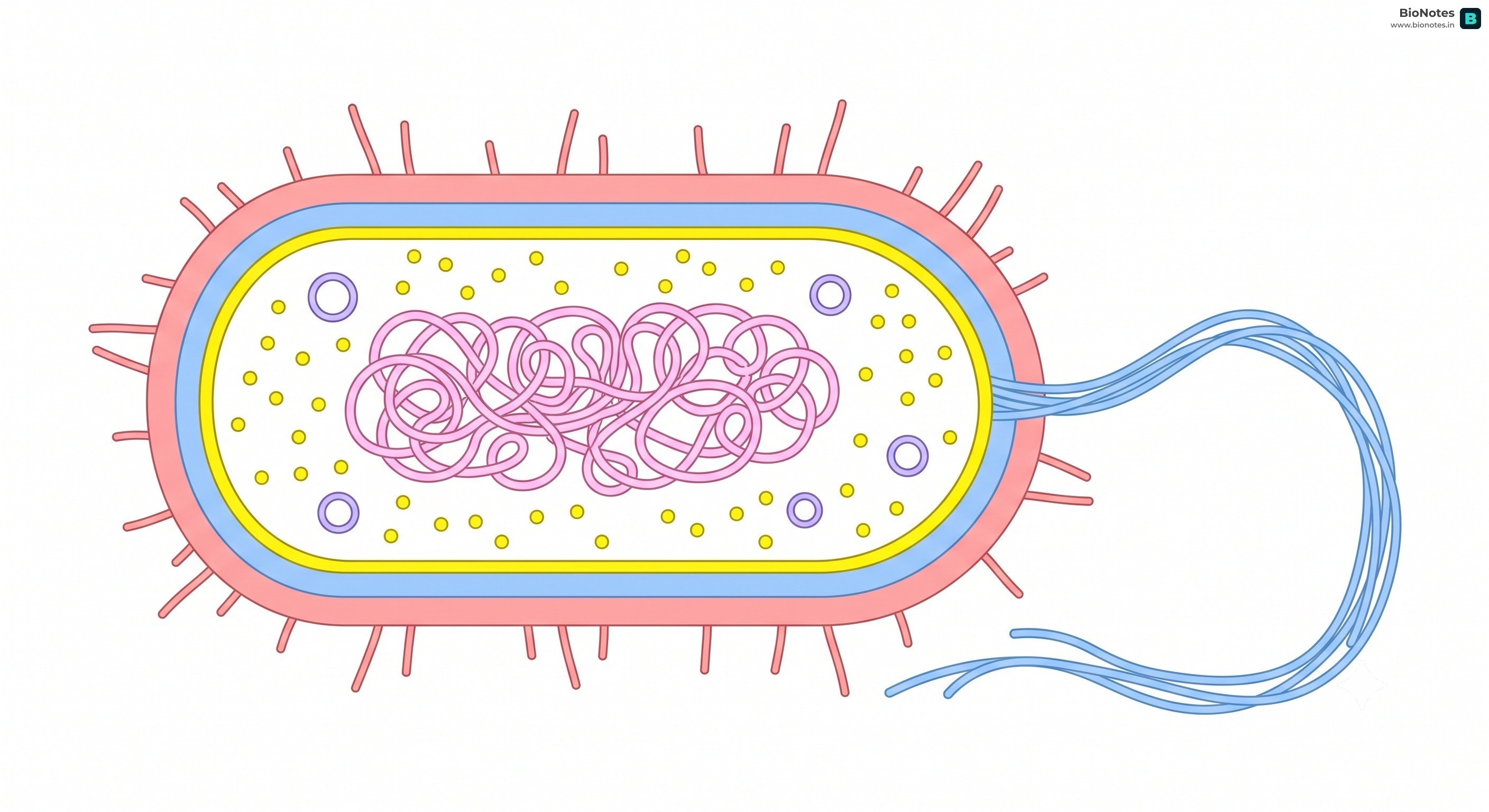
Misconception 1:You get sick because bacteria are physically eating your cells.Correction: While some do, most bacterial diseases are caused by the toxins (poisons) the bacteria secrete, rather than them physically destroying tissue.
Misconception 2:A fever is a symptom of the disease damaging your body.Correction: A fever is actually an active defense mechanism triggered by your own immune system to make the body too hot for pathogens to reproduce efficiently.
Health is defined by the World Health Organization (WHO) as a state of complete physical, mental, and social well-being, and not merely the absence of disease or infirmity.
Symptoms: Sustained high fever (39°C to 40°C), weakness, stomach pain, constipation, headache, loss of appetite. Intestinal perforation and death can occur in severe cases.
Diagnosis:Widal test is a serological test used to diagnose typhoid fever.
Infective Stage (Sporozoites): When an infected female Anopheles mosquito bites a human, sporozoites (infective form) are injected into the blood.
Liver Stage: Sporozoites reach the liver cells, multiply asexually, and burst the liver cells, releasing merozoites.
Red Blood Cell (RBC) Stage: Merozoites infect RBCs, multiply asexually, and cause the RBCs to rupture, releasing toxins (hemozoin) that cause fever and chills. This cycle repeats.
The Chill Factor
The characteristic shivering and high fever of malaria are caused by Hemozoin, a toxic pigment released into the blood every time the red blood cells burst. This is also why malarial symptoms occur in predictable cycles.
Gametocytes: Some merozoites develop into male and female gametocytes in RBCs. 5. Mosquito Stage: When a mosquito bites an infected human, gametocytes enter the mosquito's gut.
Fertilization and Development: Gametocytes fertilize and develop into sporozoites in the mosquito's gut, which then migrate to the salivary glands, ready to infect a new human host.
Competitive Edge: The Malaria Life Cycle Trap
Examiners love asking about the exact locations!
Fertilization and Sexual phase occur in the Mosquito's Gut (Stomach), NOT in the human.
Infective stage for Humans:Sporozoites (found in mosquito saliva).
Infective stage for Mosquitoes:Gametocytes (found in human blood).
Prevention: Mosquito control (larvicides, adulticides, eliminating breeding sites), use of mosquito nets, repellents, antimalarial drugs.
Transmission: Ingestion of contaminated food/water containing Ascaris eggs.
Symptoms: Internal bleeding, muscular pain, fever, anemia, blockage of the intestinal passage.
Prevention: Proper hygiene, sanitation, avoid open defecation.
Filariasis (Elephantiasis):
Cause:Wuchereria bancrofti and Wuchereria malayi (filarial worms).
Transmission: Bite of infected female Culex mosquito.
Symptoms: Chronic inflammation of the lymphatic vessels of the lower limbs, leading to gross deformities (elephantiasis). Genital organs may also be affected.
Antibodies (Immunoglobulins - Igs) are protein molecules produced by B-lymphocytes in response to antigens.
Structure: Y-shaped molecule composed of four polypeptide chains: two identical light (L) chains and two identical heavy (H) chains. They are held together by disulfide bonds. Each chain has a variable region (antigen-binding site) and a constant region.
Types (Isotypes): Based on the heavy chain type, there are five major classes of antibodies:
IgG: Most abundant antibody in serum, crosses placenta, provides passive immunity to fetus.
IgA: Found in secretions (colostrum, tears, saliva, mucus), protects mucous membranes.
IgM: Largest antibody, first antibody produced in primary immune response.
IgD: Found on the surface of B-cells, involved in B-cell activation.
IgE: Involved in allergic reactions and defense against parasites.
Immunisation is the process by which the body is made immune to a disease, typically by vaccination.
Vaccines are biological preparations that provide active acquired immunity to a particular infectious disease. They contain weakened or inactivated pathogens, or their components (antigens), which stimulate the immune system to produce antibodies and memory cells without causing the disease.
Principle: The principle of immunisation is based on the property of 'memory' of the immune system. When a vaccine is administered, the body produces primary immune response and generates memory B and T cells. Subsequent exposure to the actual pathogen elicits a rapid and strong secondary immune response.
Types of Vaccines: Live-attenuated, inactivated, toxoid, subunit, recombinant, mRNA vaccines.
Cancer is an abnormal, uncontrolled proliferation of cells that can invade and spread to other parts of the body.
Types of Tumors:
Benign Tumors: Remain confined to their original location and do not spread to other parts of the body. They are generally less harmful.
Malignant Tumors: Are cancerous. They grow rapidly, invade surrounding normal tissues, and can spread to distant sites through blood or lymph (metastasis), forming secondary tumors.
Allergy is the exaggerated response of the immune system to certain antigens present in the environment.
Causes (Allergens): Substances that cause allergic reactions (e.g., pollen, dust mites, animal dander, certain foods, drugs).
Mechanism: When exposed to allergens, the body produces IgE antibodies. These IgE antibodies bind to mast cells and basophils, causing them to release chemicals like histamine and serotonin.
Drug abuse refers to the use of certain drugs for non-medical purposes, leading to physical, psychological, and social harm.
Alcohol abuse refers to excessive and harmful consumption of alcoholic beverages.
Commonly Abused Drugs:
Opioids: Derived from the opium poppy (Papaver somniferum). Bind to opioid receptors in the CNS and gastrointestinal tract. Examples: Morphine, heroin (smack).
Cannabinoids: Obtained from the inflorescences of the cannabis plant (Cannabis sativa). Interact with cannabinoid receptors in the brain. Examples: Marijuana, hashish, charas, ganja.
Cocaine (Coke/Crack): Obtained from coca plant (Erythroxylum coca). Interferes with the transport of dopamine.
Effects: Stimulant, sense of euphoria, increased energy. Excessive dosage causes hallucinations.
Other Drugs: Barbiturates, amphetamines, benzodiazepines (sedatives and tranquilizers), LSD (hallucinogen).
Effects of Drug and Alcohol Abuse:
Short-term: Reckless behavior, violence, impaired judgment, mood swings, nausea, vomiting, loss of coordination.
Long-term: Liver cirrhosis (alcohol), nervous system damage, cardiovascular diseases, mental disorders, addiction, withdrawal symptoms, social and economic problems, increased risk of infections (e.g., AIDS, hepatitis due to shared needles).
Adolescent Abuse: Early age of initiation, peer pressure, curiosity, stress, family problems. Leads to poor academic performance, depression, aggression, isolation.
Prevention and Control:
Avoid Undue Peer Pressure: Educate adolescents about the dangers.
Education and Counselling: Identify and counsel those at risk.
Seeking Help from Parents and Peers: Open communication.
Looking for Danger Signs: Changes in behavior, academic decline, withdrawal.
Seeking Professional and Medical Help: Rehabilitation programs.
 BioNotes