Created by Titas Mallick
Biology Teacher • M.Sc. Botany • B.Ed. • CTET (CBSE) • CISCE Examiner
 BioNotes
Created by Titas Mallick
Biology Teacher • M.Sc. Botany • B.Ed. • CTET (CBSE) • CISCE Examiner
Online
NCERT Biology Activities for Class 12 Biology - Ecosystem - Trophic Analysis and Decomposition Kinetics.
Aim: To observe the rate of decomposition of organic matter under different environmental conditions (moisture and temperature).
Materials Required:
Procedure:
Scientific Note Decomposition is an oxygen-consuming process. The rate is determined by the C:N ratio and the chemical composition of the detritus. Materials rich in Lignin and Chitin decompose very slowly, while those rich in nitrogen and water-soluble substances (like sugars) decompose rapidly. Anaerobic conditions inhibit the activity of aerobic decomposers, significantly slowing down the process.
Observation: Jar B (Warm and Moist) will show the highest rate of decomposition (highest mass loss). Jar C (Anaerobic) will show the lowest rate due to limited microbial respiration.
Lab Best Practice Drying the litter to a "constant weight" is essential to ensure that you are measuring the loss of organic matter and not just changes in water content.
 www.bionotes.in
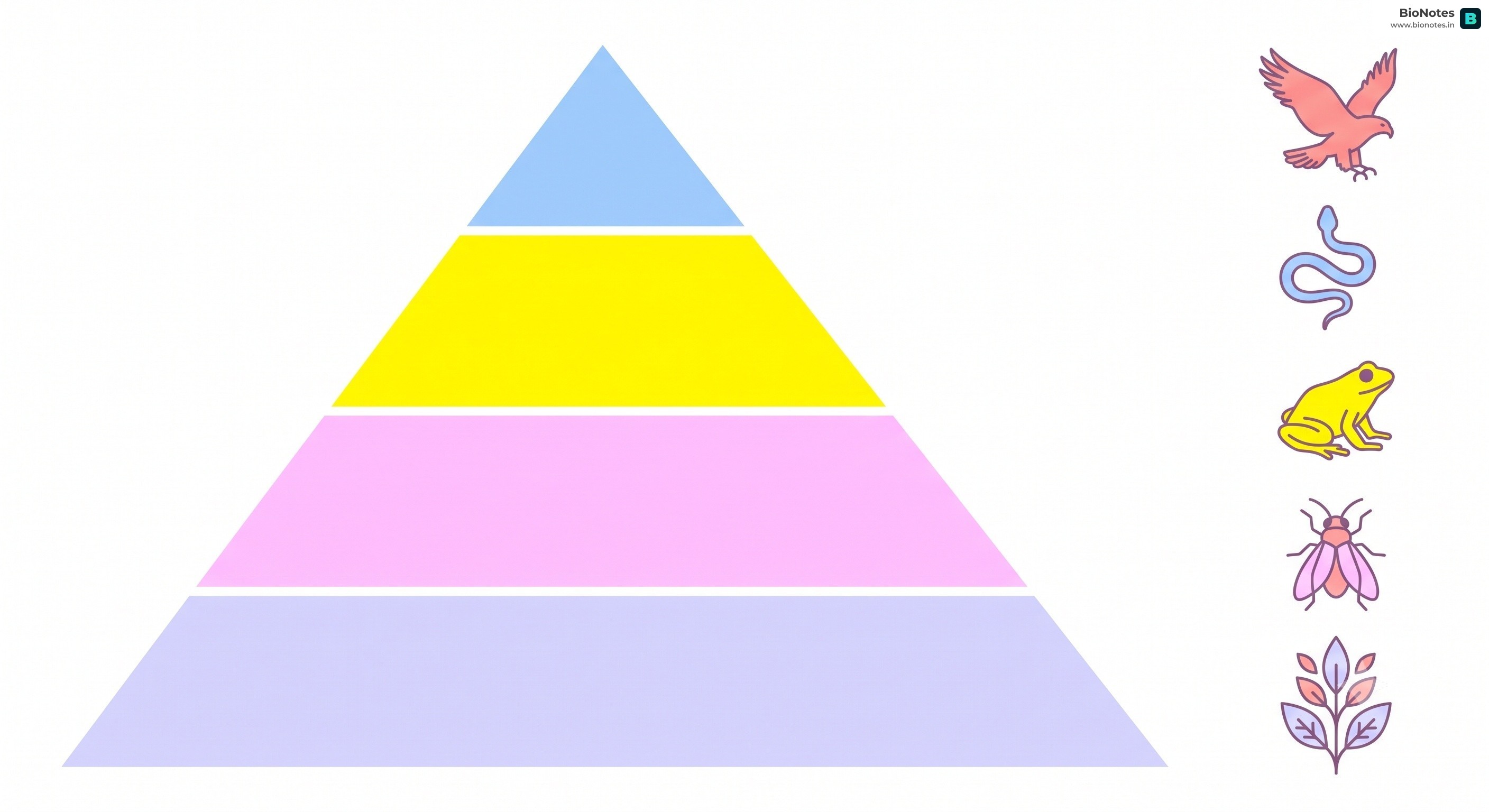
Aim: To quantify the transfer of biomass across different trophic levels in a local ecosystem.
Materials Required:
Procedure:
Scientific Note In terrestrial ecosystems, the pyramid of biomass is usually upright. However, in aquatic ecosystems, the pyramid of biomass can be inverted (e.g., the biomass of a small population of phytoplankton supports a much larger biomass of zooplankton/fish due to high turnover rates).
Safety First When collecting insects or small animals for biomass estimation, use specialized tools (sweep nets/pitfall traps) and ensure that no endangered species are harmed. Always release non-target organisms immediately.