BioNotes
CBSE/NCERT/Exercises/Class_11_Biology

Class 11 Biology - Cell Cycle and Cell Division

NCERT Biology Exercises for Class 11 Biology - Cell Cycle and Cell Division - Class_11_Biology
Class 11 Biology - Cell Cycle and Cell Division

Exercises

1. What is the average cell cycle span for a mammalian cell?

Answer: The average cell cycle span for a mammalian cell is approximately 24 hours.


2. Distinguish cytokinesis from karyokinesis.

Answer:

  • Karyokinesis: It is the division of the cell nucleus into two daughter nuclei during mitosis or meiosis. It occurs before cytokinesis.
  • Cytokinesis: It is the division of the cell's cytoplasm into two daughter cells, which follows the completion of karyokinesis.

3. Describe the events taking place during interphase.

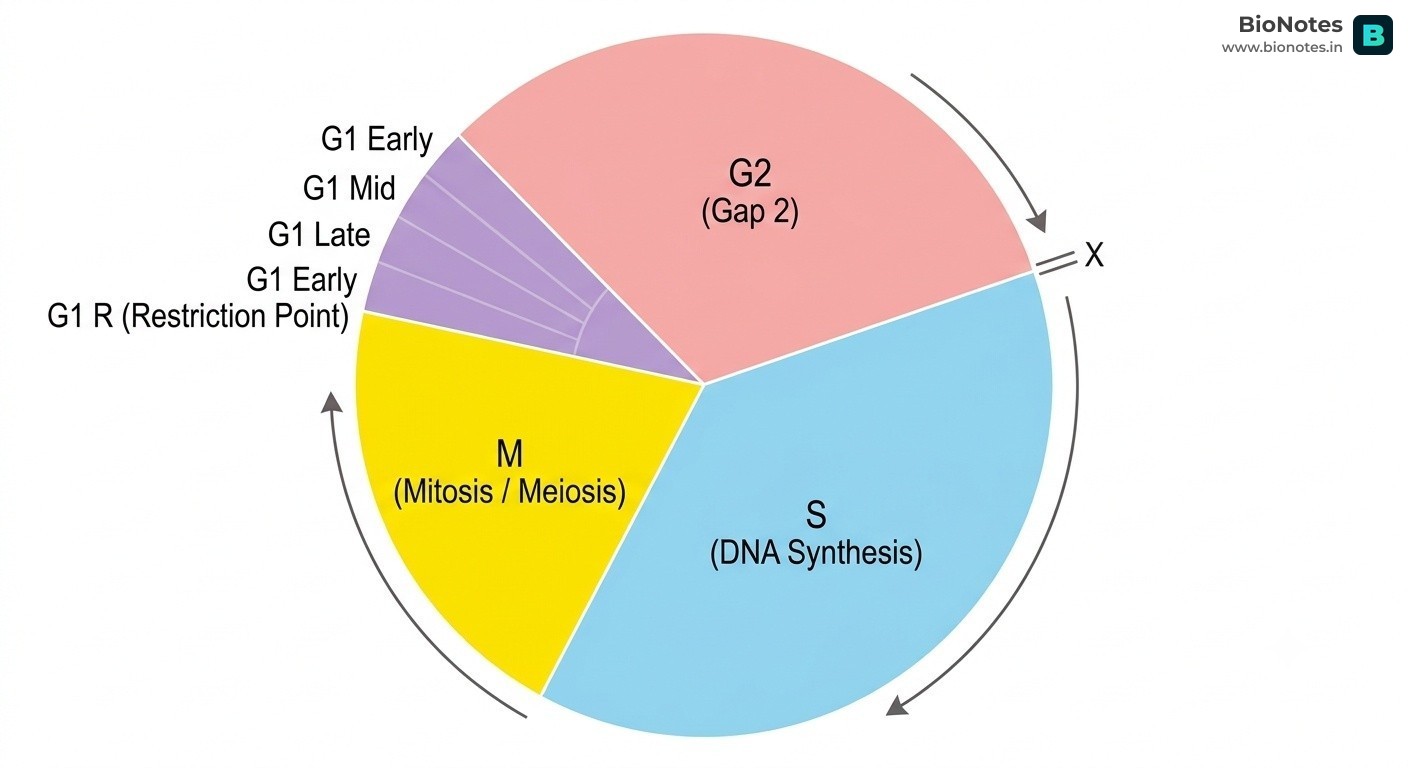
Answer: Interphase is the "resting phase" where the cell prepares for division by undergoing growth and DNA replication. It consists of three stages:

  1. G₁ Phase (Gap 1): The cell is metabolically active, grows, and synthesizes RNAs and proteins. No DNA replication occurs.
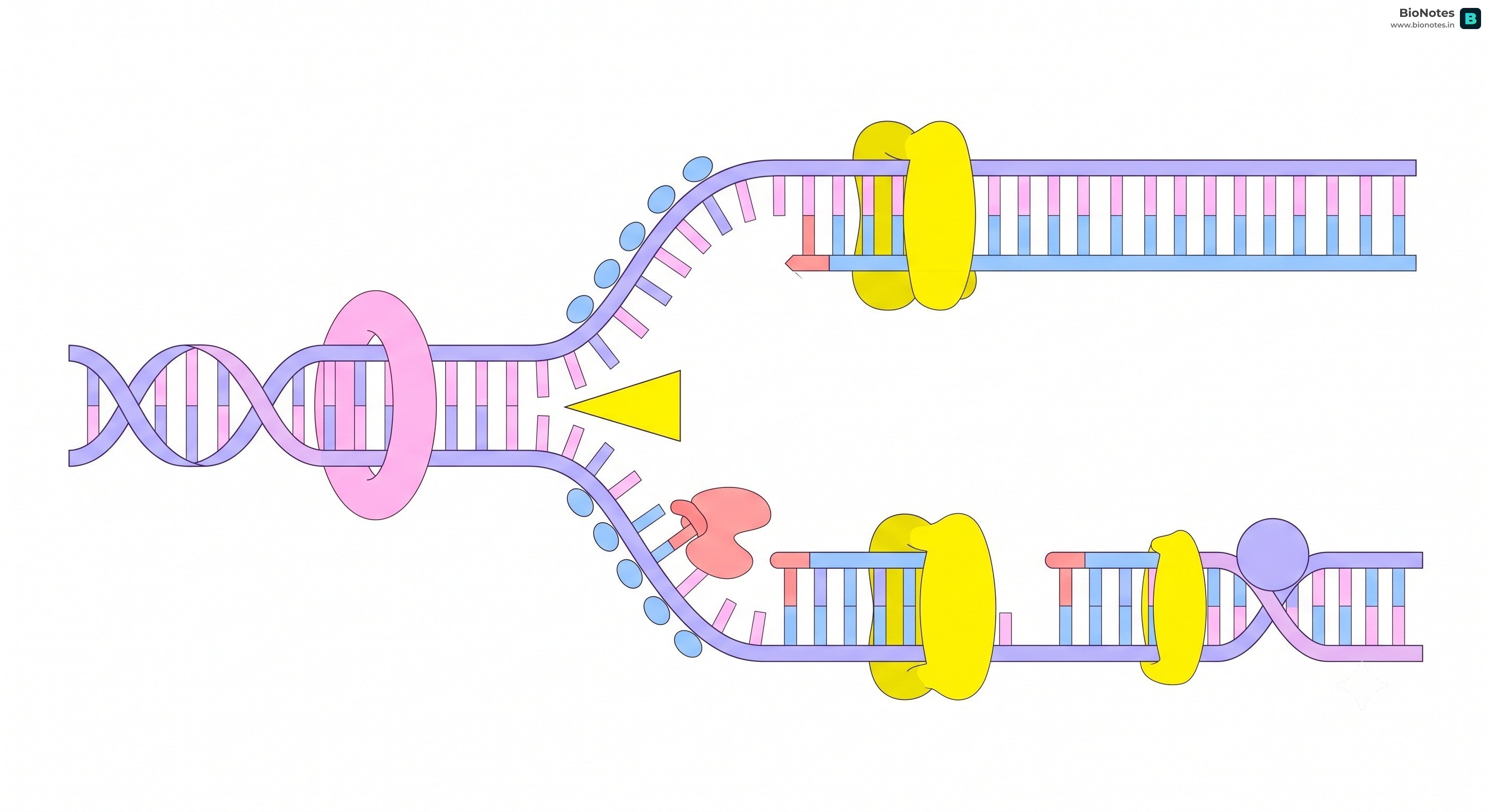
  2. S Phase (Synthesis): DNA replication takes place, doubling the DNA content per cell (2C to 4C). In animal cells, the centriole also duplicates. The chromosome number remains 2n.
  3. G₂ Phase (Gap 2): Protein synthesis for mitosis occurs while the cell continues to grow.

4. What is G₀ (quiescent phase) of cell cycle?

Answer: The G₀ phase is an inactive stage where cells exit the G₁ phase and no longer proliferate. These cells remain metabolically active but do not divide unless specifically called upon by the organism to replace lost cells (e.g., heart cells).


5. Why is mitosis called equational division?

Answer: Mitosis is called equational division because the number of chromosomes in the daughter cells is exactly the same as the number of chromosomes in the parent cell (both remain 2n).


6. Name the stage of cell cycle at which one of the following events occur:

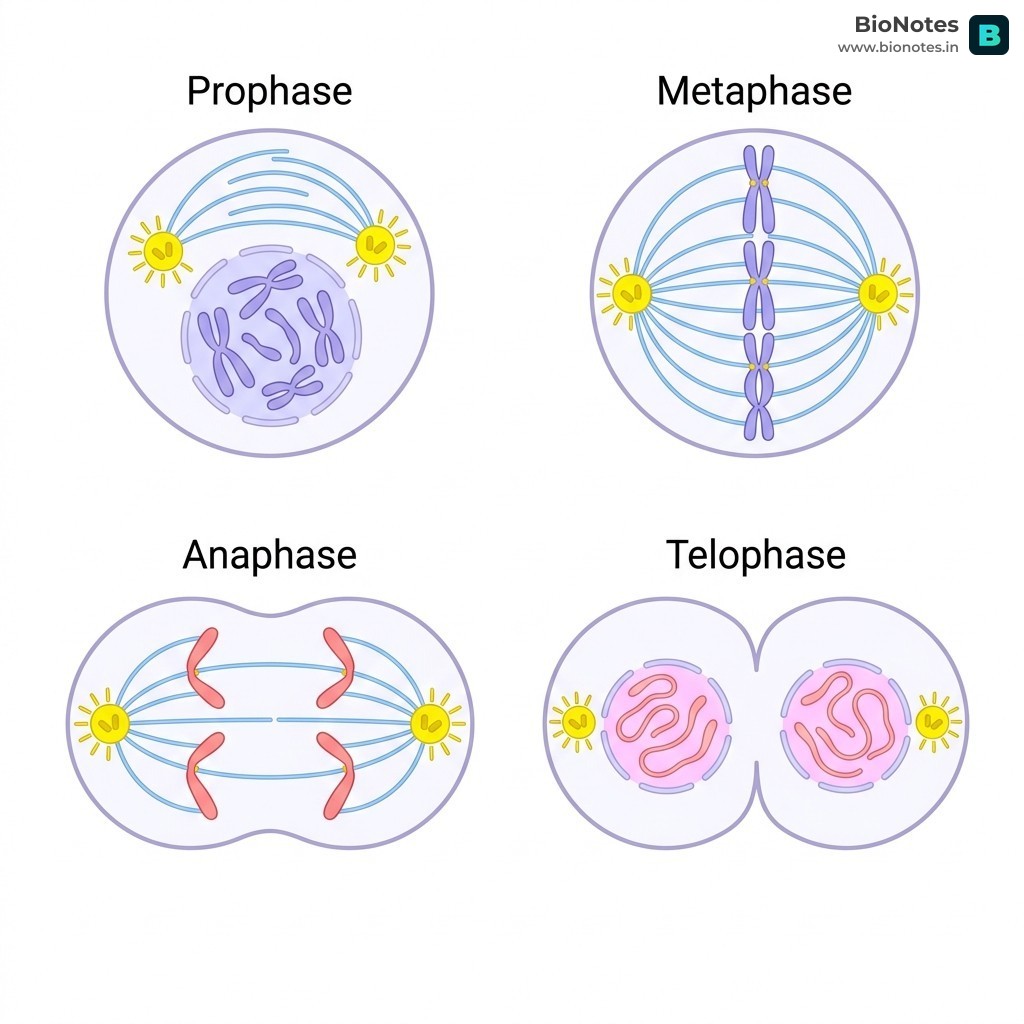
(i) Chromosomes are moved to spindle equator. (ii) Centromere splits and chromatids separate. (iii) Pairing between homologous chromosomes takes place. (iv) Crossing over between homologous chromosomes takes place.
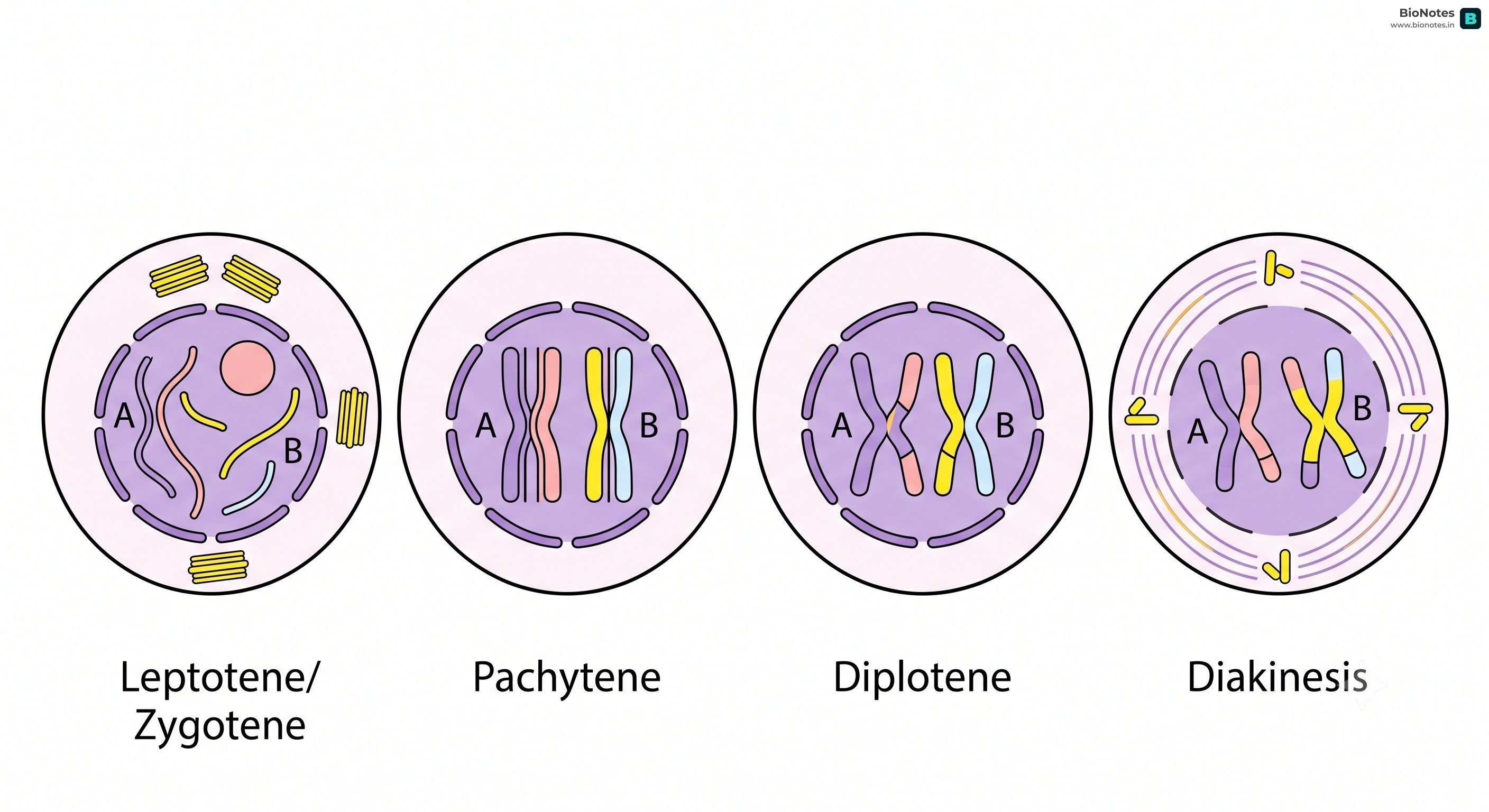
Answer: (i) Metaphase (ii) Anaphase (iii) Zygotene (Prophase I of Meiosis) (iv) Pachytene (Prophase I of Meiosis)


7. Describe the following: (a) synapsis (b) bivalent (c) chiasmata

Answer:

  • (a) Synapsis: The process of pairing of homologous chromosomes during the zygotene stage of Prophase I.
  • (b) Bivalent: A complex formed by a pair of synapsed homologous chromosomes (also called a tetrad).
  • (c) Chiasmata: X-shaped structures formed during the diplotene stage, which represent the sites where crossing over has occurred between non-sister chromatids.

8. How does cytokinesis in plant cells differ from that in animal cells?

Answer:

  • Animal Cells: Accomplished by the appearance of a cleavage furrow in the plasma membrane, which deepens centripetally until the cell is divided into two.
  • Plant Cells: Due to the rigid cell wall, a cell plate begins to form in the center and grows centrifugally (outward) to meet the lateral walls, forming the middle lamella.

10. Distinguish anaphase of mitosis from anaphase I of meiosis.

Answer:

  • Anaphase (Mitosis): Centromeres split simultaneously, and sister chromatids separate and move to opposite poles.
  • Anaphase I (Meiosis): Homologous chromosomes separate and move to opposite poles, while sister chromatids remain associated at their centromeres.

11. List the main differences between mitosis and meiosis.

Answer:

FeatureMitosisMeiosis
Type of DivisionEquational (2n to 2n)Reductional (2n to n)
Number of DivisionsOne single divisionTwo sequential divisions (I & II)
Synapsis & Crossing OverAbsentPresent in Prophase I
Daughter CellsTwo diploid cells, identicalFour haploid cells, varied
OccurrenceSomatic cellsGerm cells (Gametogenesis)

12. What is the significance of meiosis?

Answer: Meiosis ensures the conservation of the specific chromosome number of each species across generations in sexually reproducing organisms. It also increases genetic variability in populations through crossing over, which is crucial for evolution.


14. Can there be mitosis without DNA replication in ‘S’ phase?

Answer: No. Mitosis requires the distribution of an exact copy of the genome to each daughter cell. Without DNA replication in the S phase, the chromosome number would be halved in each division, violating the principle of equational division.


15. Can there be DNA replication without cell division?

Answer: Yes. In some organisms, karyokinesis is not followed by cytokinesis, leading to a multinucleate condition (e.g., liquid endosperm in coconut). In other cases, repeated DNA replication without division leads to polyploidy.


16. Change in parameters (Mitosis):

Answer:

  • (i) Number of chromosomes (N) per cell: Remains constant (2n) throughout the process.
  • (ii) Amount of DNA content (C) per cell: Doubles during the S phase (2C to 4C) and is restored to 2C at the end of the M phase (after cytokinesis).
Location:/CBSE/NCERT/Exercises/Class_11_Biology/Chapter_10_Cell_Cycle_and_Cell_Division.mdx

Created by Titas Mallick

Biology Teacher • M.Sc. Botany • B.Ed. • CTET Qualified • 10+ years teaching experience