BioNotes
CBSE/NCERT/Notes/Class_11_Biology

Biological Classification

Comprehensive Notes on Biological Classification - NCERT Class 11 Biology

Biological Classification

Key Concepts

Historical Background of Classification

Since ancient times, humans have attempted to classify living organisms based on their needs (food, shelter, clothing).

  • Aristotle: The earliest to attempt a more scientific basis for classification. He classified plants into trees, shrubs, and herbs based on simple morphological characters. Animals were divided into those with red blood and those without.
  • Two Kingdom System: Proposed by Linnaeus, dividing organisms into Kingdom Plantae and Kingdom Animalia.
    • Limitations: Did not distinguish between eukaryotes and prokaryotes, unicellular and multicellular organisms, or photosynthetic and non-photosynthetic organisms.

Five Kingdom Classification

Proposed by R.H. Whittaker (1969). The five kingdoms are Monera, Protista, Fungi, Plantae, and Animalia.
  • Main Criteria:
    1. Cell structure (Prokaryotic vs. Eukaryotic)
    2. Body organization (Cellular vs. Multicellular/Tissue)
    3. Mode of nutrition (Autotrophic vs. Heterotrophic)
    4. Reproduction
    5. Phylogenetic relationships (Evolutionary history)

Kingdom Monera

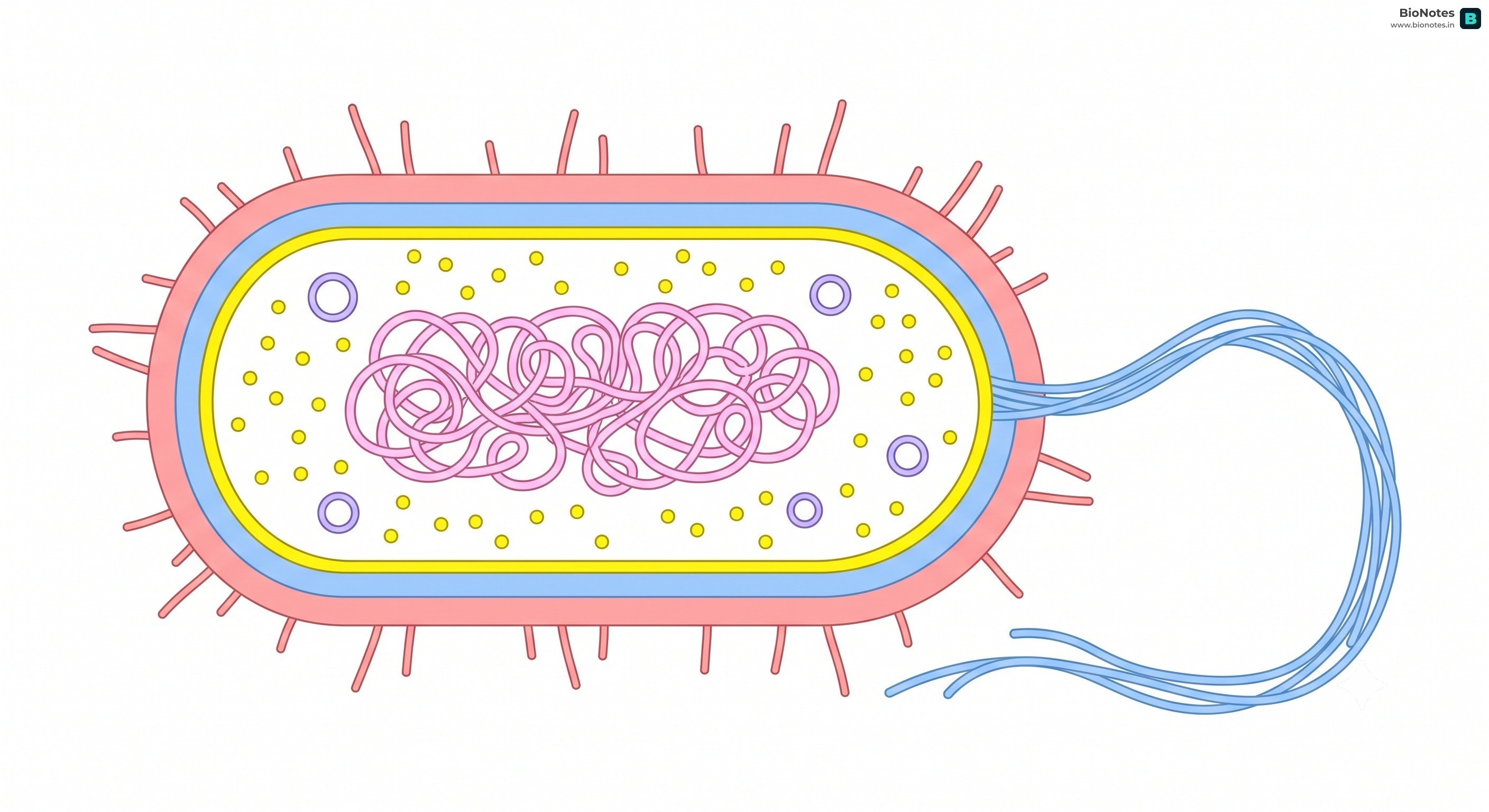
Bacteria are the sole members of this kingdom. They are the most abundant microorganisms and can survive in extreme habitats.
  • Bacterial Shapes: Coccus (spherical), Bacillus (rod-shaped), Vibrium (comma-shaped), and Spirillum (spiral).
  • Archaebacteria: Live in harsh environments like salty areas (halophiles), hot springs (thermoacidophiles), and marshy areas (methanogens). Methanogens produce biogas (methane) in ruminant animals.
  • Eubacteria (True Bacteria):
    • Cyanobacteria (Blue-green algae): Photosynthetic autotrophs, some can fix atmospheric nitrogen in specialized cells called heterocysts (e.g., Nostoc, Anabaena).
    • Chemosynthetic Autotrophs: Oxidize inorganic substances to produce ATP.
    • Heterotrophic Bacteria: Most abundant, act as decomposers, and are useful in making curd, antibiotics, etc. Some are pathogenic (e.g., Cholera, Typhoid).
    • Mycoplasma: Smallest living cells, lack a cell wall, and can survive without oxygen.

Kingdom Protista

Includes all single-celled eukaryotes. Primarily aquatic.

  • Chrysophytes: Diatoms and golden algae. Diatoms have indestructible cell walls embedded with silica, forming diatomaceous earth used in polishing and filtration.
  • Dinoflagellates: Mostly marine and photosynthetic. Some (e.g., Gonyaulax) cause red tides and release toxins.
  • Euglenoids: Fresh water organisms (e.g., Euglena). Have a protein-rich layer called pellicle instead of a cell wall. They are mixotrophic (photosynthetic in light, heterotrophic in dark).
  • Slime Moulds: Saprophytic protists. Form aggregations called plasmodium under suitable conditions.
  • Protozoans: Heterotrophs, primitive relatives of animals.
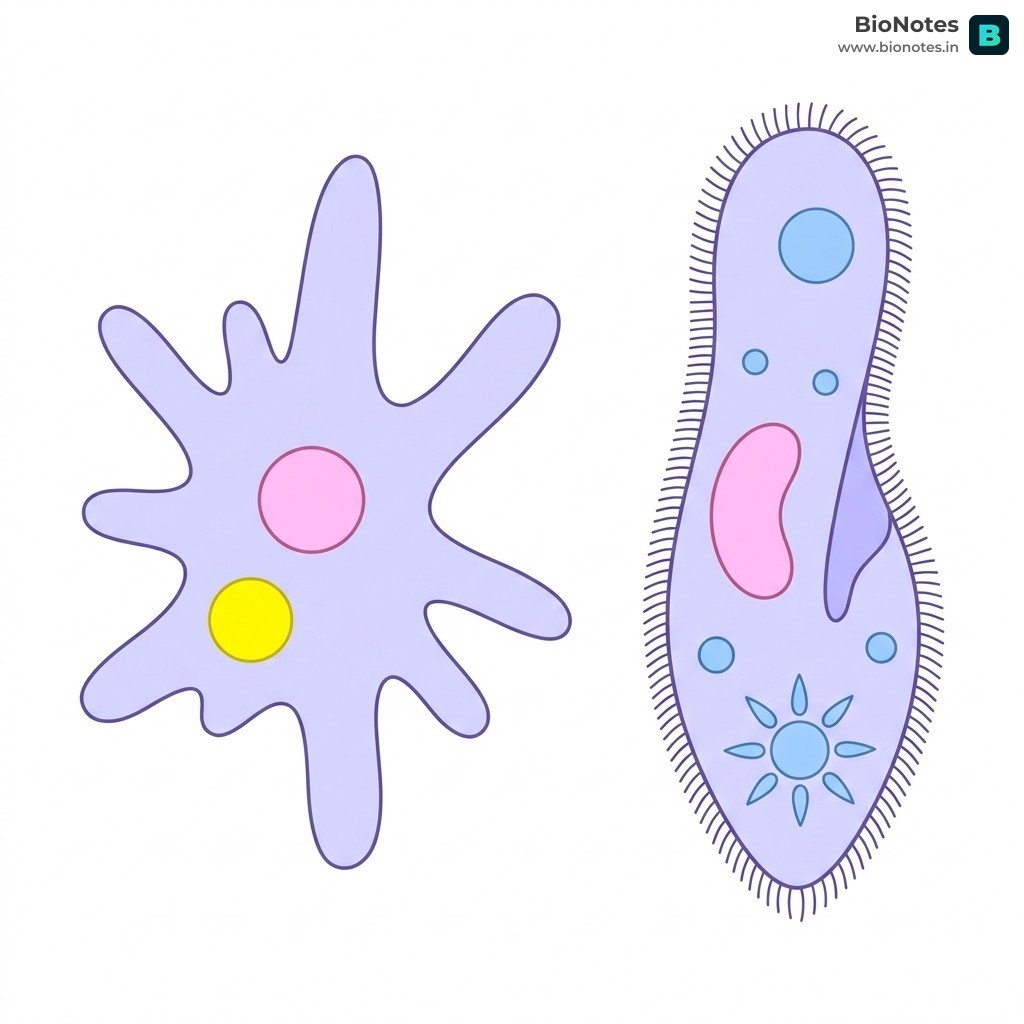
    • Amoeboid: Use pseudopodia (e.g., Amoeba).
    • Flagellated: Have flagella (e.g., Trypanosoma causing sleeping sickness).
    • Ciliated: Have thousands of cilia (e.g., Paramoecium).
    • Sporozoans: Have infectious spore-like stage (e.g., Plasmodium causing malaria).

Kingdom Fungi

Unique kingdom of heterotrophic organisms. Cosmopolitan in distribution.
  • **Structure:**bodies consist of long, slender thread-like structures called hyphae. A network of hyphae is a mycelium. Some hyphae are coenocytic (multinucleated). Cell walls contain chitin.
  • Nutrition: Saprophytes, parasites, or symbionts (Lichens with algae, Mycorrhiza with roots).
  • Classes of Fungi:
    1. Phycomycetes: Mycelium is aseptate and coenocytic (e.g., Mucor, Rhizopus).
    2. Ascomycetes (Sac-fungi): Multicellular (except yeast). Mycelium is branched and septate. Produce conidia (asexual) and ascospores (sexual) (e.g., Penicillium, Aspergillus, Yeast).
    3. Basidiomycetes: Mushrooms, bracket fungi. Produce basidiospores exogenously on a basidium (e.g., Agaricus, Puccinia).
    4. Deuteromycetes (Imperfect fungi): Only asexual/vegetative phases are known (e.g., Alternaria, Trichoderma).

Kingdom Plantae and Animalia

  • Plantae: Eukaryotic chlorophyll-containing organisms. Have a cellulosic cell wall. Exhibit alternation of generations (sporophytic vs. gametophytic phases).
  • Animalia: Heterotrophic eukaryotes, multicellular, lack cell walls. Mode of nutrition is holozoic (ingestion).

Viruses, Viroids, Prions, and Lichens

These are not included in Whittaker's five-kingdom classification.

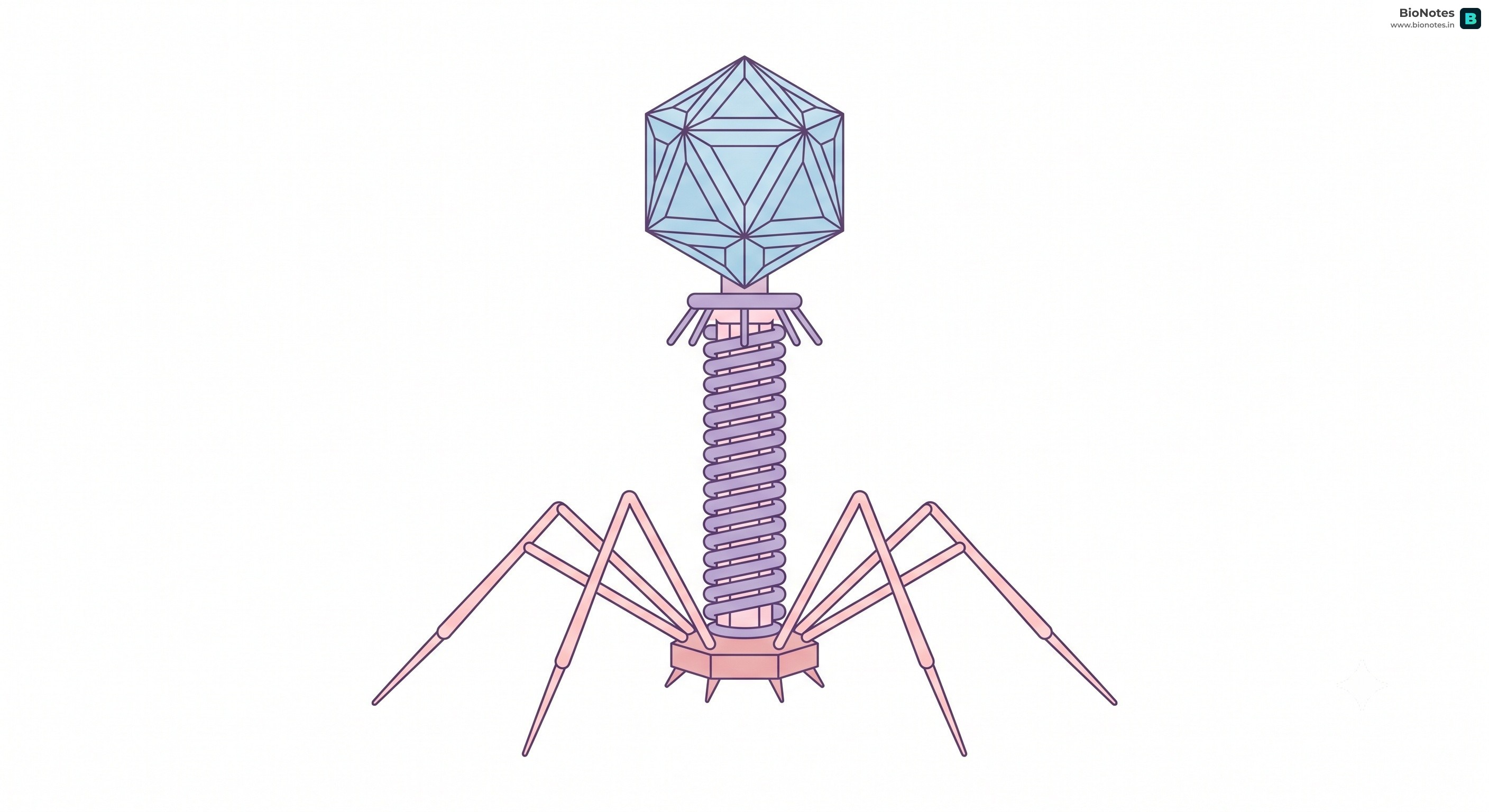
  • Viruses: Non-cellular, inert crystalline structure outside the host. Obligate parasites. Contain either RNA or DNA. Viruses that infect plants are usually single-stranded RNA; those that infect animals have RNA or double-stranded DNA. Bacteriophages are DNA viruses that infect bacteria.
  • Viroids: Discovered by T.O. Diener. Smaller than viruses, consist of free RNA without a protein coat. Cause potato spindle tuber disease.
  • Prions: Abnormally folded proteins that cause infectious neurological diseases (e.g., Mad Cow disease, CJD in humans).
  • Lichens: Symbiotic association between algae (phycobiont) and fungi (mycobiont). Excellent pollution indicators.
Location:/CBSE/NCERT/Notes/Class_11_Biology/Chapter_02_Biological_Classification.mdx

Created by Titas Mallick

Biology Teacher • M.Sc. Botany • B.Ed. • CTET Qualified • 10+ years teaching experience