CBSE/NCERT/Notes/Class_11_Biology
Structural Organisation in Animals
Comprehensive notes on NCERT Class 11 Biology Chapter 7 (Focus on Frogs)
Structural Organisation in Animals
In multicellular animals, groups of similar cells along with intercellular substances perform specific functions. Such organizations are called tissues. These tissues organize to form organs, which in turn associate to form organ systems. This chapter focuses on the morphology and anatomy of the frog as a representative vertebrate.
Key Concepts
1. The Frog (Rana tigrina)
- Habitat: Freshwater and land (Amphibia).
- Poikilotherms: Cold-blooded animals whose body temperature varies with the environment.
- Survival Strategies:
- Camouflage: Ability to change color to hide from enemies.
- Aestivation: Summer sleep to protect from extreme heat.
- Hibernation: Winter sleep to protect from extreme cold.
2. Morphology
- Skin: Smooth, slippery, and moist due to mucus. The frog absorbs water through the skin rather than drinking it.
- Body Divisions: Head and trunk (neck and tail are absent).
- Head Features:
- Nostrils: Pair above the mouth.
- Eyes: Bulged and covered by a nictitating membrane for protection in water.
- Tympanum: Ear that receives sound signals.
- Limbs:
- Forelimbs: End in four digits.
- Hind limbs: Larger, muscular, end in five webbed digits for swimming.
- Sexual Dimorphism: Males have vocal sacs and copulatory pads on the first digit of the forelimbs.
3. Anatomy
A. Digestive System
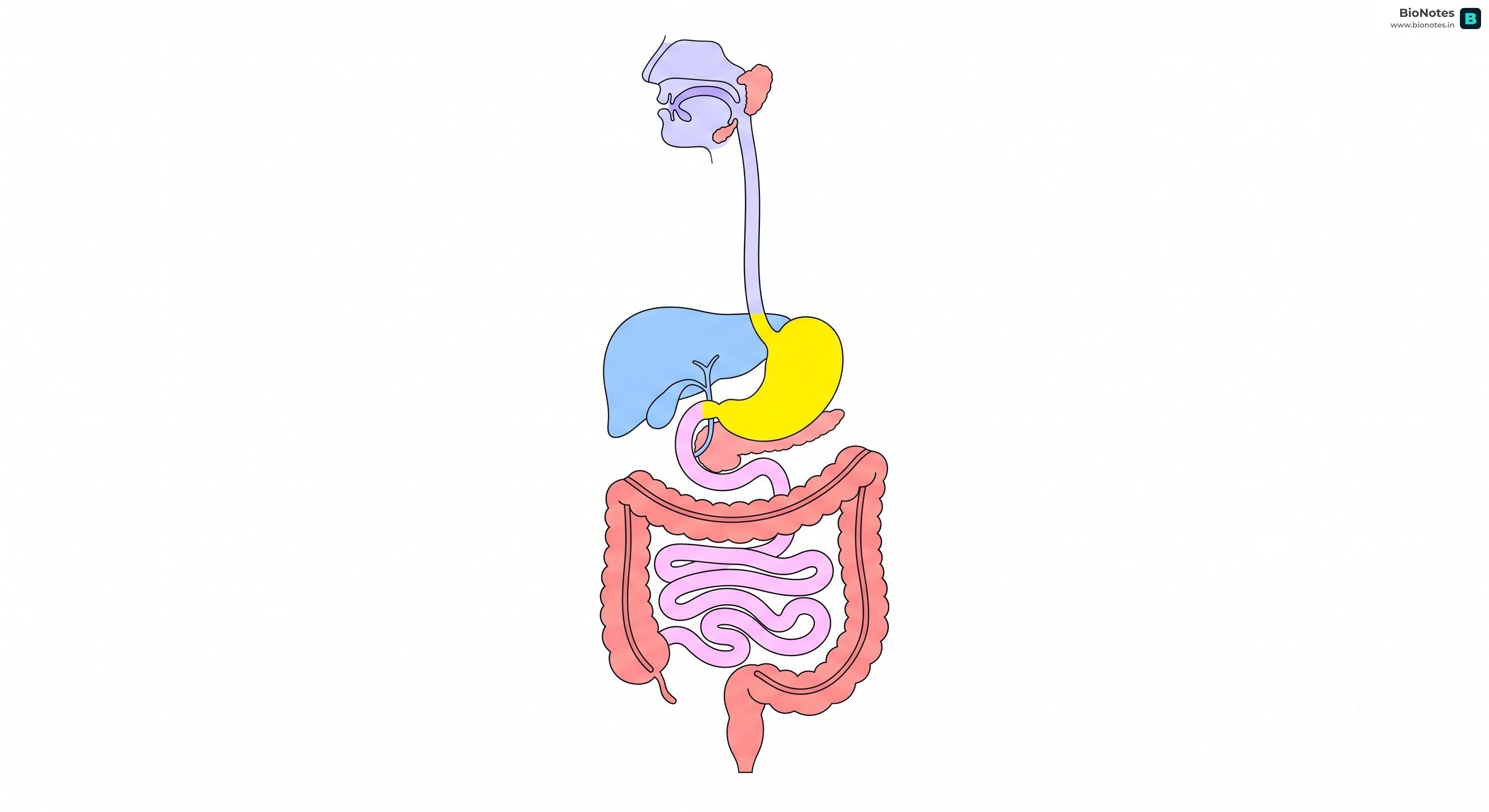
- Alimentary Canal: Short (carnivorous nature).
- Path: Mouth → Buccal cavity → Pharynx → Oesophagus → Stomach → Intestine → Rectum → Cloaca.
- Digestion: Food is captured by a bilobed tongue. Gastric juices and HCl in the stomach convert food into chyme. The duodenum receives bile (from liver/gall bladder) and pancreatic juice (from pancreas). Digested food is absorbed by villi and microvilli in the intestine.
B. Respiratory System
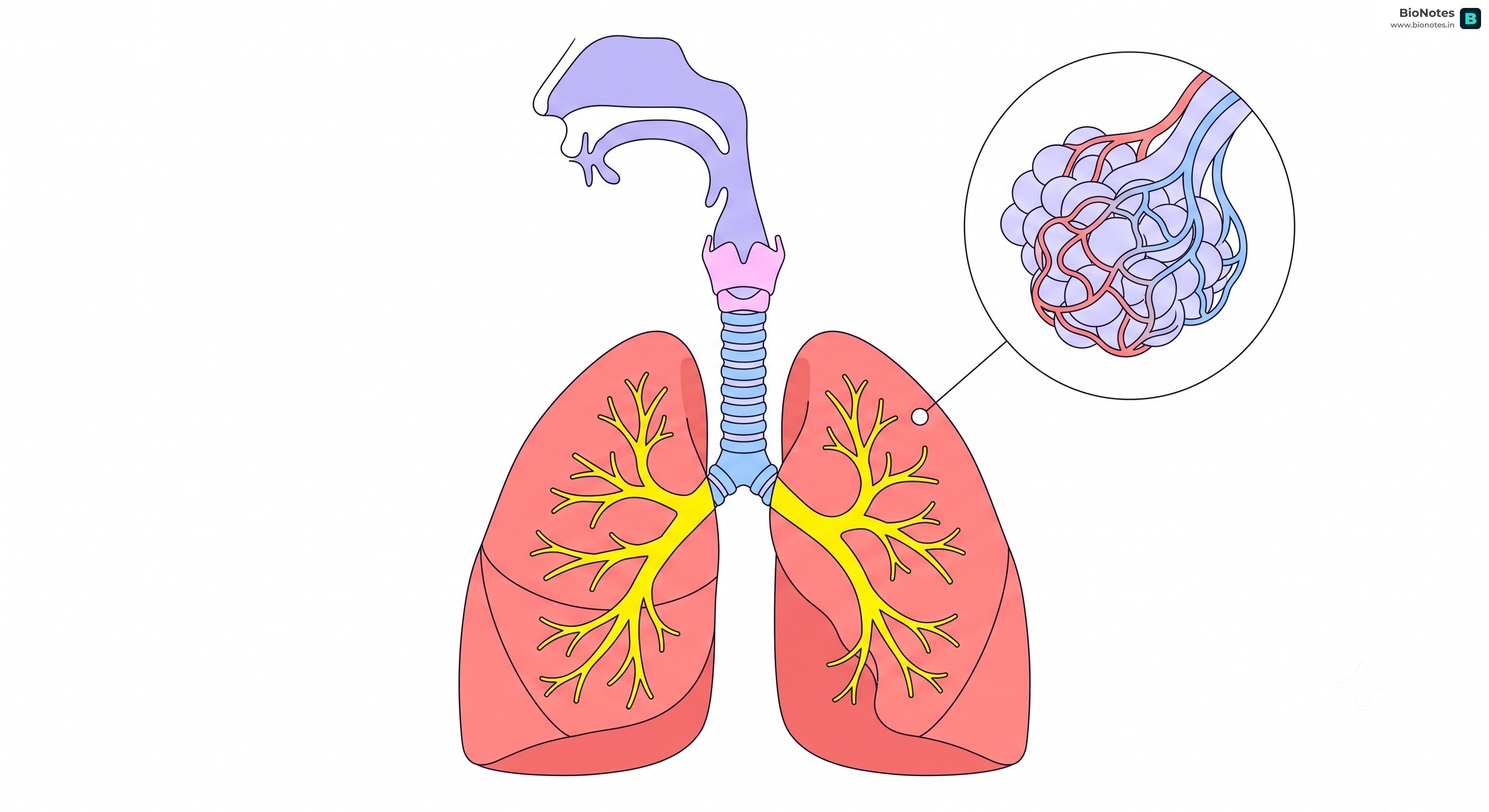
- In Water: Skin acts as the respiratory organ (Cutaneous respiration).
- On Land: Lungs (Pulmonary respiration), buccal cavity, and skin are used.
- Lungs: Pair of pink, sac-like structures in the thorax.
C. Vascular System
- Type: Closed circulatory system.
- Heart: Three-chambered (two atria, one ventricle). Covered by pericardium.
- Portal Systems: Well-developed hepatic portal system (liver-intestine) and renal portal system (kidney-lower body).
- Blood: Plasma and cells (RBCs, WBCs, platelets). RBCs are nucleated and contain haemoglobin.
D. Excretory System
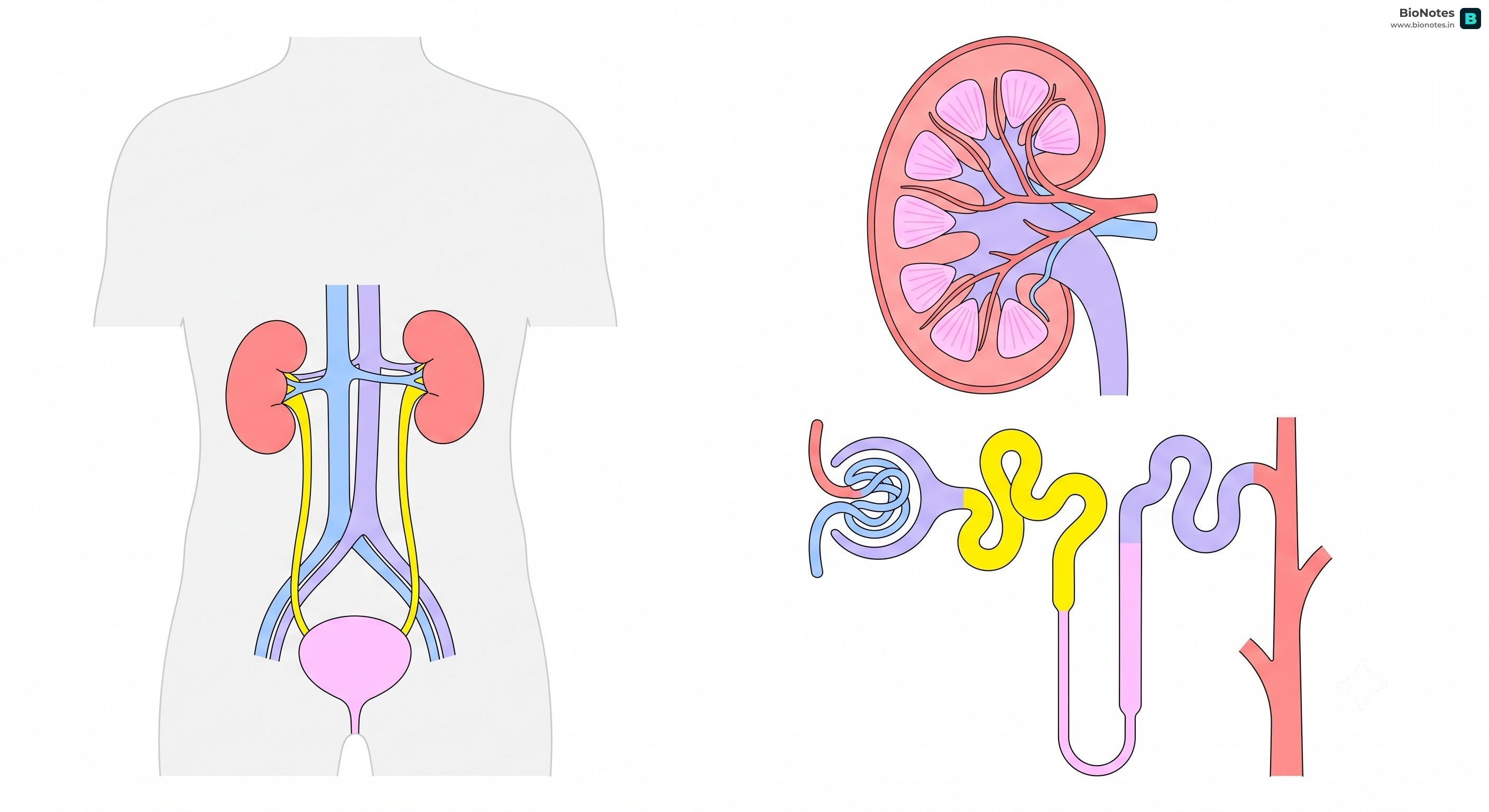
- Components: Pair of kidneys, ureters, cloaca, and urinary bladder.
- Function: Kidneys contain nephrons. The frog is ureotelic (excretes urea).
- Ureters: In males, they act as urinogenital ducts (carrying both urine and sperms).
E. Control and Coordination
- Endocrine System: Includes pituitary, thyroid, parathyroid, thymus, adrenal glands, etc.
- Nervous System: Central (brain and spinal cord), Peripheral (10 pairs of cranial nerves), and Autonomic.
- Brain: Divided into fore-brain (olfactory lobes, cerebral hemispheres), mid-brain (optic lobes), and hind-brain (cerebellum, medulla oblongata).
F. Reproductive System
- Male: Pair of testes adhered to kidneys by mesorchium. Sperms pass through vasa efferentia, Bidder's canal, and then the urinogenital duct.
- Female: Pair of ovaries (no functional connection with kidneys). Oviducts open into the cloaca separately. A female lays 2500–3000 ova.
- Development: External fertilization in water. Larval stage is called tadpole, which undergoes metamorphosis.
Location:
/CBSE/NCERT/Notes/Class_11_Biology/Chapter_07_Structural_Organisation_in_Animals.mdx