BioNotes
CBSE/NCERT/Notes/Class_11_Biology

Body Fluids and Circulation

Comprehensive notes on blood composition, the human heart, cardiac cycle, ECG, and circulatory disorders.

Body Fluids and Circulation

Key Concepts

Composition of Blood

Blood is a special connective tissue consisting of a fluid matrix (plasma) and formed elements.
  • Plasma (55%): A straw-colored viscous fluid. 90-92% water, 6-8% proteins (Fibrinogen for clotting, Globulins for defense, Albumins for osmotic balance). Plasma without clotting factors is called Serum.
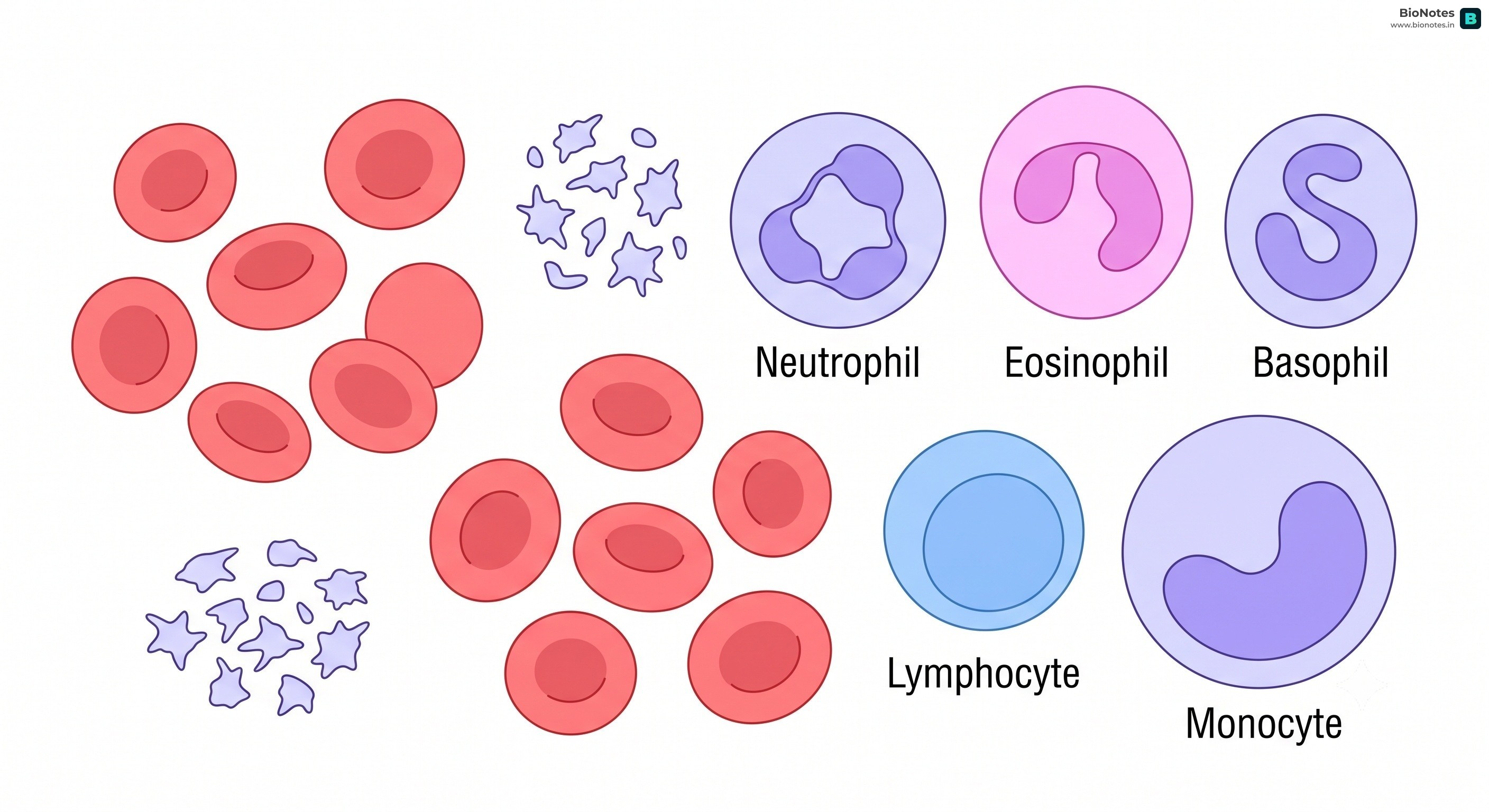
  • Formed Elements (45%):
    • Erythrocytes (RBCs): Biconcave, lack nucleus (in most mammals), contain haemoglobin for gas transport. Life span: 120 days.
    • Leucocytes (WBCs): Nucleated, part of the immune system. Includes Granulocytes (Neutrophils, Eosinophils, Basophils) and Agranulocytes (Lymphocytes, Monocytes).
    • Platelets (Thrombocytes): Cell fragments from megakaryocytes involved in blood coagulation.

Blood Groups and Coagulation

  • ABO Grouping: Based on A and B antigens on RBCs. Group O is the universal donor; AB is the universal recipient.
  • Rh Grouping: Based on the Rh antigen. Erythroblastosis foetalis occurs when an Rh-ve mother carries an Rh+ve foetus.
  • Coagulation (Clotting): A "cascade" process. Prothrombin is converted to Thrombin (by thrombokinase), which converts Fibrinogen to Fibrin threads that trap dead cells to form a clot. Calcium ions are essential.

Human Circulatory System

  • Heart Anatomy: A 4-chambered muscular organ tilted to the left. Protected by the pericardium.
    • Valves: Tricuspid (right side), Bicuspid/Mitral (left side), and Semilunar valves prevent backward flow.
    • Nodal Tissue: The Sino-atrial node (SAN) is the pacemaker as it generates the maximum action potentials (70-75/min).
  • Cardiac Cycle: Includes Atrial systole, Ventricular systole, and Joint diastole. Duration: 0.8 seconds.
  • Cardiac Output: Stroke volume (70 mL) $\times$ Heart rate ($\approx 72$ bpm) $\approx 5$ Litres/min.
  • Heart Sounds: 'Lub' (closure of tricuspid/bicuspid valves) and 'Dub' (closure of semilunar valves).

Electrocardiogram (ECG)

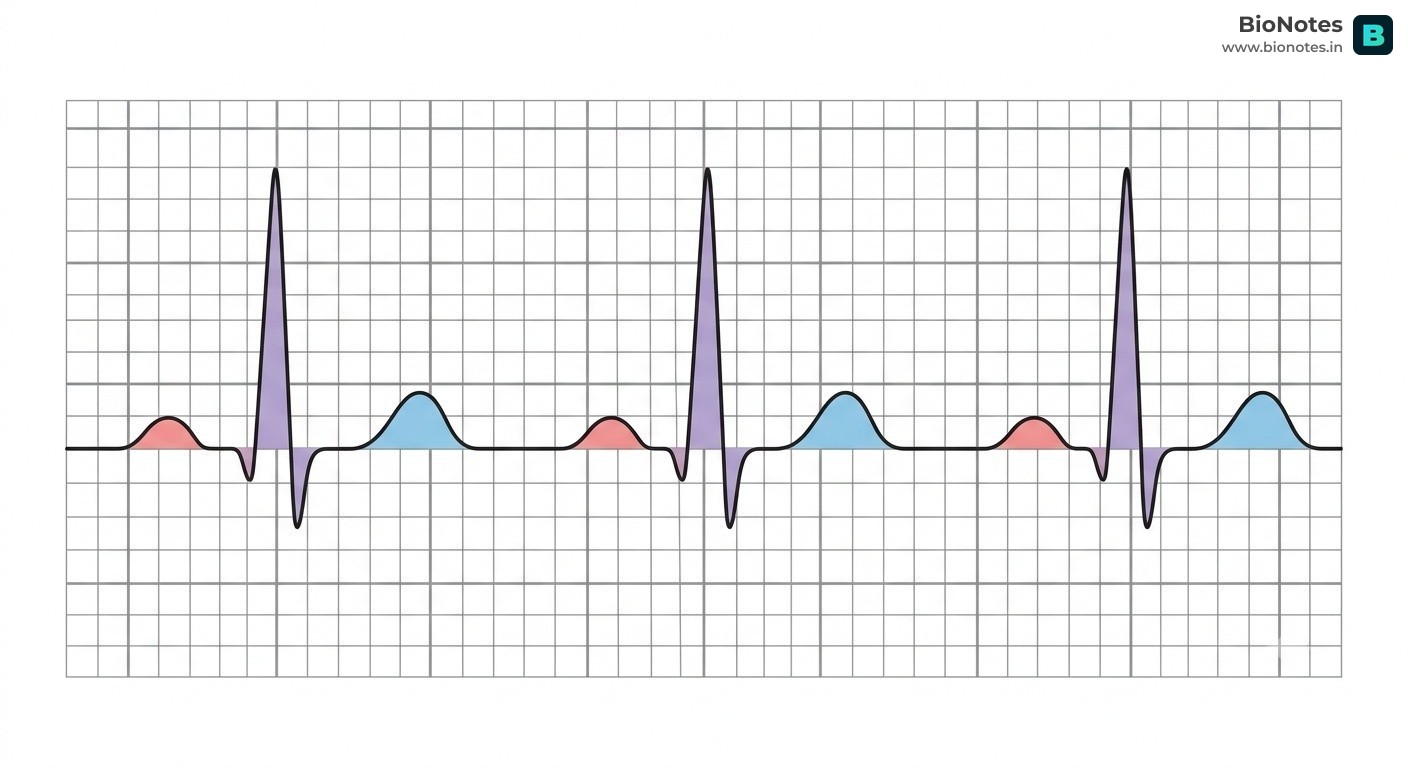
A graphical representation of the heart's electrical activity.

  • P-wave: Depolarisation (excitation) of atria.
  • QRS complex: Depolarisation of ventricles (marks beginning of systole).
  • T-wave: Repolarisation (return to normal) of ventricles.

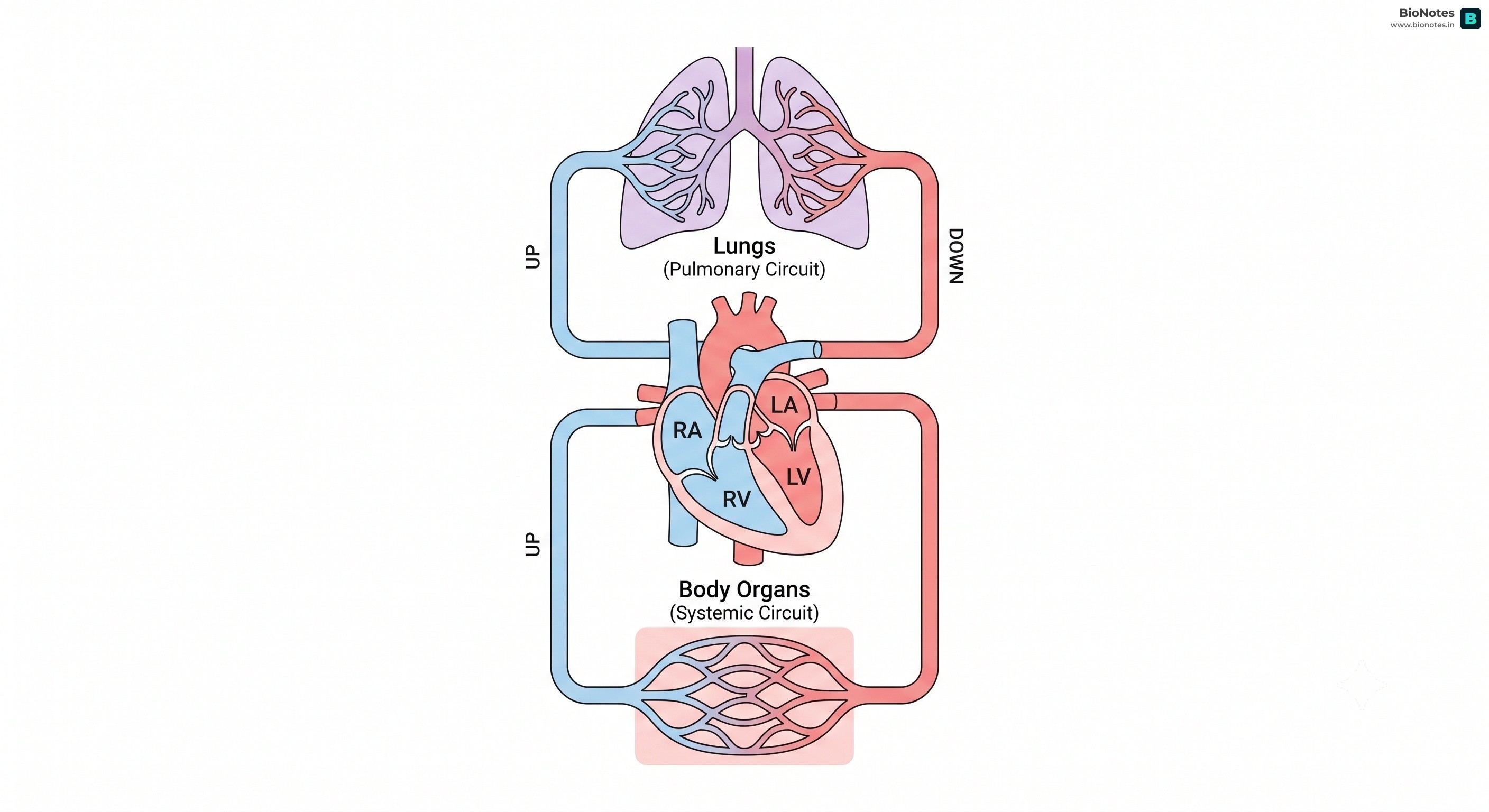
Double Circulation

Humans possess two separate circulatory pathways:

  1. Pulmonary Circulation: Right ventricle $\rightarrow$ Pulmonary artery $\rightarrow$ Lungs $\rightarrow$ Pulmonary veins $\rightarrow$ Left atrium.
  2. Systemic Circulation: Left ventricle $\rightarrow$ Aorta $\rightarrow$ Body tissues $\rightarrow$ Vena cava $\rightarrow$ Right atrium.
  • Hepatic Portal System: A unique vascular connection between the digestive tract and the liver.

Regulation and Disorders

  • Regulation: The heart is myogenic (auto-regulated). The medulla oblongata can moderate activity via the Autonomic Nervous System (ANS).
  • Hypertension: Blood pressure higher than normal (e.g., 140/90).
  • Coronary Artery Disease (CAD): Atherosclerosis; narrowing of arteries due to deposits.
  • Angina Pectoris: Acute chest pain due to inadequate oxygen reaching the heart.
  • Heart Failure: Heart not pumping blood effectively; often involves lung congestion.

Activities

  • Measure your pulse rate and notice its rhythm.
  • Learn about the "universal donor" and "universal recipient" concepts through a blood donation drive.
  • Draw a diagram of the human heart and trace the path of blood during double circulation.
Location:/CBSE/NCERT/Notes/Class_11_Biology/Chapter_15_Body_Fluids_and_Circulation.mdx

Created by Titas Mallick

Biology Teacher • M.Sc. Botany • B.Ed. • CTET Qualified • 10+ years teaching experience