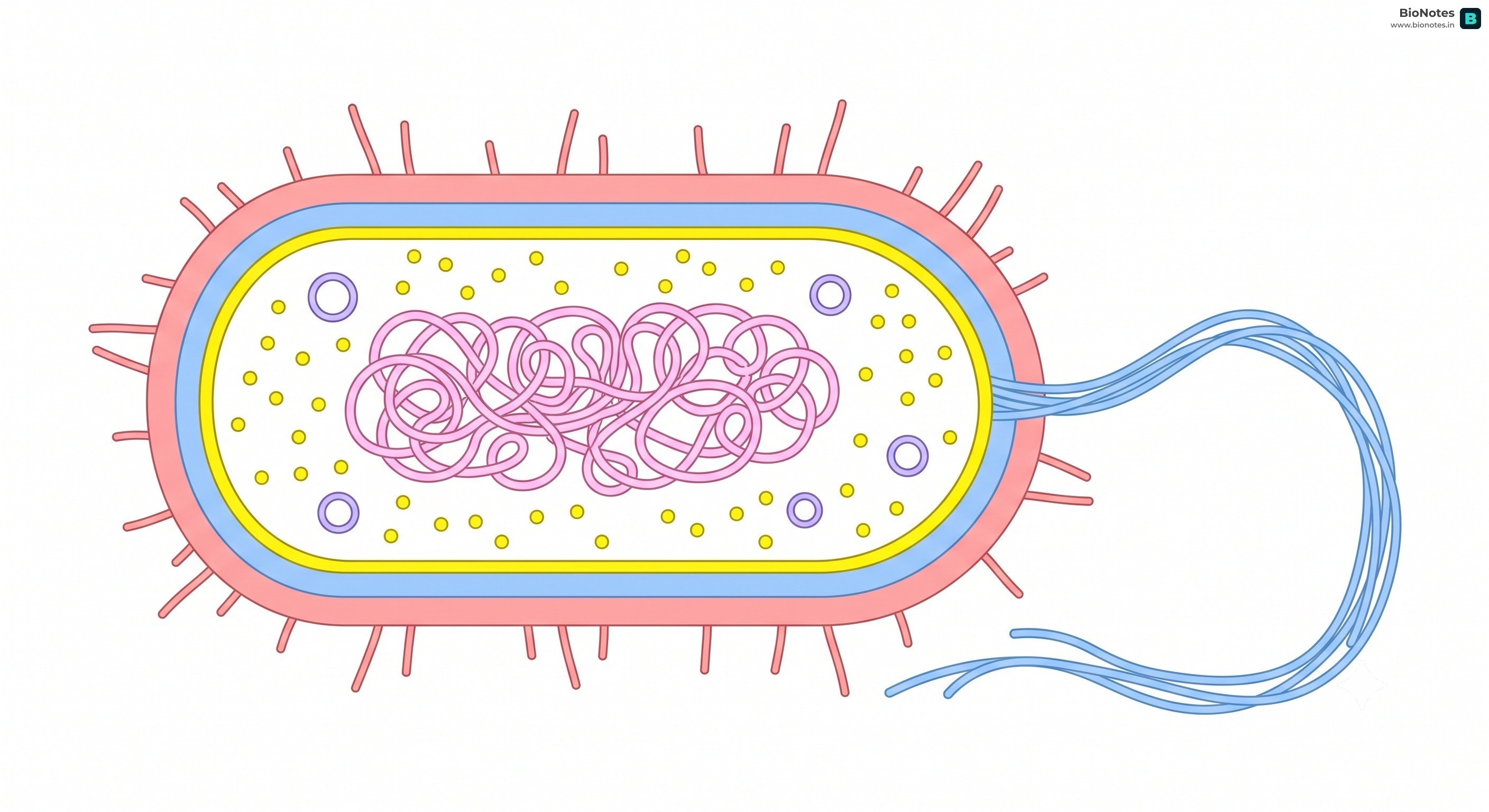
Bacteria are microscopic, single-celled organisms that are found everywhere on Earth. While they are often associated with diseases, bacteria play a crucial role in various aspects of our lives, both beneficial and harmful. Their economic importance stems from their diverse metabolic activities, which have been harnessed by humans for centuries in medicine, agriculture, and industry.
Watch Out! Bacteria are essential for human survival:
Misconception 1:Bacteria are generally bad and cause disease.Correction: Without bacteria, humans would die and ecosystems would collapse! They digest our food, create vitamins, break down waste, and fix nitrogen for plants.
Bacteria are indispensable in the medical field, particularly in the production of vital substances that fight diseases.
Antibiotics: These are chemical substances produced by microorganisms (including bacteria) that can kill or inhibit the growth of other microorganisms. They are one of the most significant discoveries in medicine.
How it works: Antibiotics target specific structures or metabolic pathways in pathogenic bacteria that are not present in human cells, thus killing the bacteria without harming the host.
Examples:
Streptomycin is produced by the bacterium Streptomyces griseus and is used to treat tuberculosis.
Bacitracin is produced by Bacillus subtilis and is used in topical ointments for skin infections.
Serums: A serum is the clear, liquid part of blood that contains antibodies. In medicine, serums (or antisera) are prepared by injecting a specific antigen (like a toxin or a virus) into an animal (e.g., a horse). The animal's immune system produces antibodies against that antigen. The blood is then drawn, and the serum containing these antibodies is separated.
How it works: When this serum is injected into a person suffering from the disease, the pre-formed antibodies provide immediate, passive immunity, neutralizing the toxins or pathogens.
Example: Anti-tetanus serum (ATS) is used to treat a person who has a tetanus-prone wound.
Vaccines: A vaccine is a biological preparation that provides active acquired immunity to a particular infectious disease. It typically contains a weakened or killed form of the disease-causing microorganism, its toxins, or one of its surface proteins.
How it works: The vaccine stimulates the body's immune system to recognize the agent as a threat, destroy it, and "remember" it. If the body encounters the live pathogen in the future, the immune system can quickly mount a defense and prevent the disease.
Example: The BCG (Bacillus Calmette-Guérin) vaccine is used to protect against tuberculosis and is made from a weakened strain of Mycobacterium bovis.
Bacteria are vital for soil fertility and plant growth, primarily through their role in the Nitrogen Cycle. Nitrogen is an essential component of proteins and nucleic acids, but plants cannot use the abundant nitrogen gas (N₂) from the atmosphere directly.
Nitrogen Cycle:
Nitrogen-Fixing Bacteria: These bacteria convert atmospheric nitrogen (N₂) into ammonia (NH₃), a form that plants can absorb. This process is called nitrogen fixation.
Symbiotic:Rhizobium bacteria live in the root nodules of leguminous plants (like peas and beans) and fix nitrogen for the plant in exchange for nutrients.
Legumes and Soil Fertility
Farmers often rotate crops with leguminous plants (like peas or clover) because the Rhizobium bacteria in their roots naturally enrich the soil with nitrogen, reducing the need for chemical fertilizers.
Free-living:Azotobacter and Clostridium live freely in the soil and fix nitrogen.
Nitrifying Bacteria: These bacteria convert ammonia into nitrates, which are the primary form of nitrogen absorbed by plants. This is a two-step process:
Nitrosomonas bacteria convert ammonia (NH₃) into nitrites (NO₂^-).
Nitrobacter bacteria convert nitrites (NO₂^-) into nitrates (NO₃^-).
Denitrifying Bacteria: These bacteria complete the cycle by converting nitrates (NO₃^-) back into atmospheric nitrogen gas (N₂). This process, called denitrification, can be considered harmful to agriculture as it removes usable nitrogen from the soil.
Bacteria's metabolic processes are harnessed in various industrial applications.
Curing of Tea: The characteristic flavor and aroma of cured tea leaves are developed through a fermentation process. After the leaves are harvested and withered, they are rolled to break the cells and release enzymes. Bacteria, such as Bacillus megaterium, then act on the leaves, causing chemical changes that produce the final product's unique qualities.
Tanning of Leather: Tanning is the process of treating animal hides and skins to produce leather. In the initial stages, hides are soaked in water to clean them and remove hair and flesh. Specific bacteria help in the decomposition of soft, non-collagenous proteins and fats, making the hide softer and more receptive to the tanning agents. This bacterial action is a crucial step in producing high-quality leather.
Bacteria are major culprits in food spoilage. They decompose the organic matter in food, leading to changes in taste, smell, and texture, making it unfit for consumption.
How it works: Saprophytic bacteria secrete enzymes that break down proteins, carbohydrates, and fats in food. This decomposition produces foul-smelling compounds like ammonia and hydrogen sulfide.
Examples:
Clostridium botulinum can grow in improperly canned foods and produces a deadly toxin that causes botulism.
Salmonella and Escherichia coli (E. coli) can contaminate raw meat, poultry, and eggs, causing food poisoning.
A bio-weapon, or biological agent, is a microorganism (like a bacterium, virus, or fungus) or a toxin that is released deliberately to cause disease and death in humans, animals, or plants.
How it works: Pathogenic bacteria can be cultivated and weaponized for use in bioterrorism or warfare. They can be dispersed as aerosols, or used to contaminate food and water supplies.
Examples:
Bacillus anthracis (Anthrax): Spores of this bacterium can be inhaled, causing a severe and often fatal lung infection. It is considered a potent bio-weapon due to the hardiness of its spores.
Yersinia pestis (Plague): The bacterium that caused the Black Death has been considered for weaponization.
Curriculum Alignment
Global Standard: NGSS-MS-LS2-3
Crosswalks:
AQA-GCSE-4.7.2KS3-Biology
Learning Objectives:
Understand the useful role of bacteria in industry and nature.
 BioNotes