Class 9
Created by Titas Mallick
Biology Teacher • M.Sc. Botany • B.Ed. • CTET (CBSE) • CISCE Examiner
 BioNotes
Created by Titas Mallick
Biology Teacher • M.Sc. Botany • B.Ed. • CTET (CBSE) • CISCE Examiner
Online
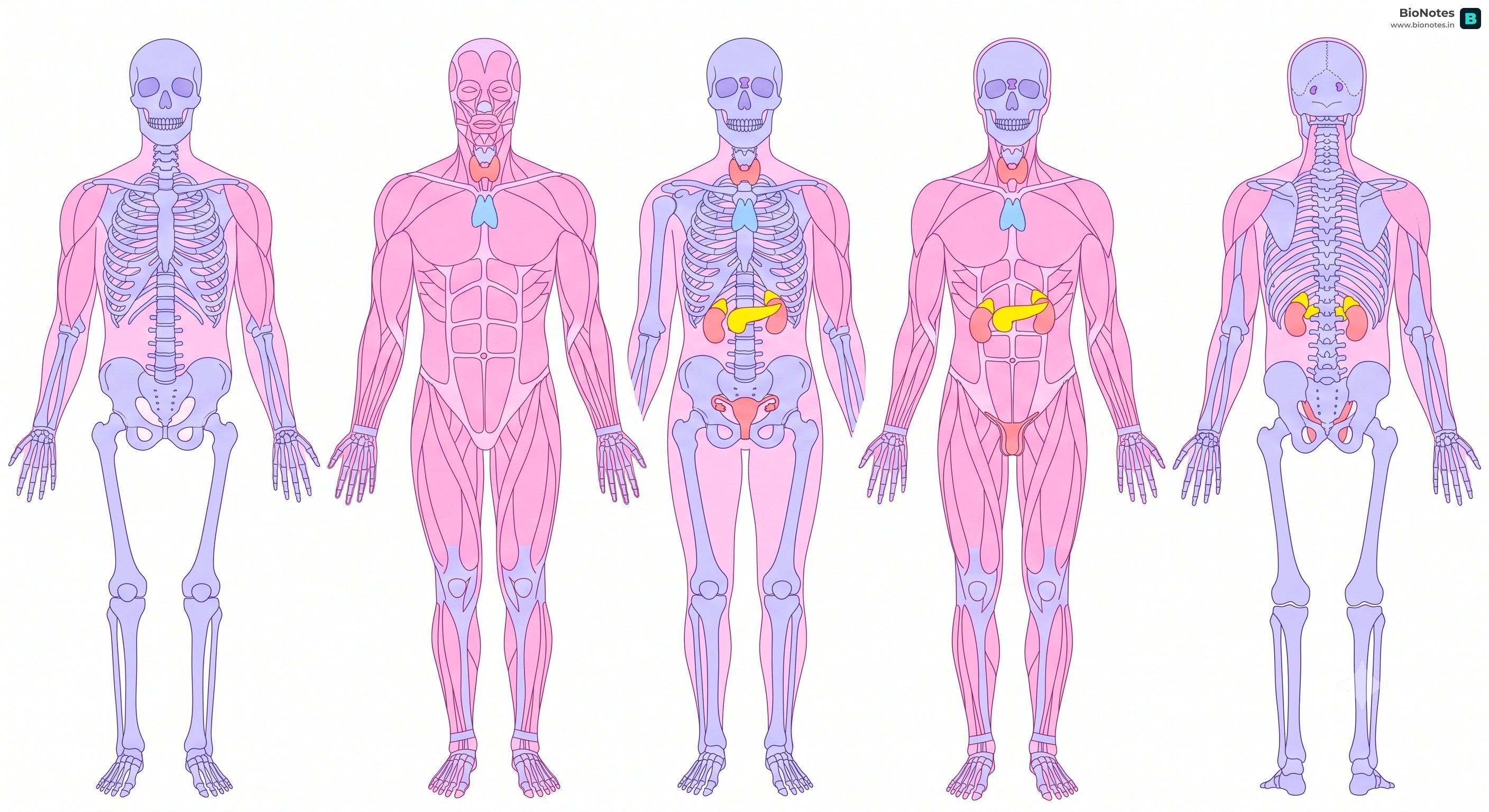
This note provides a detailed and intuitive understanding of the human skeleton, its functions, the division into axial and appendicular parts, and the various types of joints, as outlined in the syllabus.
Common Misconceptions
Watch Out! The skeletal system is dynamic, not dead structure:
The human skeleton is a vital organ system that provides the body with its fundamental structure and enables numerous biological processes. Its major functions include:
Living Tissue Bones are not dry, dead structures; they are living tissues with their own blood vessels and nerves. They are constantly being broken down and rebuilt in a process called bone remodeling.
The human skeleton is divided into two main functional and anatomical parts:
 www.bionotes.in
Joints (articulations) are the points where two or more bones meet. They are classified based on the amount of movement they allow (functional classification) or the type of material connecting the bones (structural classification).
Joints can also be classified by the type of connective tissue that binds the bones together:
This detailed explanation aims to provide a clear and comprehensive understanding of the human skeleton, its divisions, and the various types of joints, serving as a thorough study guide.
NGSS-MS-LS1-3AQA-GCSE-4.2.2KS3-Biology